


Table of Contents
- Why Freshness Changes Everything in Your Cup
- The Bloom Test: Watch Your Coffee Breathe
- Signs of Stale Coffee Beans You Can Spot in Seconds
- Coffee Roast Date vs Expiration Date: Which One Matters?
- How to Store Coffee Beans for Maximum Freshness
- How Long Does Fresh Coffee Actually Stay Fresh?
- Taste Testing: The Final Freshness Check
- Frequently Asked Questions
Last Updated: September 14, 2026
Why Freshness Changes Everything in Your Cup
Knowing how to tell if coffee is fresh is the single biggest variable between a forgettable cup and one you think about all week. If you want to know how to tell if coffee is fresh, start with the roast date, not the expiration date: coffee is an agricultural product that begins losing its best qualities the day it leaves the roaster. At Happy Pup Coffee Company, we roast to order for exactly this reason, because a bag that sat in a warehouse for months can look perfect and still taste flat.
Fresh coffee is roasted coffee that still contains enough carbon dioxide and volatile aromatic compounds to produce a lively bloom, a fragrant aroma, and a balanced extraction. Once those compounds dissipate, the coffee turns stale, and no brewing method can bring it back.
Here's the good news: you don't need a lab. You need your nose, your eyes, and about 30 seconds with hot water.
The Bloom Test: Watch Your Coffee Breathe
The bloom test is the fastest, most reliable freshness check you can run at home. Pour hot water over freshly ground coffee and watch what happens: fresh coffee swells and releases a dome of foamy bubbles, while stale coffee barely reacts.
That reaction is degassing, the release of carbon dioxide trapped inside the bean during roasting. Here's the mechanism most guides skip: during roasting, sugars and amino acids react (the Maillard reaction) and organic acids break down, and those reactions generate CO2 that gets physically trapped in the bean's porous cell structure. After the roast, that gas has only one way out, slowly, through the bean's walls. The rate follows a rough curve: a large share of the gas escapes in the first few days, then the release tapers off over the following weeks. The vigor of the bloom is a direct readout of where a bean sits on that curve.
When hot water hits the grounds, it accelerates the release of whatever CO2 remains, and that escaping gas pushes the grounds upward into the foamy dome you see. So the bloom isn't a magic trick, it's a pressure release you can watch.
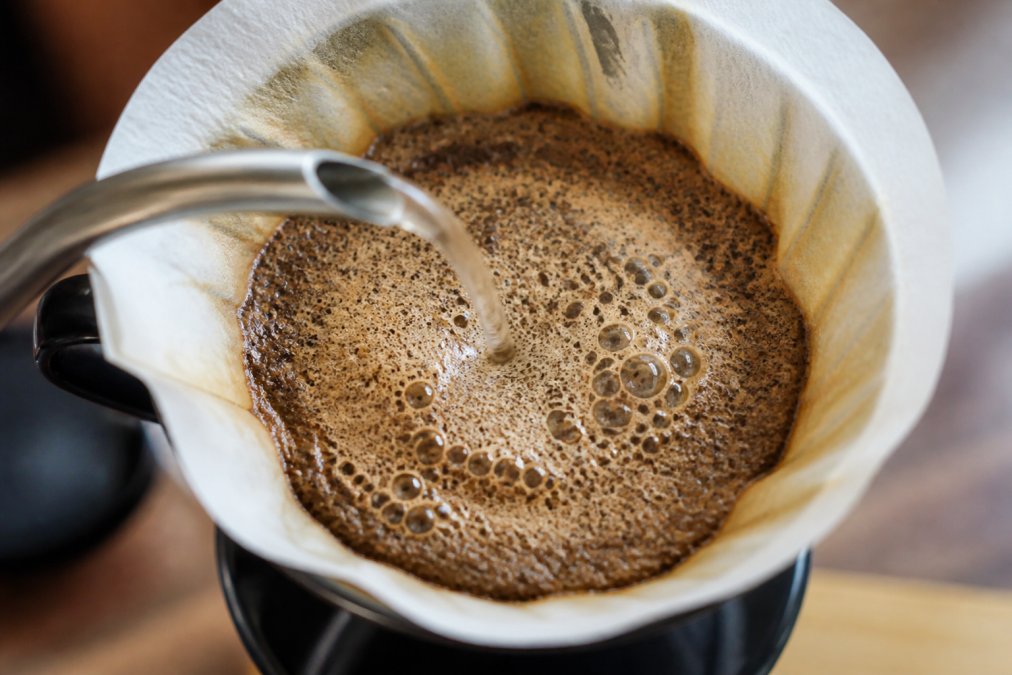
Here's how to run it properly:
- Grind a scoop of beans to your normal setting.
- Place the grounds in a dry cup or dripper.
- Pour hot water evenly over the top.
- Watch for 20 to 30 seconds.
- Note the size of the bubble dome and how long it lasts.
A big, active bloom points to a recent roast. A thin or absent bloom points to a bag that's been sitting a while.
Why Roast Level Changes What a 'Weak' Bloom Means
This is the part that trips people up, and it's the angle almost no guide covers: a modest bloom does not automatically mean stale coffee. Roast level changes how much gas a bean holds and how fast it leaves.
- Dark roasts are roasted longer and reach higher internal temperatures, which develops more CO2 and leaves the bean more porous. They degas fast and hard, so a dark roast can throw a dramatic bloom on day two and a much calmer one by day ten, even though it's still perfectly fresh.
- Light roasts are denser and less porous, so they hold their gas longer and release it more slowly. A light roast may show a gentler bloom across its whole fresh window, which can read as 'stale' to someone expecting a dark roast's fireworks.
Judge each coffee against its own baseline, not against a different roast.
The Resting Period, Explained by the Same Mechanism
The first few days after a roast are the flip side of the bloom. Coffee roasted yesterday is still releasing so much CO2 that, during brewing, the escaping gas pushes water away from the grounds, a effect brewers call channeling. Water finds paths of least resistance and bypasses part of the coffee bed, so you get an uneven, sometimes sour or hollow cup from beans that are objectively at their freshest.
Letting the coffee rest a few days lets the most aggressive degassing finish, so water can contact the grounds evenly. That's why 'roasted yesterday' and 'roasted last week' can both be fresh, yet only one brews well.
Signs of Stale Coffee Beans You Can Spot in Seconds
You can catch most stale coffee before you ever brew it. Stale beans give off a dull, papery, or cardboard-like smell, look dry and matte on the surface, and often arrive in packaging with no roast date and no degassing valve.
Smell and Aroma Checks
Aroma is your most sensitive freshness instrument. Open the bag and take a deep breath: fresh coffee smells sweet, complex, and fragrant, with distinct flavor notes that shift as the coffee rests. Stale coffee smells flat, musty, or faintly like cardboard.
That change comes from oxidation, the same reaction that turns cooking oil rancid over time. Oxygen attacks the oils on the bean's surface, and the bright, vibrant aromatics fade first. If you have to hunt for a smell, the coffee is already past its best.
Visual Inspection and Packaging Clues
Your eyes can confirm what your nose suspects. Look for these signals:
- Surface texture: fresh beans have a slight sheen from surface oils; stale beans look dry and matte.
- Color: fading toward a dull, uniform brown suggests age.
- One-way valve: a small valve on the bag lets CO2 escape without letting oxygen in. Its presence signals a roaster who understands degassing.
- Puffed bag: a sealed bag that looks inflated is a good sign, because the beans are still releasing carbon dioxide.
[Specialty Coffee(/blogs/news/specialty-coffee-vs-grocery-store-brands) Association guidance on coffee freshness and storage | sca.coffee]
Coffee Roast Date vs Expiration Date: Which One Matters?
The roast date matters, and the expiration date usually doesn't. Roast date tells you when the clock started ticking on freshness. An expiration date is often set months out for inventory purposes and says almost nothing about how the coffee actually tastes today.
This is the part most shoppers get wrong. They grab the bag with the furthest-out date, assuming it's the freshest, when the opposite is often true. A bag printed with a roast date from last week beats a bag with a "best by" date six months away every time.
Roast level complicates the picture. Darker roasts sit closer to the surface oils, so they tend to taste stale sooner, while lighter roasts hold their character a little longer. That's a matter of perception as much as chemistry, but it's why two bags with identical roast dates can age differently.
How to Store Coffee Beans for Maximum Freshness
Storing coffee well comes down to four enemies: oxygen, heat, light, and moisture. Beat all four and you'll extend the window where your coffee still tastes like it should.
The rules that do the most work:
- Keep beans whole until you brew, because grinding exposes far more surface area to oxygen.
- Use an airtight container, ideally opaque and ceramic or stainless steel.
- Store at room temperature, away from the stove, oven, and sunny windowsills.
- Skip the freezer for daily use. If you must freeze, freeze whole beans in a sealed bag and use them straight from frozen.
- Buy in amounts you'll finish in two to four weeks rather than stockpiling.
The Environmental Factor Most Guides Ignore
Time is only half the staling story. The conditions your coffee sits in decide how fast the clock runs, and this is where two identical bags with the same roast date can age at completely different rates.
Humidity. Coffee is hygroscopic, meaning it pulls moisture out of the air. Every time a bean absorbs water, it speeds up the chemical reactions that flatten aroma, and it makes the bean brew differently because you're now extracting a wetter, partially degraded product. A humid kitchen, a bathroom-adjacent cabinet, or a damp basement all accelerate staling. If you live somewhere muggy, this matters more than the calendar.
Temperature swings. Heat accelerates oxidation and drives off volatile aromatics, but the bigger problem is fluctuation. A bag that warms and cools repeatedly, say, sitting near a dishwasher or a window that gets afternoon sun, condenses moisture inside the container each time it cools. That trapped moisture does the same damage as ambient humidity. A steady cool spot beats a warm spot that occasionally gets cold.
Oxygen exposure frequency. Every time you open the container, fresh oxygen rushes in to replace the CO2 that's been pooling. A large bag you open twice a day degasses and re-oxygenates constantly, while a small bag you finish in a week barely notices. This is the real argument for buying smaller amounts more often, not just freshness at purchase, but less oxygen churn during use.
A practical way to think about it: your storage setup should minimize how often air, heat, and moisture touch the beans, not just how much of each is present.
USDA information on food storage and spoilage
How Long Does Fresh Coffee Actually Stay Fresh?
Fresh coffee stays at its peak for roughly two to four weeks after the roast date, then declines gradually over the following weeks. Whole beans hold their quality longer than ground coffee, which can lose noticeable aroma within days of grinding.
Environmental factors matter more than most guides admit. Humidity and heat both accelerate flavor degradation, which is why coffee stored in a humid kitchen fades faster than coffee kept in a cool, dry pantry. If you live somewhere damp, tighten your storage routine and buy smaller amounts more often.
A practical timeline to work from:
| Time Since Roast | What to Expect | Best Use |
|---|---|---|
| Days 1-4 | Very gassy, bloom is aggressive | Let it rest before brewing |
| Days 5-14 | Peak aroma and balanced extraction | Ideal for all brewing methods |
| Weeks 3-4 | Aroma softening, bloom smaller | Still good, drink soon |
| Beyond 4 weeks | Flat aroma, weak bloom, dull cup | Better for cold brew than pour-over |
That "resting period" in the first few days catches people out. Coffee roasted yesterday can actually brew unevenly because it's releasing so much CO2 that water channels around the grounds. Waiting a few days after the roast date often produces a better cup than brewing the same day.
USDA information on food storage and spoilage
Taste Testing: The Final Freshness Check
Your palate is the last word. Even if the bloom looks weak and the bag has no valve, a quick taste test settles the question.
Brew a small cup using your normal method and evaluate it like a taster would. Fresh coffee tastes vibrant and punchy, with clear acidity, pleasant body, and flavor notes you can actually name. Stale coffee tastes flat, papery, or faintly rancid, with a hollow finish and none of the brightness you'd expect.
Pay attention to crema if you pull espresso: a thick, persistent crema points to fresh beans, while a thin, fast-collapsing layer suggests the coffee has been sitting. For drip and pour-over drinkers, watch the bloom one more time and trust your nose over the calendar.
Judging freshness shouldn't require a chemistry degree or a trip to three different stores. The real challenge is getting coffee that was roasted recently enough to matter, and that's where buying direct makes the difference. Happy Pup Coffee Company is veteran owned and operated, roasts to order, and delivers specialty-grade coffee straight to your door, whether you want whole bean single-origin, flavored blends, or convenient single-serve capsules. Our Whiskey Barrel Aged single-origin Guatemalan coffee is aged 30 days in a Bourbon barrel and then roasted to order, so it arrives with the kind of bloom you can't fake. Get started with Happy Pup Coffee Company and taste what a genuinely fresh roast does for your morning cup.
Frequently Asked Questions
What is the freshest coffee you can buy?
The freshest coffee is whole bean coffee roasted within the last 7 to 14 days and shipped directly from the roaster. Look for a printed roast date on the bag, not just a best-by date. Coffee ordered from a roaster that roasts to order, like Happy Pup Coffee Company's Whiskey Barrel Aged, arrives within days of roasting rather than sitting on a shelf for months.
How long does coffee stay fresh after it's ground?
Ground coffee loses most of its aroma within 30 to 60 minutes of grinding because the increased surface area speeds up oxidation and CO2 release. In an airtight container, ground coffee stays reasonably fresh for about 1 to 2 weeks, compared to 2 to 4 weeks for whole beans. Grinding right before brewing is the single biggest upgrade you can make for flavor.
How do I know if my coffee is spoiled or just stale?
Stale coffee tastes flat, papery, or cardboard-like but is not harmful. Spoiled coffee shows visible mold, a musty or sour smell, or clumping from moisture exposure. If you see white or green fuzz, smell damp basement odors, or notice the beans stick together, throw the bag out. Stale coffee is disappointing; moldy coffee is a health risk.
Does the roast date matter more than the expiration date on coffee?
Yes. Expiration dates on coffee are typically set 9 to 12 months after roasting and tell you almost nothing about flavor quality. A roast date tells you exactly when the beans were at peak CO2 degassing and aromatic development. For drip or pour-over, aim for coffee roasted 5 to 14 days ago. For espresso, 7 to 21 days after roast is the sweet spot.