


Table of Contents
- What Makes a Coffee 'Single Origin'?
- How to Identify Coffee Flavor Notes
- Why Altitude and Processing Shape the Taste
- The Best Single Origin Coffee Regions to Try
- Coffee Cupping for Beginners: A Step-by-Step Guide
- Brewing Methods for Single Origin Beans
- Common Mistakes to Avoid When Tasting Coffee
- Conclusion: Start Your Tasting Adventure
- Frequently Asked Questions
Last Updated: September 7, 2026
What Makes a Coffee 'Single Origin'?
Single origin coffee comes from one specific geographic region, farm, or cooperative, rather than a blend of beans from multiple countries. Its flavor profile directly reflects the place it was grown, a concept known as terroir. When you buy a single origin bag, you are tasting the unique combination of soil, climate, and farming practices of one location, with no other beans to mask those characteristics.

At Happy Pup Coffee Company, we roast specialty-grade beans in small batches, and our single origin lineup showcases this regional purity. For beginners, starting with single origin beans is the fastest way to train your palate because each cup offers a clear, unblended snapshot of its origin. This single origin coffee bean tasting guide will walk you through the sensory skills and brewing techniques you need to actually taste those differences, serving as your single origin coffee bean tasting guide from first sip to expert-level cupping.
The key insight for newcomers is that consistency and complexity are trade-offs. Blends are engineered for a consistent flavor every time, while single origins deliver a more complex, seasonal cup that changes subtly with each harvest.
How to Identify Coffee Flavor Notes
Identifying flavor notes is a learnable skill, not an innate gift. Your palate can be trained to recognize the floral, citrus, nutty, or chocolatey descriptors printed on coffee bags, but it requires deliberate practice and a mental framework.
A practical method is to focus on three sensory categories in order: aroma, acidity, and body. First, smell the ground coffee and the brewed coffee before sipping; aroma primes your brain for specific flavors. Next, notice the acidity, which is the bright, sharp, or wine-like quality on the sides of your tongue, not the bitter taste of over-extraction. Finally, assess the body, which is the weight or mouthfeel of the coffee, ranging from light and tea-like to heavy and syrupy.
Many guides tell you to find "blueberry" notes but never explain how to get there. The missing piece is sensory calibration, building a reference library in your brain so you can name what you're tasting. Here are three structured exercises you can run at home with zero professional equipment.
Exercise 1: The Pantry Flavor Reference
Your kitchen already contains the aromatic benchmarks for most coffee tasting notes. Before your next brew, set out small samples of common reference points: a slice of lemon, a few blueberries or raspberries, a piece of dark chocolate, a spoonful of honey, and a handful of raw almonds. Smell each one deliberately, then immediately smell your brewed coffee. This direct comparison forces your brain to connect the abstract descriptor on the bag to a concrete memory. Repeat this weekly, swapping in seasonal fruit, to build a personal flavor library far faster than tasting coffee alone.
Exercise 2: The Triangulation Test
This is the same method used in professional sensory evaluation. Brew three cups: two from the same bag of coffee and one from a different single origin. Label the cups A, B, and C, but keep the key hidden. Taste all three, then identify which cup is the odd one out. This forces you to focus on subtle structural differences, acidity, body, and finish, rather than just obvious flavor notes. Run this test once a week with different origins to develop the discrimination skills that separate casual drinkers from serious tasters.
Exercise 3: The Cooling Profile
Most people taste coffee at one temperature and miss how the flavor evolves. Brew a single cup and take a sip every two minutes as it cools from 160 degrees Fahrenheit down to room temperature. You will notice that sweetness emerges first, acidity peaks in the warm-to-mid range, and bitter or earthy notes become more pronounced as the cup cools. This reveals the structural complexity of the bean: a coffee that tastes flat at every temperature is likely lower-grade, while a specialty single origin will shift noticeably through the cooling window.
The Flavor Wheel as a Map, Not a Destination
The Specialty Coffee Association's flavor wheel is a useful tool, but only if used correctly. Do not start at the center and work outward, that is overwhelming. Instead, start at the outer edge where specific descriptors live, and ask yourself which family it belongs to. If you taste something that reminds you of "orange zest," trace it inward to "citrus fruit," then to "fruity." This reverse mapping trains you to categorize flavors systematically, far more effectively than staring at the wheel hoping for inspiration.
After each tasting session, write down three words for the aroma, three for the acidity, and three for the body. Over a month of tasting different origins, this log becomes your personal reference manual, one that no two people will write identically, because your sensory memory is unique to you.
Why Altitude and Processing Shape the Taste
Altitude and processing are the two biggest variables that determine whether your cup tastes bright and fruity or heavy and chocolatey. Higher altitudes slow the cherry's maturation, producing denser beans with more complex sugars, which translates to brighter acidity and more floral or citrus notes.
Processing methods control how the fruit is removed from the bean, and each leaves a distinct fingerprint on the final cup. The washed process removes the fruit immediately before drying, yielding a clean, bright cup where the bean's intrinsic flavor shines. The natural process dries the whole cherry with the fruit intact, allowing sugars to infuse the bean for a heavier body and pronounced fruity, sometimes boozy, sweetness. The honey process is a middle ground, removing some mucilage but not all, resulting in a balanced cup with sweetness and body.
For example, our Ethiopia Natural beans are grown at 1700 to 1900 meters and processed using the full natural method, which is why they carry those milk chocolate and caramel notes. In contrast, the [Colombia(/products/colombia) | happypupcoffeecompany.com] beans from Medellin are fully washed and dried in solar dryers, preserving the dried orange and berry brightness that comes from the higher altitude. When you understand these variables, you can predict a coffee's flavor profile before you even open the bag.
The Best Single Origin Coffee Regions to Try
If you are just starting your palate development, three regions offer the clearest contrast in flavor profiles and are the best single origin coffee regions to explore first.
- Ethiopia: The birthplace of coffee, Ethiopian beans are often processed naturally and feature vibrant, complex fruit notes like blueberry, strawberry, and wine-like acidity. They are the benchmark for floral and fruity coffees.
- Colombia: Known for washed processing, Colombian coffees are balanced and approachable, with notes of caramel, citrus, and red apple. They are an excellent daily drinker with a clean, sweet finish.
- Brazil: Brazilian coffees are typically lower in acidity with a heavy, smooth body, offering classic notes of cocoa, nuts, and chocolate. They are ideal if you prefer a comforting, less challenging cup.
A great way to compare these regions side-by-side without committing to full bags is to try a sample pack. The Single Origin Favorites Sample Pack from Happy Pup Coffee Company includes 2oz portions of our Brazil Santos, Colombia, Ethiopia Natural, and Guatemala beans, so you can taste the spectrum of flavors and identify which profile suits your palate best.

| Region | Typical Process | Flavor Profile | Best For |
|---|---|---|---|
| Ethiopia | Natural | Floral, fruity, wine-like | Adventurous palates |
| Colombia | Washed | Citrus, caramel, balanced | Daily drinkers |
| Brazil | Pulped natural | Cocoa, nutty, smooth | Comforting cups |
Coffee Cupping for Beginners: A Step-by-Step Guide
Coffee cupping is the standardized method professionals use to evaluate and compare coffees, and it is surprisingly simple to do at home. This structured tasting removes brewing variables so you can focus purely on the flavor of the bean. You will need ground coffee, hot water just off the boil, a spoon, and a cup.
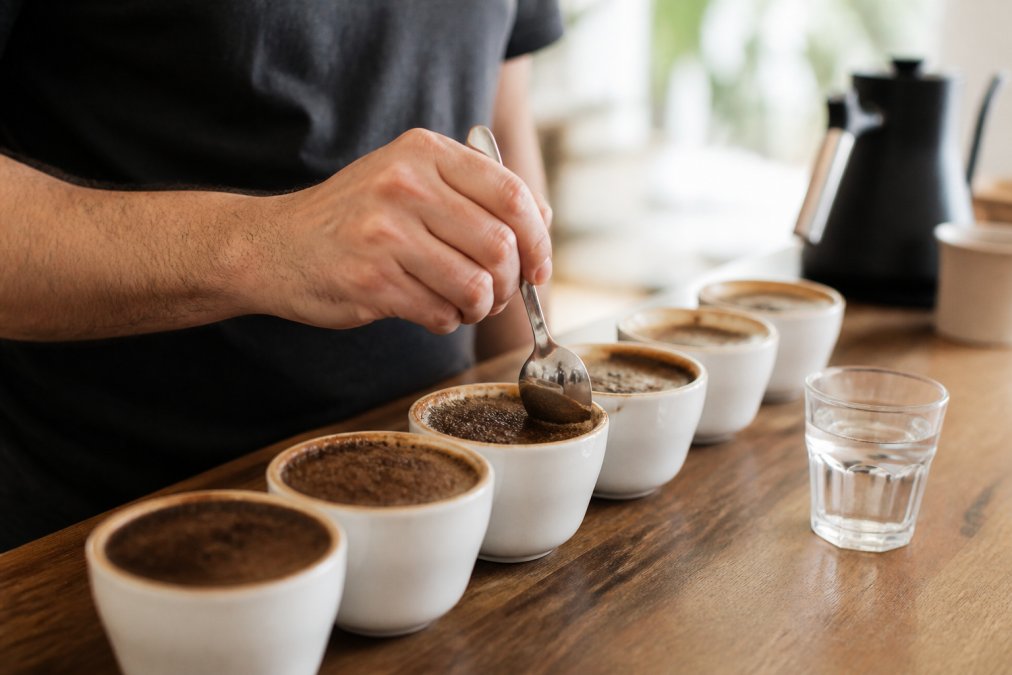
Follow these steps to conduct your first cupping session:
- Grind and smell: Coarsely grind about 12 grams of coffee per cup and place it in the cup. Smell the dry grounds and note the aroma.
- Add water: Pour 200ml of hot water (around 200 degrees Fahrenheit) over the grounds and let it steep for four minutes.
- Break the crust: After four minutes, use a spoon to stir the crust of grounds at the top, and inhale deeply. This releases the most concentrated aromatic compounds.
- Skim and taste: Remove the floating grounds from the surface, wait a few minutes for the coffee to cool, and then slurp a spoonful. Slurping aerates the coffee across your palate.
- Evaluate: Note the acidity, body, and flavor, then compare your impressions to the bag's tasting notes.
The goal is not to identify every single note perfectly. It is to build a mental library of what different coffees taste like, so you can make informed choices about what you enjoy.
Brewing Methods for Single Origin Beans
The brewing method you choose can either amplify or mask the delicate flavor notes of single origin beans, so matching the method to the coffee's profile is essential. Lighter roasts with bright acidity benefit from methods that highlight clarity, while darker, heavier coffees can handle methods that add body.
The pour-over method is widely considered the best choice for single origin coffees because its paper filter removes oils and sediment, producing a clean, tea-like cup that showcases floral and fruity notes. For a brew ratio, start with 1 gram of coffee to 16 grams of water. Grind size should be medium-fine, similar to sea salt. In contrast, the French press uses a metal mesh filter that retains more oils, resulting in a heavier body that pairs well with chocolatey, nutty coffees like a Brazilian Santos.
But here is what most guides skip: the same brewing recipe will not work for every single origin bean. The physical density of the bean, determined largely by altitude, changes how water flows through the coffee bed and how quickly solubles extract. If you treat a dense Ethiopian bean and a soft Brazilian bean identically, you will under-extract one and over-extract the other.
Adjusting Your Brew by Bean Density
High-altitude beans (grown above 1,500 meters) are denser and require more energy to extract properly. If your Ethiopian or Kenyan coffee tastes sour, sharp, or thin, you are under-extracting. The fix is not just grinding finer, it is also extending your total brew time. For a pour-over, increase your pour count from three to four or five, which lengthens the contact time between water and grounds. Alternatively, raise your water temperature from 200 degrees Fahrenheit to 205 degrees Fahrenheit. These beans can handle the extra heat without becoming bitter because their cellular structure is more compact.
Low-altitude beans (grown below 1,200 meters), such as most Brazilian coffees, are softer and less dense. They extract quickly, which means they are prone to over-extraction, the bitter, dry, astringent taste that ruins a cup. If your Brazilian coffee tastes harsh, grind coarser (think kosher salt rather than sea salt) and lower your water temperature to 195 degrees Fahrenheit. You should also shorten your total brew time by reducing the number of pours. These beans give up their flavors readily; they do not need to be coaxed.
A Practical Troubleshooting Flow
When a single origin cup tastes wrong, work through this sequence rather than guessing:
- Sour or sharp taste? You are under-extracting. Grind one step finer, or raise water temperature by 3 to 5 degrees Fahrenheit.
- Bitter or dry taste? You are over-extracting. Grind one step coarser, or lower water temperature by 3 to 5 degrees Fahrenheit.
- Thin or watery body? Your ratio is off. Increase coffee from 1:16 to 1:15, or extend brew time slightly.
- Muddy or heavy cup? Your grind is too fine for the method. Go coarser and check that your brew time is within the method's standard range.
The Role of Water Chemistry
One variable that almost no tasting guide addresses is water chemistry, yet it can make or break a single origin cup. Tap water with high mineral content, common in many municipal water systems, can flatten acidity and mute delicate floral notes. Conversely, distilled or heavily filtered water that lacks minerals will produce a flat, lifeless cup because there are no dissolved solids to carry flavor compounds.
The Specialty Coffee Association recommends water with 150 parts per million (ppm) of total dissolved solids as a starting target (sca.coffee). If your tap water is above 250 ppm, you will likely notice a dull, chalky taste in light-roast single origins. A simple countertop filter that reduces hardness without stripping all minerals is often enough to improve clarity. To test whether water is your problem, brew the same coffee twice, once with tap water and once with a bottled spring water labeled around 150 ppm, and taste them side by side. The difference is frequently dramatic.
Freshness also plays a role; specialty coffee is best consumed within two to four weeks of its roast date, so check the bag for that date before brewing. A stale bean will taste flat regardless of how carefully you adjust your grind or water chemistry.
Common Mistakes to Avoid When Tasting Coffee
Most beginners struggle with tasting because they make a few predictable errors that obscure the coffee's true character. The first mistake is tasting coffee immediately after brewing while it is still scalding hot, which numbs your palate and prevents you from detecting subtle sweetness or acidity.
The second common mistake is ignoring the aroma. Up to 80 percent of what we perceive as taste actually comes from smell, so if you skip deeply inhaling the coffee's fragrance before sipping, you are missing half the experience (the NIH). Third, beginners often try to taste too many coffees in one sitting without cleansing their palate, which leads to flavor fatigue and confusion.
Another frequent error is brewing single origin beans incorrectly and then blaming the coffee. If you use a dark roast grind setting for a light roast bean, or water that is too cold, you will not experience the flavor profile the roaster intended. Finally, avoid comparing coffees from memory; always taste them side-by-side to notice the real differences. The Specialty Coffee Association's cupping protocols offer a standardized framework that eliminates these errors and helps you focus on the sensory experience.
Conclusion: Start Your Tasting Adventure
Developing your palate is a rewarding journey, but it requires the right starting point: fresh, properly roasted beans from a single, known origin. When you buy stale or blended coffee, you are fighting an uphill battle against flavors that have already degraded or been masked.
At Happy Pup Coffee Company, we remove that obstacle by roasting specialty-grade beans to order and shipping them directly to your door, so they arrive at peak freshness. Our Single Origin Favorites Sample Pack is the perfect way to begin, letting you taste the distinct profiles of Brazil, Colombia, Ethiopia, and Guatemala in one shipment. As a veteran-owned business, we take pride in delivering quality you can taste in every cup.
Frequently Asked Questions
What is the 15-15-15 rule for coffee?
The 15-15-15 rule is a simple guideline for brewing a balanced cup. It suggests using 15 grams of coffee per 250 milliliters of water, waiting 15 seconds after pouring hot water to let the grounds bloom, and aiming for a total brew time of around 15 minutes for methods like a French press. This rule helps maintain consistency and extract the full flavor profile of your single origin beans, ensuring a sweet and balanced cup every time.
What is the difference between single origin and blended coffee?
Single origin coffee comes from one specific farm, region, or country, showcasing the unique terroir of that place. Blended coffee combines beans from multiple origins to create a balanced, consistent flavor profile. Single origin beans often have distinct tasting notes like citrus or chocolate, while blends are designed for uniformity and often used in espresso to create a reliable crema and body.
How do you properly taste coffee for flavor notes?
To properly taste coffee, start by smelling the grounds before brewing. After brewing, take a sip and let the coffee coat your entire palate. Try to identify the primary flavors, then the acidity and body. Refer to a coffee flavor wheel to help pinpoint specific notes like floral, fruity, or nutty. Practice with different single origin coffees to train your palate and notice the subtle differences between regions.
What equipment do I need to host a coffee tasting at home?
You need a few simple tools to host a coffee tasting at home: freshly roasted single origin beans, a burr grinder, a scale, a pour-over kettle, and cupping bowls or small glasses. A spoon and a cup of water for rinsing are also essential. The Single Origin Favorites Sample Pack is perfect for this, as it includes six different 2oz packs so you can compare flavors side by side.
Does roast level affect the tasting of single origin beans?
Yes, roast level significantly impacts the tasting experience. A light roast preserves the bean's origin characteristics, highlighting floral, fruity, and acidic notes. A medium roast offers a balanced profile with more body and sweetness, like chocolate or caramel. Dark roasts bring out bold, smoky flavors but can mask the subtle terroir of the bean. For tasting single origin coffees, a light to medium roast is usually recommended to fully appreciate the origin.
How do altitude and soil affect the taste of coffee beans?
Altitude and soil are key parts of a coffee's terroir. Beans grown at higher altitudes mature more slowly, developing more complex sugars and a denser bean, which often results in brighter acidity and more intricate flavor notes. Volcanic loam soil, common in regions like Guatemala and Colombia, is rich in minerals that feed the plant, contributing to a cleaner, sweeter cup with distinct characteristics.
Tasting coffee is a skill that improves with practice, and the biggest barrier is usually access to fresh, high-quality beans. Let us handle the sourcing and roasting so you can focus on enjoying the flavors. Get started with Happy Pup Coffee Company and taste the difference that freshness makes.