


Table of Contents
- What Makes Freshly Roasted Coffee Beans Different?
- Antioxidant Content: How Freshness Affects Chlorogenic Acids
- Flavor and Aroma: The Chemical Shift After Roasting
- Coffee Bean Roast Dates Explained: Light, Medium, and Dark
- How to Store Coffee Beans for Freshness: Protect the Oils
- How to Choose Coffee Beans That Are Truly Fresh
- Conclusion: Make Freshness Part of Your Daily Routine
- Frequently Asked Questions
Last Updated: September 9, 2026
What Makes Freshly Roasted Coffee Beans Different?
Freshly roasted coffee beans are beans consumed within a window where their chemical and aromatic profile is at its peak. The difference between a bean roasted last week and one roasted six months ago is a measurable change in chemistry. At Happy Pup Coffee Company, we are dedicated to bringing you specialty-grade coffee that helps you start your day energized and end it in pure relaxation.
After roasting, beans immediately begin degassing, releasing carbon dioxide while volatile compounds responsible for aroma and flavor dissipate. The shelf life of roasted coffee is measured in weeks, not months, yet most grocery store coffee sits in bags for months before you open them. By the time those beans reach your grinder, much of what makes coffee enjoyable has already faded.
Antioxidant Content: How Freshness Affects Chlorogenic Acids
Coffee is one of the largest sources of antioxidants in the American diet, and the primary players are chlorogenic acids (CGAs), which help combat oxidative stress and neutralize free radicals (peer-reviewed research).
As beans roast, chlorogenic acid levels decrease but convert into more bioavailable antioxidant compounds. These delicate compounds degrade over time; oxygen, light, and moisture accelerate the breakdown. A bean that sits on a shelf for months will have a lower concentration of beneficial compounds than one roasted last week.
The Degassing Window and Bioavailability
In the first 24 to 72 hours after roasting, beans undergo rapid degassing, releasing CO2 that acts as a protective blanket against oxidation (sciencedirect.com). Once that subsides, oxygen infiltrates the bean matrix more readily. The peak window for antioxidant bioavailability is between day 3 and day 14 post-roast; before day 3 extraction is inconsistent, and after day 14 oxidative degradation accelerates. Most specialty roasters agree this two-week window maximizes health-supporting compounds.
Storage Impact on Nutrient Retention
Storage after the roast date is as critical as the roast date itself. The three accelerants of antioxidant loss are oxygen, light, and humidity. Oxygen triggers lipid oxidation and breaks down chlorogenic acids; UV light catalyzes these reactions, making clear bags a red flag; moisture causes beans to stale from the inside out and can promote mold.
To preserve antioxidants, control all three variables. An airtight, opaque, one-way valve bag in a cool, dark cabinet is the gold standard, allowing CO2 release without letting oxygen in. Avoid the refrigerator or freezer; moisture and temperature fluctuations degrade the bean's cellular structure.
By understanding the degassing timeline and the storage variables, you move beyond the marketing term 'fresh' and into the measurable chemical reality of what you are actually consuming.
Flavor and Aroma: The Chemical Shift After Roasting
Coffee's aroma, flavor profile, acidity, and body are dictated by hundreds of volatile compounds formed during roasting. When you smell a bag of freshly ground coffee, you are inhaling these compounds.
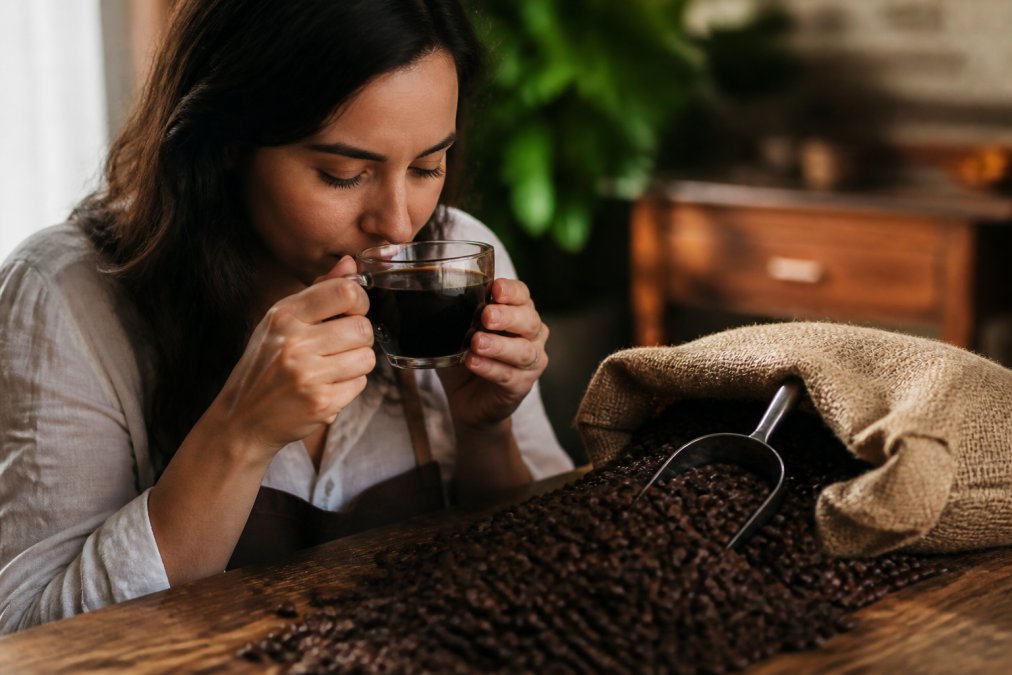
As coffee ages, volatile compounds evaporate and react with oxygen in lipid oxidation, making old coffee taste flat, stale, or rancid. The bright acidity of a fresh light roast dulls into bitterness, and complex sweetness turns hollow. For those who appreciate bean origin nuances, freshness is essential to tasting those characteristics at all.
Coffee Bean Roast Dates Explained: Light, Medium, and Dark
Roast dates are the most important label for evaluating quality, yet they are often absent from grocery store bags. A "best by" date is not a roast date; the roast date is your true starting point for measuring freshness.
The roast profile impacts how quickly benefits fade. Lighter roasts retain more chlorogenic acids and origin character with a brighter, more acidic cup. Dark roasts have a bolder, smokier profile with more bitterness and less acidity, losing more volatile compounds during roasting. Medium roasts, like our Brazil Santos, balance smoothness with pronounced cocoa notes for daily drinking.

| Roast Profile | Flavor Characteristics | Acidity | Best Consumed |
|---|---|---|---|
| Light Roast | Floral, fruity, tea-like | High | 1-3 weeks post-roast |
| Medium Roast | Balanced, chocolate, nutty | Medium | 1-4 weeks post-roast |
| Dark Roast | Smoky, bold, bittersweet | Low | 1-3 weeks post-roast |
How to Store Coffee Beans for Freshness: Protect the Oils
Once you have fresh beans, proper storage is the only thing standing between you and a stale cup. The enemies are oxygen, light, heat, and moisture; your goal is to protect the bean's delicate surface oils.
Avoid storing beans in the refrigerator or freezer; moisture degrades flavor and beans absorb other food odors. Use an airtight, opaque container in a cool, dark cabinet away from heat sources. Only grind what you need right before brewing, as whole beans retain volatile compounds far better than ground coffee.
The One-Way Valve: Your First Line of Defense
Packaging matters more than most realize. A high-quality bag has a one-way valve allowing CO2 to escape without letting oxygen in, preserving the bean's chemical integrity. If your bag lacks a valve, transfer beans to an airtight container immediately; if it has one, press the air out before sealing each time.
Brewing Method Correlation: How Your Grind and Brew Affect Health Compounds
Storage and freshness interact directly with your brewing method to determine what ends up in your cup. The key variable is extraction efficiency, influenced by grind size and brew time.
A French press uses a coarse grind and longer steeping time (typically 4 minutes), extracting a broader spectrum of compounds including chlorogenic acids. Because it is unfiltered, it retains cafestol and kahweol, diterpenes that can raise LDL cholesterol (PubMed). Freshness is critical here, as the longer steep time also extracts more stale, oxidized compounds from older beans.
For a pour-over, such as a V60 or Chemex, the paper filter traps diterpenes, reducing cholesterol-raising compounds. The shorter contact time (2-3 minutes) makes extraction more dependent on compound solubility. Freshly roasted beans yield a cleaner, more vibrant cup, while older beans extract as flat and hollow.
Espresso is the most demanding test of freshness. The high pressure and short extraction time (25-30 seconds) require a bean still actively degassing to produce crema, an emulsion of CO2 and oils carrying aromatic compounds. Beans past their peak produce a thin, pale crema and a bitter, lifeless shot.
The Sensory Science of Freshness
Freshness is a sensory experience you can verify without a lab. Opening a bag of freshly roasted beans releases a burst of sweet, floral, or fruity aromatics from volatile organic compounds formed during the Maillard reaction. When you grind the beans, that aroma should intensify; if stale, it will be muted, flat, or slightly sour.
The crema on an espresso shot is another sensory marker. A thick, golden-brown crema indicates beans are still releasing CO2 and oils are intact; a thin, pale crema signals aged beans. Reading these cues lets you become your own quality control.
How to Choose Coffee Beans That Are Truly Fresh
Choosing coffee beans goes beyond picking a nice design. Look for a visible roast date on the packaging; if it is absent, the roaster is likely not prioritizing freshness. Ideally, choose beans roasted within the past two weeks.
Fresh beans have a matte, dry surface; shiny, oily beans are either a dark roast or have aged long enough for oils to migrate. When you squeeze the bag, a distinct hiss of escaping CO2 signals active degassing and freshness.
To eliminate guesswork, buy from a roaster that roasts to order, as we do at Happy Pup Coffee Company. Our single-origin beans, like the Ethiopia Natural with its milk chocolate and caramel profile, are roasted to order and shipped directly to your doorstep, cutting out months of warehouse storage.

Conclusion: Make Freshness Part of Your Daily Routine
The benefits of freshly roasted coffee beans are clear, from richer flavor and aroma to higher antioxidant concentration. The practical takeaway is simple: check the roast date, buy whole beans, store them properly, and support roasters who prioritize freshness.
Making this shift does not need to be complicated. By choosing a source that roasts to order and delivers quickly, you remove the burden of checking dates. At Happy Pup Coffee Company, we are dedicated to bringing you specialty-grade coffee that helps you start your day energized and end it in pure relaxation.
Frequently Asked Questions
Are freshly roasted coffee beans better for you than stale beans?
Yes. Freshly roasted coffee beans retain more chlorogenic acids and polyphenols, which act as antioxidants in your body. As beans sit after roasting, oxygen triggers lipid oxidation that degrades these beneficial compounds. Within two to three weeks of the roast date, measurable antioxidant activity drops noticeably. For the highest level of protective compounds, buy beans within days of roasting and brew them within a month.
How long after roasting should you wait to brew coffee beans?
Most roasters recommend waiting 3 to 7 days after the roast date. This rest period, called the degassing phase, lets carbon dioxide escape. Brewing too early produces a flat, muted cup because the gas interferes with proper extraction. Waiting past 30 days works against you, however: volatile compounds responsible for aroma and flavor fade, and the beans taste stale even if they look fine.
Does the roast level affect the health benefits of coffee?
Yes, but not in the way you might expect. Light and medium roasts preserve more chlorogenic acids, the primary antioxidants in coffee. Dark roasts contain fewer of these compounds because prolonged heat breaks them down, though the roasting process creates new antioxidant compounds called Maillard reaction products. Both roast levels support health, but if maximizing antioxidants is your goal, choose a light or medium roast like our Ethiopia Natural.
How should I store beans to keep them fresh longer?
Store beans in an airtight, opaque container at room temperature, away from direct sunlight, heat, and moisture. Keep them in a cool, dark cabinet rather than next to the stove. Never refrigerate or freeze beans you use daily, since temperature changes cause condensation that damages bean integrity. Buy whole beans and grind only what you need right before brewing to protect volatile compounds from rapid oxidation.
The difference between a routine cup and a remarkable one often comes down to a single variable: how recently those beans were roasted. We invite you to taste that difference for yourself. Shop all coffee and see what a truly fresh roast does for your daily routine.