


Table of Contents
- What Is Specialty Grade Coffee and Why It Matters
- How to Buy Specialty Coffee Beans Online Without Getting Burned
- Best Coffee Subscription Services: What to Look For
- How to Store Coffee Beans for Freshness After They Arrive
- Sourcing, Ethics, and the Real Cost of Specialty Coffee Beans Online
- Water Chemistry: The Variable Most Coffee Buyers Ignore
- Conclusion
Last Updated: August 23, 2026
What Is Specialty Grade Coffee and Why It Matters
Specialty grade coffee is the top tier of the global coffee classification system, defined by the Specialty Coffee Association as beans that score 80 points or above on a 100-point cupping scale. Below that threshold lies commercial or commodity coffee, the kind that fills supermarket shelves and tastes the same every morning regardless of origin or season.
At Happy Pup Coffee Company, we work exclusively within this specialty tier because the difference is immediately apparent in the cup. Specialty beans are grown at higher altitudes, harvested with precision, and processed using methods, washed, natural, honey process, that directly shape the flavor you taste. A naturally processed Ethiopia will carry fruit-forward notes that a washed Colombia never will.
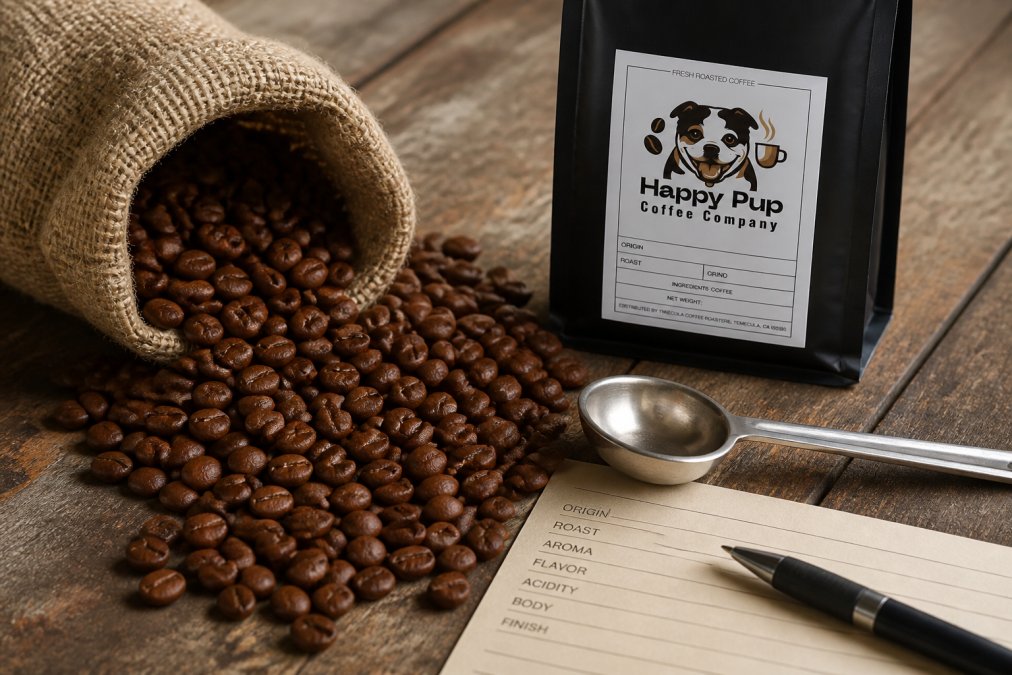
The Specialty Coffee Association's grading standards require that specialty-grade lots contain zero category-one defects and no more than five category-two defects per 350-gram sample. Most commercial coffee doesn't come close to meeting this standard.
Roasting Profiles: Light, Medium, and Dark Explained
Light roasts preserve the most origin character, delivering higher acidity and floral or fruity tasting notes. These work beautifully for single-origin coffees where you want to taste terroir. Happy Pup's Ethiopia Natural, a med-light roast, offers tasting notes of milk chocolate, fruity, and caramel from indigenous heirloom cultivars grown at 1700-1900 meters in the Sidama Zone.

Medium roasts balance origin character with roast development, softening acidity and increasing body into caramel, cocoa, and nutty notes. The Colombia offering, dried orange, berry, chocolate, sits in this range, grown by smallholder farmers at 1300-1500 meters using a fully washed process.
Dark roasts push roast development further, producing bittersweet, smoky, or chocolate-forward profiles where origin character recedes. For espresso drinkers wanting a bold, low-acidity cup, a well-executed dark roast is the right choice.
The mistake most buyers make is defaulting to dark because it "tastes stronger." Strength is a function of brew ratio, not roast level.
Single-Origin vs. Craft Blends: Which Should You Buy?
Single-origin coffees come from one farm, cooperative, or defined region, offering transparency about grower, altitude, process, and variety. Craft blends combine beans from multiple origins to achieve a consistent, balanced cup engineered for specific brewing methods, like the 6Bean dark roast designed for espresso.
Neither is objectively better. If you pull espresso shots daily and want consistency, a craft blend is more reliable. If you brew pour-over and want to explore how terroir shapes flavor, single-origins will reward your curiosity.
How to Buy Specialty Coffee Beans Online Without Getting Burned
The biggest mistake when buying specialty coffee beans online is treating freshness as an afterthought. Roast date matters more than any other variable on the product page.
Degassing is the process by which freshly roasted beans release carbon dioxide over 24-72 hours after roasting. The sweet spot for most whole bean specialty coffee is between 3 and 21 days post-roast, depending on roast level. When a roaster lists a "best by" date without a roast date, that's a yellow flag.
Look for roast-to-order operations that don't pre-roast and warehouse inventory. This ensures beans are as fresh as possible when they ship.
Reading Tasting Notes and Flavor Profiles
Tasting notes are not fabricated marketing copy, they're the predictable output of specific varietals, altitudes, processing methods, and roast levels. When a roaster lists "dried orange, berry, chocolate" for a Colombian medium roast, those notes reflect real compounds in the bean.
Use tasting notes as a guide to flavor direction rather than a literal promise. If a coffee's tasting notes describe flavors you already enjoy, dark chocolate, stone fruit, caramel, it's a reasonable bet you'll enjoy the coffee.
Matching Beans to Your Brewing Method
| Brewing Method | Recommended Roast | Grind Size | Key Consideration |
|---|---|---|---|
| Espresso | Medium-Dark to Dark | Fine | Needs body and low acidity to hold up through pressure |
| Pour-Over / Drip | Light to Medium | Medium | Highlights origin character and acidity |
| French Press | Medium to Dark | Coarse | Full body; fines cause over-extraction |
| Cold Brew | Medium to Dark | Extra Coarse | Long steep time; dark roasts produce smoother result |
| AeroPress | Light to Medium | Medium-Fine | Versatile; can mimic espresso or filter style |
Espresso beans need enough body and sweetness to survive milk dilution and pressure extraction. A delicate light roast that shines in a pour-over will taste thin and sour as espresso. Conversely, a dark roast that works beautifully as espresso can taste flat and ashy in a pour-over.
Match the bean to the method before you buy.
Best Coffee Subscription Services: What to Look For
The best coffee subscription services ensure you never run out of fresh coffee without locking you into a rigid system you can't adjust.
When evaluating subscription options, prioritize:
- Roast-to-order fulfillment: Coffee roasted after your order is placed, not pulled from pre-roasted warehouse inventory.
- Flexible cadence: Ability to pause, skip, or adjust frequency and selections between shipments.
- Variety access: Full catalog access, including limited single-origin releases and seasonal offerings.
- Grind options: Whole bean preferred for freshness, but ground options for those using blade grinders or single-serve machines.
- Transparent sourcing: Clear information about where beans come from, who grew them, and how they were processed.
For remote workers and busy professionals who go through coffee quickly, a subscription removes reordering friction while maintaining specialty-grade quality.
How to Store Coffee Beans for Freshness After They Arrive
How you store coffee beans determines whether that specialty-grade purchase pays off or goes to waste within a week.
The four enemies of fresh coffee are oxygen, moisture, heat, and light, in that order of damage potential.
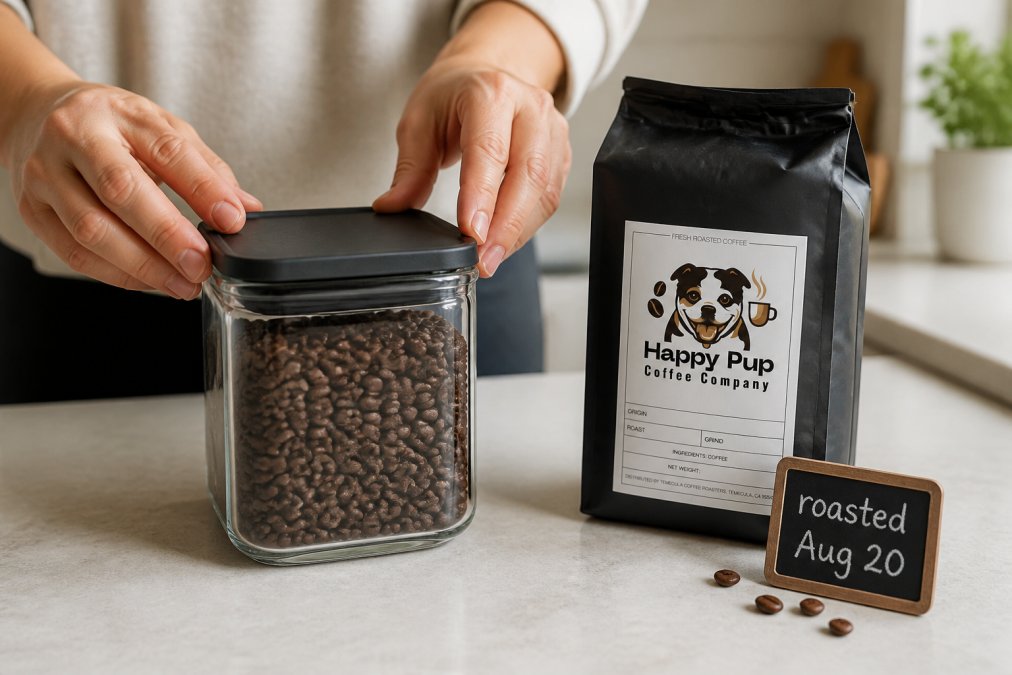
- Use an airtight container. Ceramic or stainless steel canisters with one-way CO2 valves are ideal.
- Keep beans at room temperature. Room temperature in a dark cupboard is correct; freezing introduces moisture through condensation.
- Buy in quantities you'll use within two weeks. Whole bean specialty coffee is at its best in the first 14 days after roast.
- Never store in the bag after opening. Transfer to a proper canister within a day or two of opening.
- Grind immediately before brewing. Pre-ground coffee loses most volatile aromatics within 15-30 minutes of grinding.
Sourcing, Ethics, and the Real Cost of Specialty Coffee Beans Online
Specialty coffee sourcing exists on a spectrum from commodity trading to direct relationships with individual farms. Where a roaster sits on that spectrum tells you about the quality and consistency of what you're buying.
Direct trade means the roaster has a direct financial relationship with the grower, often paying above Fair Trade floor prices in exchange for exclusive access to specific lots. As documented in the USDA's overview of specialty coffee supply chains, price premiums at the farm level are strong predictors of long-term bean quality and supply consistency.
Fair trade certification, administered through Fair Trade USA's certification standards, sets minimum price floors and labor standards for certified cooperatives. It's a meaningful baseline, but doesn't guarantee cup quality the way a direct trade relationship can.
When you buy specialty coffee beans online, the price reflects the full chain: farmer compensation, processing infrastructure, green coffee logistics, roasting labor, and shipping. A bag priced significantly below market signals that someone in that chain got squeezed.
Budget-Friendly Strategies: Sample Packs and Cost Per Cup
Sample packs are the smartest entry point for exploring specialty coffee without committing to full-size bags. Happy Pup Coffee Company's Best Sellers Sample Pack includes six 2oz packs for $24.99. The Single Origin Favorites Sample Pack offers six 2oz packs of the most popular single-origin offerings, also at $24.99.

A standard 12oz bag of specialty coffee yields approximately 22-24 cups at a standard brew ratio, typically working out to a cost per cup that compares favorably to a daily café purchase.
Water Chemistry: The Variable Most Coffee Buyers Ignore
Water chemistry is the single most underappreciated variable in home brewing. Coffee is approximately 98-99% water, and the mineral content, specifically magnesium and calcium levels, directly affects extraction efficiency and flavor clarity.
The Specialty Coffee Association's water quality standards recommend total dissolved solids between 75-250 mg/L, with a target of around 150 mg/L, and a pH of 6.5-7.5 for optimal extraction. Most municipal tap water falls within a usable range, but heavily softened or very hard water will noticeably impact results.
If your tap water tastes bad on its own, it will taste bad in your coffee. Filtered water or quality bottled water with a known mineral profile is a straightforward upgrade.
| Variable | What It Affects | Quick Fix |
|---|---|---|
| Roast date | Freshness and flavor complexity | Buy roast-to-order; use within 14 days |
| Grind size | Extraction rate and balance | Match grind to brew method; use burr grinder |
| Water quality | Extraction efficiency and clarity | Filter tap water or use mineral-balanced bottled water |
| Storage method | Shelf life and aroma retention | Airtight canister, room temperature, away from light |
| Brew ratio | Strength and body | Use a kitchen scale; start at 1:15 coffee to water |
Happy Pup Coffee Company is a veteran-owned and operated roaster committed to specialty-grade sourcing and freshness. If you're ready to move past grocery store coffee, the best first step is exploring the full catalog.
SHOP ALL COFFEE
Getting the most out of specialty coffee beans online requires attention to freshness, sourcing transparency, water quality, and brewing method alignment. Happy Pup Coffee Company makes that process straightforward: freshly roasted, specialty-grade beans shipped directly to your door, backed by the commitment to quality you'd expect from a veteran-owned operation. Start with the Best Sellers Sample Pack or the Single Origin Favorites Sample Pack, find your profile, and build from there.

Frequently Asked Questions
What defines specialty grade coffee beans?
Specialty grade coffee scores 80 points or above on a 100-point scale set by the Specialty Coffee Association. Trained Q Graders evaluate beans on attributes including aroma, acidity, body, flavor, and aftertaste. Beans must also have zero category-one defects and no more than five category-two defects per 350-gram sample. In practice, this means tighter sourcing, more careful processing, and a noticeably cleaner, more complex cup than commodity-grade coffee.
How can you tell if coffee beans are fresh when buying online?
Look for a roast date printed on the bag, not just a best-by date. Specialty coffee beans are at peak flavor roughly 7 to 21 days after roasting, once degassing slows. Roasters who ship roast-to-order are your best signal of freshness. Avoid bags with only a vague expiration date, no roast information, or that have sat in a warehouse. Sample packs are a low-risk way to test freshness from a new roaster before committing to a full bag.
Should I buy whole bean or pre-ground coffee online?
Whole bean specialty coffee beans stay fresh significantly longer than pre-ground because grinding exposes more surface area to oxygen. If you own a burr grinder, whole bean is the better choice every time. Grind size also varies by brewing method, so grinding fresh lets you dial in espresso, drip coffee, or pour-over precisely. Pre-ground is a reasonable convenience trade-off for single-serve machines or travel, but for peak flavor complexity, whole bean wins.
How does a coffee subscription service work?
A coffee subscription delivers freshly roasted beans on a schedule you set, typically weekly, bi-weekly, or monthly. Most services let you choose roast level, origin, and bag size. The best ones ship roast-to-order so beans arrive at peak freshness rather than sitting in inventory. Look for subscriptions that allow you to pause, skip, or swap selections without a penalty, especially if your consumption changes month to month.
This article was written using GrandRanker