


Table of Contents
- Coffee Roast Levels Explained: Light, Medium, and Dark
- Arabica vs. Robusta: What the Bean Type Actually Means
- Single Origin vs. Blend Coffee: Which Should You Choose?
- Coffee Bean Roast Date Importance and How to Read a Bag Label
- How to Choose Coffee Beans That Match Your Brewing Method
- How to Store Coffee Beans for Freshness and Shelf Life
- Sustainability, Sensory Training, and Getting the Best Value When You Choose Coffee Beans
- Conclusion
Last Updated: August 22, 2026
Knowing how to choose coffee beans is the single biggest variable between a cup you forget and one you think about all day. Most people grab whatever's on sale at the grocery store and wonder why their morning ritual feels like a chore. Once you understand a handful of fundamentals, selecting the right beans becomes intuitive. At Happy Pup Coffee Company, we work with specialty-grade coffee every day, and the questions we hear most often come down to roast level, origin, freshness, and storage. This guide covers all of it, clearly and without snobbery.
Coffee Roast Levels Explained: Light, Medium, and Dark
Roast level describes how long and at what temperature green coffee beans are subjected to heat, fundamentally changing the bean's flavor, acidity, body, and caffeine expression.
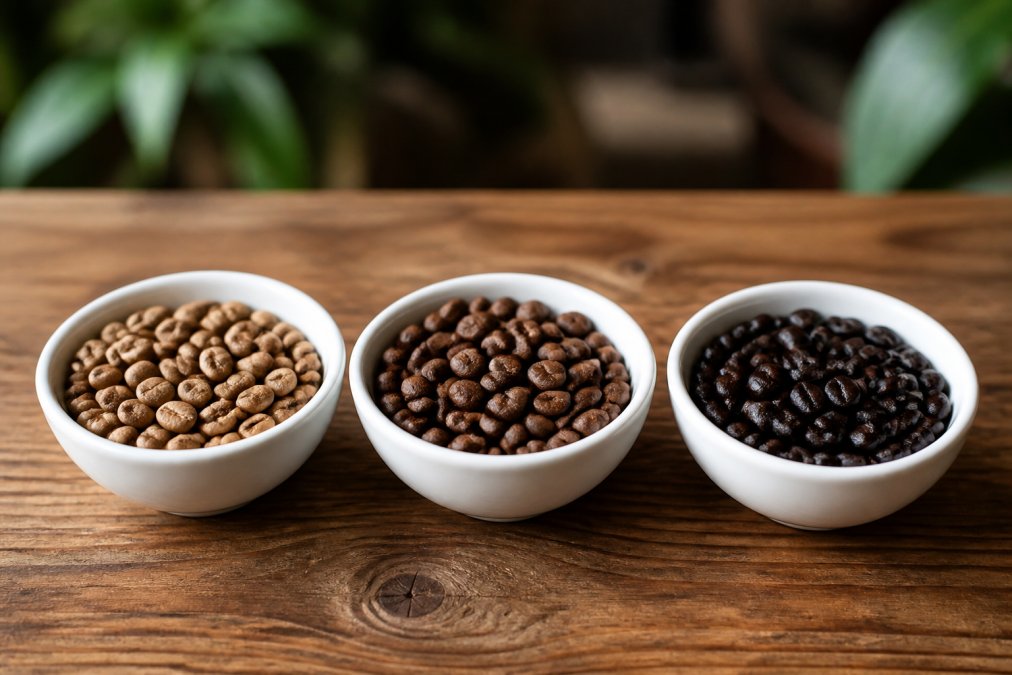
| Roast Level | Acidity | Body | Flavor Profile | Best Brewing Method |
|---|---|---|---|---|
| Light | High | Light | Fruity, floral, tea-like | Pour-over, AeroPress |
| Medium | Balanced | Medium | Caramel, nuts, mild fruit | Drip, French press |
| Dark | Low | Heavy | Chocolate, smoke, bitterness | Espresso, cold brew |
Light Roast: High Acidity, Complex Flavor Profiles
Light roast beans are pulled from the roaster early, preserving origin characteristics from altitude, soil, and processing method. The result is high acidity, lighter body, and tasting notes ranging from bright citrus to stone fruit to jasmine. Light roasts also contain slightly higher caffeine by volume. For pour-over or AeroPress brewing of single-origin Ethiopian or Colombian beans, light roast reveals terroir most clearly.
Medium Roast: The Balanced Middle Ground
Medium roast is the most forgiving choice for most brewing methods. Acidity softens, body fills out, and flavor lands between the bean's natural character and roasting sweetness. Caramel, toasted nuts, and mild fruit are common descriptors. For drip machines and French press, medium roast delivers consistent results without demanding precision. It's also most approachable for people transitioning from grocery-store coffee.
Dark Roast: Bold Body, Low Acidity
Dark roast shifts from origin character to roast character. Beans develop surface oils, heavy mouthfeel, and flavors skewing toward dark chocolate, smoke, and pronounced bitterness. Acidity drops significantly. For espresso-based drinks, dark roast holds up well under pressure and pairs naturally with milk. Quality dark roast should taste rich and complex, not burnt, burnt is a roasting mistake, not a roast level.
Arabica vs. Robusta: What the Bean Type Actually Means
Arabica dominates specialty coffee. It grows at higher altitudes, requires careful cultivation, and produces a sweeter, more nuanced cup with higher acidity and lower caffeine. Most quality-focused roasters work exclusively with arabica.
Robusta contains roughly twice the caffeine of arabica and grows more easily at lower altitudes. It produces a harsher, more bitter cup with a heavier body. It's cheaper to grow, which is why it dominates mass-market and instant coffee blends. Some Italian espresso traditions use small amounts of robusta intentionally, but specialty coffee avoids it.
If a bag doesn't specify arabica, it almost certainly contains robusta or a blend. Specialty-grade coffee, as defined by the Specialty Coffee Association grading standards, must score 80 or above on a 100-point cupping scale and sources exclusively from arabica.
Single Origin vs. Blend Coffee: Which Should You Choose?
Single-origin coffee comes from one defined source: a country, region, farm, or lot. Blends combine beans from multiple origins to achieve consistent, balanced flavor year-round.
Single-origin is right when you want to taste a growing region's specific character. An Ethiopian Yirgacheffe differs distinctly from a Guatemalan Antigua. Single-origin beans reward slower brewing methods that preserve complexity: pour-over, AeroPress, or well-dialed espresso. The tradeoff is seasonal availability and batch variation.
Blends prioritize consistency and balance. A well-crafted blend smooths sharp edges and delivers predictable cups across seasons. For espresso and milk-based drinks, blends often perform better because the roaster engineered the flavor profile for that extraction context.
A thoughtfully constructed blend from quality arabica sources outperforms a carelessly sourced single-origin every time.
Coffee Bean Roast Date Importance and How to Read a Bag Label
Roast date is the single most important piece of information on a coffee bag. Freshly roasted beans off-gas CO₂ for several days after roasting. Brewing too soon produces uneven extraction; waiting too long means aromatics have dissipated and coffee tastes flat.
Brew whole bean coffee between 5 and 30 days after the roast date. For espresso, wait at least 10 days for beans to settle. According to the Specialty Coffee Association's brewing resources, extraction quality is directly tied to the freshness window.
What to look for on the bag:
- Roast date (not a "best by" date)
- Origin information: country, region, farm, or cooperative
- Varietal: the specific arabica cultivar (Bourbon, Typica, Geisha, etc.)
- Processing method: washed, natural, or honey
- Altitude: often listed in meters above sea level
- Tasting notes: the roaster's cupping observations
If a bag only lists a "best by" date and a mountain illustration, you're looking at commodity coffee, not specialty coffee.
Processing Methods: Washed, Natural, and Honey
Processing method describes how the coffee cherry's fruit is removed from the bean after harvest, dramatically affecting the final flavor profile.
Washed (wet) process: Fruit is removed before drying, producing a clean, bright cup with high acidity and clear origin expression. Most Ethiopian and Central American specialty coffees use this method.
Natural (dry) process: The whole cherry dries with fruit intact, allowing sugars to ferment into the bean. The result is heavier body, lower acidity, and pronounced fruit flavors like blueberry, strawberry, or tropical fruit. Natural process coffees tend to polarize.
Honey process: A middle path. Some fruit mucilage remains during drying, producing a cup between washed clarity and natural sweetness. The name refers to the sticky texture during processing, not added sweetener.
Altitude, Growing Region, and Varietal
Altitude is a proxy for quality in arabica coffee. Higher elevations mean cooler temperatures, slower cherry development, and denser beans with more complex sugars and acids. The Coffee Quality Institute's origin research documents how altitude correlates with cup quality across major growing regions.
Growing regions carry signature flavor tendencies:
- Ethiopia: Floral, citrus, berry
- Colombia: Balanced, mild acidity, caramel and stone fruit
- Guatemala: Chocolate, spice, medium body
- Kenya: Bright, wine-like acidity, blackcurrant
- Sumatra: Earthy, low acidity, heavy body, herbal notes
Varietal refers to the specific arabica cultivar: Bourbon, Typica, Geisha, SL28, Pacamara. Geisha has become synonymous with exceptional floral complexity and commands higher auction prices.
How to Choose Coffee Beans That Match Your Brewing Method
Choosing coffee beans without considering your brewing method is like buying tires without knowing your car. Each method's extraction dynamics demand different grind sizes, roast levels, and bean characteristics.
Pour-over and drip: Light to medium roast, medium grind. These methods highlight acidity and delicate tasting notes, so single-origin arabica from Ethiopia or Colombia shines.
French press: Medium to dark roast, coarse grind. The immersion method produces heavier body and mouthfeel, complementing roasts with more body.
Espresso: Medium-dark to dark roast, fine grind. Espresso demands beans that handle high pressure and heat without turning bitter. Blends designed for espresso are engineered for this context.
Cold brew: Dark roast, coarse grind, long extraction. Cold water extracts differently than hot, so you need beans with enough body and sweetness to carry through dilution and ice.
Single-serve capsules: If using a capsule machine, grind size and dose are predetermined. The quality question becomes entirely about the beans inside. Happy Pup Coffee Company's single-serve capsules use the same specialty-grade arabica as the whole bean lineup.
How to Store Coffee Beans for Freshness and Shelf Life
Improper storage ruins good coffee. Whole beans are vulnerable to four enemies: oxygen, moisture, heat, and light.
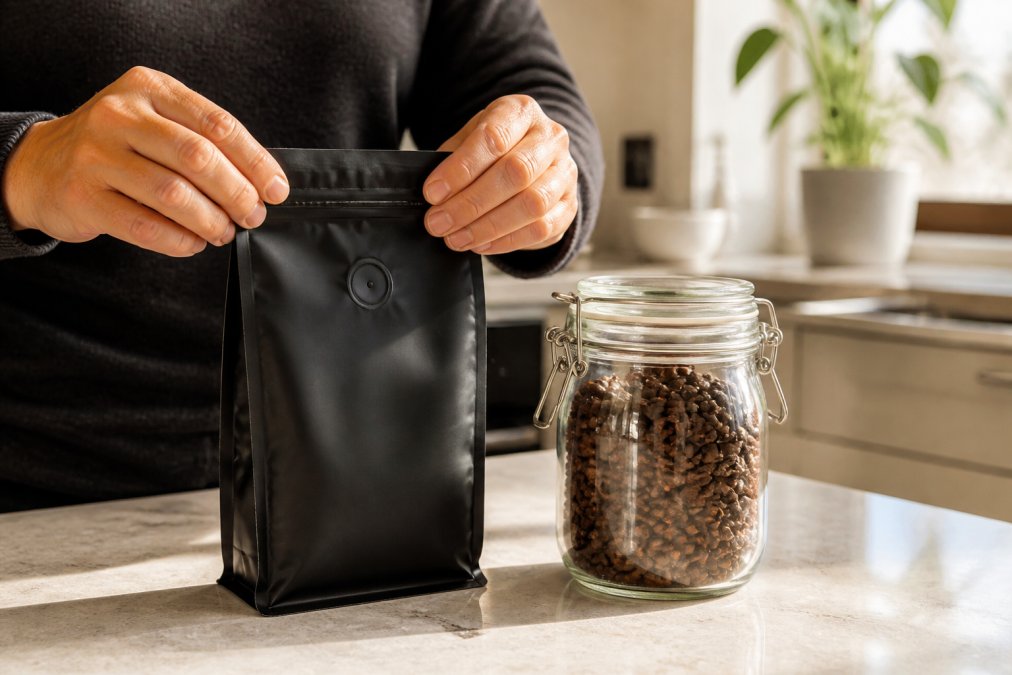
The one-way valve bags used by specialty roasters allow CO₂ to escape during degassing without letting oxygen in. Once opened, that protection is compromised.
Best practices for storage:
- Transfer beans to an airtight container with a one-way valve if not finishing the bag within a week
- Store at room temperature in a dark cabinet, away from heat sources
- Do not refrigerate whole beans: moisture cycling accelerates staling
- Freezing is acceptable for long-term storage only: freeze in airtight, single-use portions and never refreeze
- Buy quantities you'll use within two to three weeks of the roast date
Peak flavor shelf life is roughly 30 days from roast date. Pre-ground coffee stales significantly faster, typically within a week, because increased surface area accelerates oxidation.
Sustainability, Sensory Training, and Getting the Best Value When You Choose Coffee Beans
Fair Trade, Direct Trade, and Ethical Sourcing Labels
Fair Trade certification, administered through Fair Trade USA's certification standards, sets minimum price floors and social standards for producer cooperatives. It's meaningful but has limitations: minimum price floors don't always reflect actual market quality, and certification costs can exclude small farms.
Direct trade is not a formal certification. It describes relationships between roasters and specific farms where roasters negotiate directly, often paying above Fair Trade minimums in exchange for quality commitments and traceability. Many specialty roasters prefer direct trade because it creates accountability on both sides.
Rainforest Alliance and organic certifications address environmental practices rather than price equity. When choosing coffee beans with sustainability in mind, look for roasters who publish sourcing information: farm name, country, altitude, and price paid to producers. Transparency is the most reliable indicator of genuine commitment.
Training Your Palate Without a Cupping Lab
Sensory training doesn't require a professional cupping setup. Start by brewing the same bean two ways on the same day: pour-over and French press. Notice how mouthfeel, acidity, and tasting notes shift between methods. Then try two beans from different origins using the same method. The contrast between an Ethiopian natural and a Colombian washed is immediately apparent.
Keep a simple tasting journal. Write three words for each cup: one for aroma, one for the first sip, one for the aftertaste. Over a month, you'll build a personal flavor vocabulary that makes choosing beans far more intuitive.
Budget-to-Quality Ratio: Specialty vs. Grocery Store Coffee
Specialty coffee costs more per bag, and it's worth it. Grocery store coffee is sold in larger quantities at lower per-ounce prices, but roast dates are often months old by the time it reaches your cup. You're paying for volume, not quality or freshness. Specialty coffee, roasted to order and shipped directly, delivers a meaningfully different product.
Per-cup cost of specialty whole bean coffee brewed at home is competitive with almost any alternative short of commercial-scale espresso. The comparison that matters is specialty beans brewed at home versus a daily café habit, that math almost always favors buying quality beans and brewing yourself.
When choosing coffee beans from a specialty roaster, you're paying for sourcing relationships, roasting expertise, and freshness. Those aren't marketing abstractions; they're the variables that determine what ends up in your cup.
Choosing the right coffee beans gets easier with every bag you open deliberately. The biggest barrier isn't knowledge; it's the habit of defaulting to familiar labels without asking what's inside. Happy Pup Coffee Company sources specialty-grade arabica, roasts fresh, and delivers directly to your door, so beans arrive in their optimal freshness window. Whether starting with whole bean single-origins or exploring single-serve capsules, the quality standard stays consistent. Shop all coffee at Happy Pup Coffee Company and find the roast, origin, and format that fits how you actually drink.
Frequently Asked Questions
How do I find the right coffee beans for my taste preferences?
Start by identifying what you enjoy in a cup: bright and fruity, smooth and nutty, or bold and bitter. Light roasts from high-altitude single-origin farms tend to deliver more acidity and complex tasting notes. Medium roasts offer balance. Dark roasts lean toward bitterness with a heavier body. If you are unsure, a medium-roast blend is the most forgiving starting point while you develop your palate through repeated tasting and comparison.
Does the roast date matter when buying coffee beans?
Yes, roast date is one of the most important factors to check when you choose coffee beans. Freshly roasted beans release CO2 through a process called degassing for several days after roasting. The peak flavor window is generally 7 to 21 days after the roast date. Coffee bought from a grocery store often lacks a roast date entirely, which is a red flag. Always look for a clearly printed roast date, not a vague best-by date, and aim to brew within that fresh window.
What is the difference between single-origin and coffee blends?
Single-origin coffee comes from one farm, cooperative, or growing region, which makes the flavor profile more distinct and traceable. You will often notice specific tasting notes tied to that region's altitude, processing method, and varietal. Blends combine beans from multiple origins to create consistency and balance across batches. Blends are ideal if you want a reliable everyday cup. Single-origin is better when you want to explore specific flavor characteristics or support transparent sourcing.
What are the best coffee beans for beginners?
Beginners typically do best with a medium-roast arabica blend. Arabica beans have lower bitterness and more natural sweetness than robusta, making them more approachable. A blend smooths out any sharp edges from a single origin, so the cup is consistent and easy to enjoy without dialing in a precise grind or brew ratio. As your palate develops, you can branch into light-roast single-origin coffees or experiment with different processing methods like natural process for added sweetness and body.
How can you tell if coffee beans are high quality?
Specialty-grade coffee is evaluated on a 100-point scale by certified Q Graders; beans scoring 80 or above qualify as specialty. On the bag, look for a clear roast date, named growing region or farm, processing method, and varietal. Visually, quality whole beans should be uniform in size and color with no visible defects or broken pieces. The aroma should be distinct and pleasant, not flat or musty. Bags with one-way degassing valves also signal that the roaster cares about preserving freshness.
How do I store coffee beans to keep them fresh longer?
Keep whole beans in an airtight container away from light, heat, and moisture. A cool, dark pantry shelf works well. Avoid the refrigerator, where condensation and food odors affect flavor. Freezing is an option for long-term storage, but only freeze beans once and let them come fully to room temperature before opening the bag. Buy in quantities you will use within two to three weeks of the roast date, and grind only what you need immediately before brewing to preserve aroma and flavor.
This article was written using GrandRanker