


Table of Contents
- Why Proper Storage Keeps Your Coffee Fresh
- How Long Do Coffee Beans Stay Fresh?
- The Best Coffee Storage Containers for Your Kitchen
- Can You Freeze Coffee Beans? What to Know
- Step-by-Step: How to Store Coffee Beans Properly
- Common Storage Mistakes to Avoid
- Travel and Small-Space Storage Solutions
- Frequently Asked Questions
Last Updated: September 19, 2026
Why Proper Storage Keeps Your Coffee Fresh
Coffee starts losing flavor the moment it leaves the roaster. If you want to know how to store coffee beans properly, the answer comes down to blocking three things: oxygen, moisture, and light. Get those under control and your beans stay vibrant for weeks.
Here's what happens inside the bag. Roasted beans release carbon dioxide for days after roasting, a process called degassing (pubmed.ncbi.nlm.nih.gov). That gas pushes oxygen away from the bean. Once degassing slows, oxygen moves in and starts breaking down the oils that carry aroma and flavor. That breakdown is oxidation, and it's the main reason coffee tastes flat.
Happy Pup Coffee Company roasts in small batches and ships fast. Freshness is a clock, and storage is how you slow it down.
The three enemies, in order of damage:
- Oxygen: causes oxidation and dulls the flavor profile
- Moisture: invites staleness and muddies the brew
- Light: breaks down volatile compounds that create aroma
A good storage setup blocks all three at once. A bad one, like a folded bag on the counter, does almost nothing.
How Long Do Coffee Beans Stay Fresh?
Whole bean coffee stays at peak flavor for about 2 to 4 weeks after the roast date when stored in an airtight, opaque container away from heat. After that window, flavor fades fast even though the beans remain safe to brew.
The roast date matters more than the best-by date. A best-by date tells you when the package expires. A roast date tells you when the clock started. Always look for the roast date.
Peak Flavor Windows by Roast Level
Dark roasts peak earliest, usually within the first week, because the roasting process pushes oils to the surface where oxygen reaches them faster. Medium roasts hold their best flavor for roughly 1 to 2 weeks. Light roasts tend to last longest, often holding peak flavor for 2 to 3 weeks.
Humidity changes this.
Signs Your Beans Have Gone Stale
Your senses will tell you before any label does. Watch for these signals:
- No aroma when you open the container
- Flat, papery smell instead of sweet or fruity notes
- Oily, dull surface on beans that were once matte
- Weak crema when brewing espresso
- Thin, sour, or cardboard taste in the cup
If your coffee tastes like nothing, storage is the first suspect, not the beans.
The Best Coffee Storage Containers for Your Kitchen
The best coffee storage containers are airtight, opaque, and sized to hold about a week of beans. A container that's too big traps extra air, which speeds up oxidation.
Glass vs. Ceramic vs. Stainless Steel
Each material has trade-offs. Here's how they compare:
| Material | Light Blocking | Airtight | Best For |
|---|---|---|---|
| Glass | Poor unless tinted | Good with a valve lid | Home brewers who want to see the beans |
| Ceramic | Excellent | Good | Countertop display in a dark kitchen |
| Stainless steel | Excellent | Excellent | Daily use and travel |
Glass looks great but lets light through unless it's tinted or stored in a cupboard. Ceramic blocks light well but can chip. Stainless steel wins on durability and light blocking, which is why it's our default pick for everyday storage.
Why One-Way Valves Matter
A one-way valve is a small membrane that lets carbon dioxide out but keeps oxygen from getting in. Without it, gas builds up inside a sealed container and can pop the lid, or the pressure forces air out and back in when you open it.
Can You Freeze Coffee Beans? What to Know
Yes, you can freeze coffee beans, and it works well if you do it right. Freezing slows oxidation and preserves peak flavor for months rather than weeks.
The rules are simple:
- Freeze beans in small, airtight portions you'll use within a week
- Squeeze out excess air or use a vacuum seal
- Never refreeze beans after thawing
- Let frozen beans come to room temperature before grinding
Step-by-Step: How to Store Coffee Beans Properly
Follow these six steps and you'll preserve peak flavor far longer than a bag on the counter ever could.
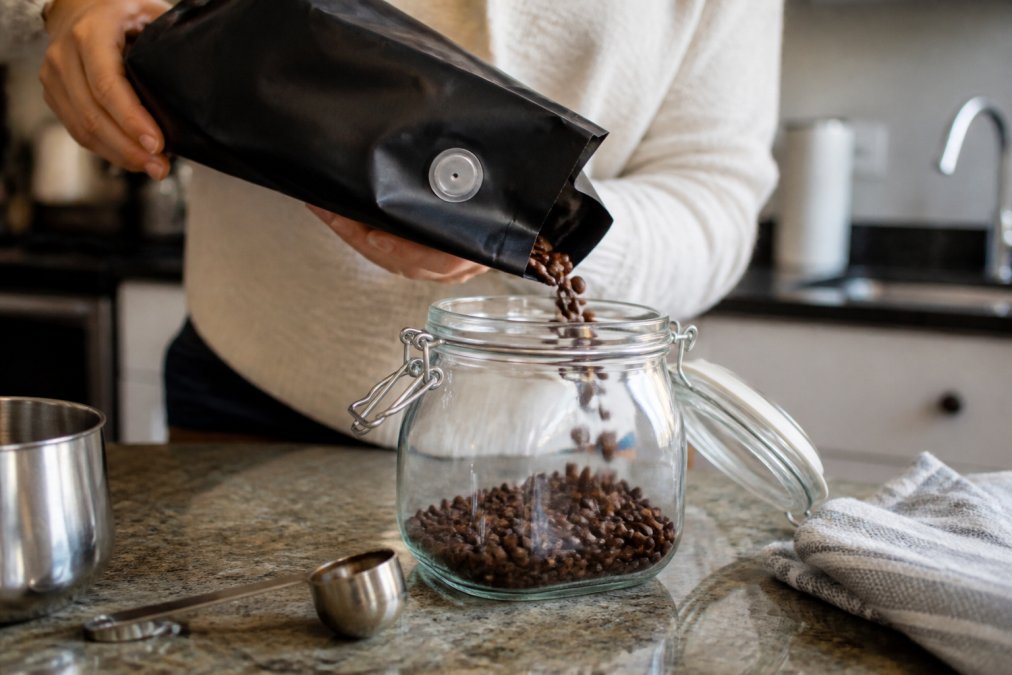
What you'll need:
- An airtight, opaque container with a one-way valve
- A cool, dark storage spot
- A grinder you'll use right before brewing
Common Storage Mistakes to Avoid
Most stale coffee comes from a handful of repeat mistakes. Fix these and you'll notice the difference within a day.
- Storing beans in the fridge. The fridge is humid and full of odors. Beans absorb both.
- Using a clear container on the counter. Direct sunlight and ambient light break down volatile compounds.
- Keeping beans in the hopper. A grinder hopper isn't airtight and exposes beans to air all day.
- Buying pre-ground coffee. Ground coffee stales in days, not weeks.
- Skipping the valve. A fully sealed jar traps gas and forces air in when you open it.
Travel and Small-Space Storage Solutions
Travel is where most storage advice falls apart. A container that works on your kitchen counter faces three new enemies on the road: pressure changes, humidity swings, and constant reopening. Here's how to handle each.
Why Travel Breaks Normal Storage Rules
Pressure changes. If you fly, cabin pressure drops. A rigid, fully sealed container with no valve can build internal pressure from residual degassing and pop its lid, or worse, force air out on the way up and suck humid cabin air back in on the way down. A one-way valve solves this by letting gas escape without letting air return.
Travel Storage Options That Actually Work
- Small stainless steel canisters with a one-way valve and threaded lid. Best for car trips and hotel stays. The valve handles pressure, the steel blocks light, and the threaded lid survives a backpack.
- Vacuum-sealed portions. Divide beans into single-day or single-brew portions before you leave. Vacuum sealing removes the air that drives oxidation, and each portion stays sealed until you open it. This is the strongest option for longer trips.
- One-way valve bags, reused. If you already have roaster bags with valves, they work for short trips. Roll them tight to push out excess air, then clip or tape the top.
- Single-serve capsules. For zero-fuss travel, capsules are pre-portioned and sealed. They trade peak freshness for convenience, but they beat a stale open bag every time.
Small-Kitchen and Small-Space Tactics
Limited counter space doesn't mean limited freshness. A few adjustments preserve quality without clutter:
- Store vertically, not on the counter. A closed cabinet or drawer blocks light and frees counter space. Beans don't need to be on display.
- Size containers to your brewing volume. A container holding about one week of beans limits the air sitting on top of them. In a small kitchen, two small containers beat one large one.
- Use stackable stainless steel canisters. They block light, seal tightly, and nest to save shelf space.
- Skip decorative glass jars on open shelves. If your kitchen gets bright afternoon sun, a clear jar on a shelf is one of the fastest ways to stale beans.
- Keep a small daily-use container and a larger reserve. Refill the small one weekly from the reserve, so the bulk of your beans is opened as rarely as possible.
A Simple Travel Checklist
- Portion beans before you leave, one bag or canister per few days.
- Choose a container with a one-way valve if you're flying.
- Keep beans out of checked luggage and hot cars; heat accelerates oxidation.
- Once a portion is opened, use it within a few days.
- Don't bring beans back and forth between freezer and room temperature, pick one and commit.
If you'd rather not think about any of this, freshly roasted beans delivered to your door can simplify things. Happy Pup Coffee Company roasts in small batches and ships direct, so your beans arrive close to their roast date. Our collection includes single-origin favorites, flavored blends, and convenient single-serve capsules for standard machines.
Frequently Asked Questions
Is it okay to store coffee beans in a Ziploc bag?
Ziploc bags are not ideal for long-term storage because they let in air and moisture. A sealed bag with a one-way valve offers better protection, but an opaque airtight container is best. If you must use a Ziploc, squeeze out excess air and keep it in a dark cupboard, but plan to use the beans within a week or two for the best flavor.
How long do roasted coffee beans stay fresh?
Whole roasted beans stay at peak flavor for about two to four weeks after the roast date when stored in an airtight container away from heat and light. After that, they slowly lose aroma and complexity. For the freshest cup, buy beans with a recent roast date and grind them right before brewing.
Should you keep coffee beans in the freezer?
Yes, you can freeze coffee beans to extend freshness, but only if you do it right. Use an airtight, opaque container and freeze in small portions you will use within a week or two. Avoid repeated thawing and refreezing, which introduces moisture and speeds up staleness. Let frozen beans come to room temperature before grinding.
Is it better to store coffee beans in glass or stainless steel?
Both work well if the container is airtight and opaque. Stainless steel blocks light completely, which protects beans from UV damage. Glass lets you see the beans but needs to be stored in a dark cupboard or be made of tinted glass. Ceramic is another good option because it is opaque and does not retain odors.