


Table of Contents
- What a Fresh Coffee Beans Delivery Service Actually Gives You
- Coffee Roast Dates Explained: Why They Matter More Than the Roast Level
- How to Choose Coffee Beans for Your Brewing Method
- How to Store Coffee Beans for Maximum Freshness After Delivery
- Cost-Per-Cup Analysis: Fresh Coffee Beans vs. Grocery Store Coffee
- Decaf and Low-Acid Options Worth Knowing About
- Fresh Coffee Beans Delivered Right: What to Look for in a Roaster
- Conclusion
Last Updated: August 24, 2026
What a Fresh Coffee Beans Delivery Service Actually Gives You
Fresh coffee beans delivered to your door is the single biggest upgrade you can make to your daily cup. At Happy Pup Coffee Company, we've built our entire model around one principle: specialty-grade beans roasted fresh and shipped directly to you, cutting out the weeks of warehouse storage that destroy grocery store coffee before it hits the shelf.
Coffee is perishable. Once roasted, beans begin releasing carbon dioxide and oxidizing. By the time a bag reaches a grocery store shelf, it may have sat in a distribution warehouse for weeks. A direct-to-door delivery model solves this by shipping within days of the roast, not weeks.
A fresh coffee beans subscription typically gives you:
- Beans roasted to order, often within 48-72 hours of shipping
- Transparent roast dates printed on every bag
- Customizable delivery frequency (weekly, biweekly, monthly)
- Access to specialty-grade arabica and single-origin lots not available at retail
- Direct trade and fair trade sourcing that supports growers directly
The difference in the cup is not subtle. Fresh beans produce a noticeably brighter aroma, more complex tasting notes, and fuller body. Stale beans produce flat, bitter coffee regardless of brewing care.
Single-Origin vs. Blends: Which Ships Best?
Both ship well when handled correctly, but they serve different drinkers.
Single-origin coffees highlight the flavor profile of one specific growing region. Happy Pup's Colombia, sourced from smallholder farmers in Medellín at 1,300-1,500 meters altitude, delivers tasting notes of dried orange, berry, and chocolate. These coffees reward drinkers who want to taste where their coffee comes from.
Blends prioritize consistency and balance. The Happy Pup House Blend, a medium roast combining select Central and South American coffees, is smooth, clean, and reliable. If you want the same great cup every morning without variables, a well-crafted blend is the smarter choice.

For delivery, single-origins can be slightly more sensitive to brewing variables. Blends are more forgiving.
Whole Bean vs. Pre-Ground for Delivery Orders
Whole bean is the right answer for anyone who cares about freshness. Pre-ground coffee exposes a dramatically larger surface area to oxygen, accelerating staling. A whole bean bag stays at peak flavor significantly longer than pre-ground.
Pre-ground is practical only for standard drip machines without a grinder. Brew it within two weeks of the roast date and store it properly.
The honest answer: buy a burr grinder. It's the single highest-return investment in your home coffee setup.
Coffee Roast Dates Explained: Why They Matter More Than the Roast Level
The roast date is the most important piece of information on a coffee bag. More important than roast level, origin, or price.
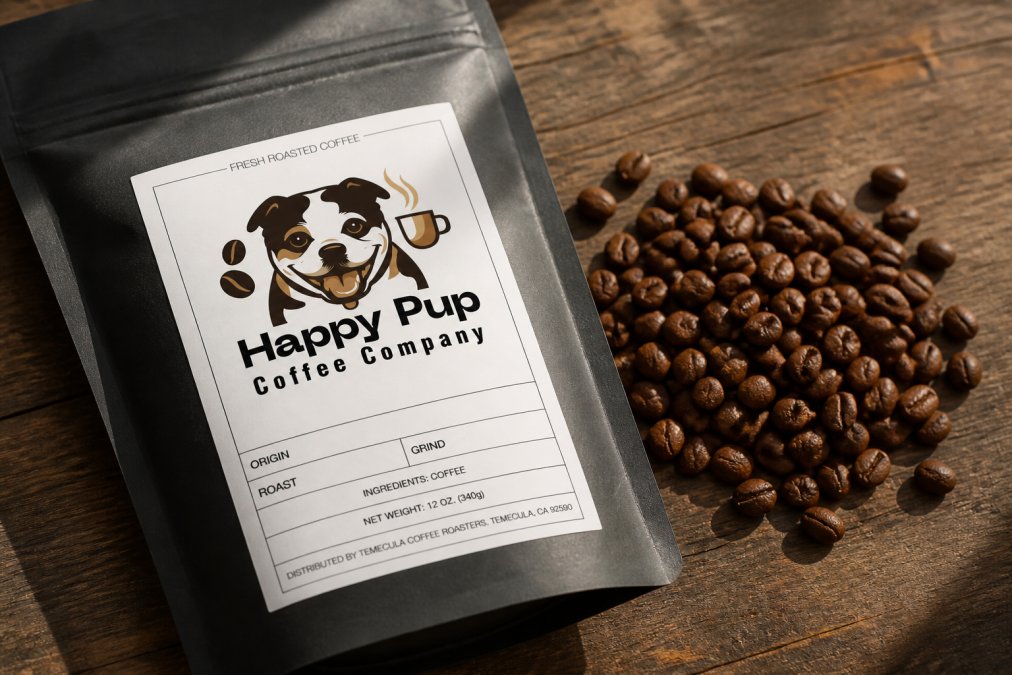
A roast date tells you exactly when beans were transformed from green to roasted. A "best by" date tells you almost nothing useful. Many mass-market bags use best-by dates with a 12-month window, obscuring the fact that coffee was roasted six months ago. Always look for the roast date specifically.
According to the Specialty Coffee Association's freshness guidelines, roasted coffee is at its best within a defined window after roasting. Beans from a fresh-roast delivery service should carry a roast date no more than a few days before shipping.
The Degassing Window: When Beans Are at Peak Flavor
Freshly roasted coffee is not immediately ready to brew.
Degassing is the process by which roasted beans release carbon dioxide produced during roasting. If you brew too soon, excess CO2 interferes with extraction, producing uneven, gassy-tasting coffee. The sweet spot depends on roast level and brewing method.
General degassing guidelines:
| Roast Level | Brewing Method | Recommended Rest After Roast |
|---|---|---|
| Light | Pour-over, filter | 7-14 days |
| Medium | Drip, Aeropress | 5-10 days |
| Medium-Dark | Espresso | 10-14 days |
| Dark | French press, drip | 3-7 days |
When your bag arrives, let it rest on the counter for a few days before brewing. You'll taste the difference.
One-way valve bags, which allow CO2 to escape without letting oxygen in, extend this window considerably. Look for them when evaluating any roaster's packaging.
How to Choose Coffee Beans for Your Brewing Method
The biggest mistake home brewers make is choosing beans based on bag design or origin story, then wondering why the cup doesn't taste right. Bean selection and brewing method must match.
Lighter roasts preserve more of the bean's natural acidity and complex flavor compounds. They work best with brewing methods that allow those flavors to express clearly. Darker roasts are lower in acidity, fuller in body, and more forgiving of extraction variables.
For a practical reference, the National Coffee Association's brewing guide covers optimal brewing parameters by method.
Matching Grind Size and Roast Profile to Your Equipment
Grind size is the primary variable controlling extraction speed. Getting it wrong makes even the freshest specialty beans taste terrible.
Espresso machines need a fine, consistent grind and perform best with medium to medium-dark roasts that have had adequate degassing time. Happy Pup's Brazil Santos, with its elegant cocoa notes, is a strong espresso candidate.

Pour-over and filter methods (Chemex, V60, Kalita) work beautifully with light to medium roasts, highlighting the brightness and complexity that single-origin coffees offer.
French press uses a coarse grind and full immersion. It's forgiving of darker roasts and produces a heavier body. Not the right method for a delicate light-roast single-origin.
Drip machines are the most flexible. A medium roast like the House Blend is the natural fit: consistent, balanced, and repeatable.
How to Store Coffee Beans for Maximum Freshness After Delivery
Storing coffee beans for maximum freshness starts with one rule: keep them away from air, light, heat, and moisture. These four elements destroy fresh coffee, and most kitchen environments expose beans to at least two of them by default.
The worst storage mistake is the refrigerator. Coffee is hygroscopic, meaning it absorbs odors and moisture from its surroundings. Refrigerators are full of both. If you're buying fresh beans on a regular delivery schedule, there's no need to freeze.
Best practices for post-delivery storage:
- Transfer beans to an airtight, opaque container immediately after opening
- Store at room temperature, away from the stove and direct sunlight
- Buy in quantities you'll use within two to three weeks of the roast date
- Never store beans in a clear glass jar on the counter
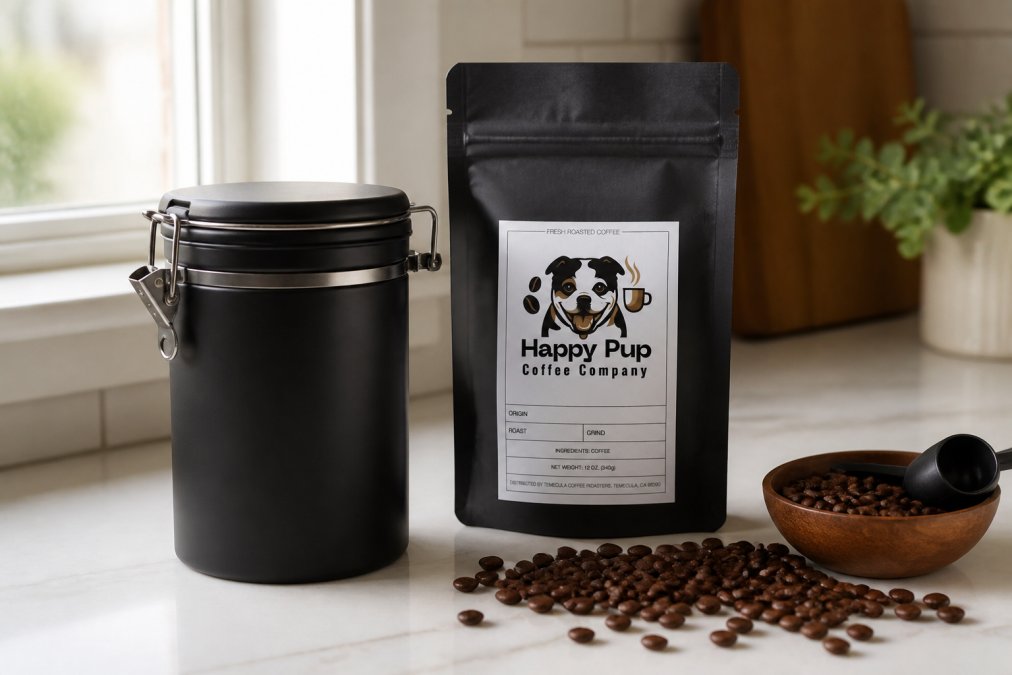
A subscription delivery matched to your actual usage is the most reliable freshness system.
Cost-Per-Cup Analysis: Fresh Coffee Beans vs. Grocery Store Coffee
Many people assume specialty fresh-roasted coffee is dramatically more expensive than grocery store options. The real cost-per-cup comparison is more nuanced.
A standard brewing ratio uses roughly 15-18 grams of coffee per 250ml cup. A 12-ounce (340g) bag yields approximately 19-22 cups depending on your brew ratio and method.
Happy Pup's House Blend at $21.99 for 12 ounces works out to roughly $1.00-$1.15 per cup. The Breakfast Blend at $29.99 comes in around $1.35-$1.58 per cup.

Compare that to a typical specialty coffee shop drink at $5-7 per cup, and the value picture shifts dramatically. You're getting specialty-grade coffee at a fraction of the cost of a café visit, with the freshness advantage that grocery store coffee simply cannot match.
Many grocery store bags labeled "premium" or "single-origin" carry no roast date, only a best-by date. The beans may have been roasted months before purchase. You're paying a premium price for a product already past its peak flavor window.
According to the Specialty Coffee Association's quality grading standards, specialty-grade coffee must score 80 points or above on a 100-point cupping scale. Mass-market grocery coffee rarely meets this threshold.
Decaf and Low-Acid Options Worth Knowing About
Decaf and low-acid coffees are underserved by most fresh-roast conversations, which focus exclusively on high-caffeine single-origins.
Decaf options from specialty roasters use water process or Swiss Water Process decaffeination, which removes caffeine without chemical solvents used in cheaper commercial decaf. The result is decaf that actually tastes like coffee, with preserved flavor compounds and proper tasting notes.
Low-acid options matter for drinkers with acid sensitivity, GERD, or those who find high-acid coffees uncomfortable. Several factors reduce perceived acidity:
- Darker roast levels (roasting breaks down chlorogenic acids)
- Lower-altitude growing regions (higher altitude produces higher acidity)
- Cold brew preparation (cold water extraction produces a noticeably lower-acid cup)
- Natural/dry process methods
Medium roasts from lower-altitude origins, like Happy Pup's Brazil Santos from the Paraná and São Paulo regions at 750-1,050 meters, tend to produce a smoother, less acidic cup than high-altitude Ethiopian or Kenyan single-origins.
Fresh Coffee Beans Delivered Right: What to Look for in a Roaster
Not all fresh-roast delivery services are equal. The term "freshly roasted" has no regulated definition.
Here's what to verify before committing to a subscription:
- Roast date on every bag: Non-negotiable. If a roaster can't tell you when beans were roasted, assume they don't want you to know.
- Roasted-to-order or small-batch roasting: Look for language indicating beans are roasted after your order is placed, not from pre-roasted inventory.
- Transparent sourcing: Direct trade and fair trade relationships with named farms or cooperatives signal quality control at the origin level.
- Cupping scores or grading information: Specialty-grade arabica should score 80+ on a cupping scale. Roasters who share this information are confident in their product.
- Packaging with one-way valves: Indicates the roaster understands degassing and is protecting beans in transit.
Happy Pup Coffee Company checks these boxes as a veteran-owned operation dedicated to specialty-grade sourcing. Every bag carries a roast date, and the product line spans single-origins with named growers and altitudes.
Troubleshooting Common Delivery Issues
A few problems come up regularly with fresh coffee bean deliveries. Most have straightforward fixes.
Coffee tastes sour or underdeveloped. The beans are too fresh, still deep in the degassing window. Let the bag rest, sealed, for 3-5 more days before brewing.
Coffee tastes flat or papery. The beans may have been exposed to air or stored improperly. Check that your storage container is actually airtight. If the bag arrived with a compromised seal, contact the roaster.
Delivery arrived later than expected. Shipping delays are outside a roaster's control once the package leaves the facility. A 2-3 day shipping delay on a bag roasted fresh is still a good outcome.
Grind size isn't producing the expected result. This is almost always a calibration issue, not a bean quality issue. Freshly roasted beans behave differently from stale beans at the same grind setting. Adjust in small increments and keep notes.
Bag arrived damaged. Document with photos and contact the roaster directly. Reputable operations will make it right.
| Issue | Likely Cause | Fix |
|---|---|---|
| Sour, underdeveloped flavor | Beans still degassing | Rest bag 3-5 more days before brewing |
| Flat, papery taste | Oxidation or stale beans | Check storage container seal; verify roast date |
| Bitter, over-extracted cup | Grind too fine or brew too long | Coarsen grind or reduce brew time |
| Weak, under-extracted cup | Grind too coarse or not enough coffee | Fine-tune grind; check dose ratio |
| Inconsistent results day to day | Grinder inconsistency | Calibrate burr grinder; use a scale |
Frequently Asked Questions
How do I know the coffee is actually fresh when it arrives?
Check the roast date printed on the bag, it should be within the past two weeks. Specialty roasters ship roasted-to-order batches, so the beans haven't been sitting in a warehouse. When you open the bag, fresh beans release carbon dioxide (CO2) and produce a strong aroma. Flat, odorless beans are a sign of age. Happy Pup Coffee Company roasts to order and ships directly to your door, so the roast date on every bag reflects when your coffee was actually made.
What should I look for in a coffee subscription service?
Prioritize roast-date transparency, flexible delivery frequency, and the ability to choose your roast profile and grind size. A good subscription lets you pause, skip, or swap selections without fees. Look for specialty-grade arabica beans with a cupping score above 80, direct-trade or fair-trade sourcing, and clear tasting notes on each product. Freshness guarantees and responsive customer support matter too, especially if a shipment arrives damaged or later than expected.
Can I order fresh coffee beans for home delivery without a subscription?
Yes. Most specialty roasters, including Happy Pup Coffee Company, sell individual bags as one-time purchases. A subscription saves you from reordering manually and often locks in a better price per bag, but it's not required. If you want to try a single-origin like the Colombia or Guatemala before committing to recurring orders, a one-time order is the simplest way to test the flavor profile and delivery experience first.
How long do freshly roasted coffee beans stay good after delivery?
Whole beans stored in an airtight container away from heat, light, and moisture stay at peak flavor for two to four weeks after the roast date. Pre-ground coffee degrades faster, typically within one to two weeks, because grinding increases surface area exposed to oxygen. Freezing whole beans in a sealed, airtight bag can extend shelf life to two or three months, but only freeze them once; repeated thawing introduces moisture that damages the flavor profile.
Is specialty-grade coffee actually worth the higher price per cup?
Specialty-grade beans score 80 or above on a 100-point cupping scale, which means they're evaluated for defects, aroma, acidity, body, and aftertaste before they're sold. At roughly $0.50-$0.75 per cup for a 12 oz bag of freshly roasted specialty coffee, the cost is comparable to a mid-range grocery store brand, and significantly cheaper than a daily café visit. The difference shows up in flavor complexity: tasting notes like dried orange, chocolate, or butterscotch are real, measurable characteristics, not marketing language.
What brewing methods work best with freshly roasted whole bean coffee?
Medium roasts with balanced acidity and body, like a washed Colombia or a natural-process Brazil Santos, work well across drip, pour-over, and French press. Espresso profiles benefit from beans rested 7-14 days post-roast so excess CO2 has degassed. Coarser grinds suit French press and cold brew; finer grinds suit espresso and moka pot. Matching grind size to your brewing method has a bigger impact on cup quality than almost any other variable.
Fresh coffee beans delivered to door is one of the simplest upgrades a coffee drinker can make, and the barrier is lower than most people expect. Happy Pup Coffee Company offers specialty-grade single-origins like the Colombia and Guatemala alongside approachable blends like the House Blend and Breakfast Blend, all roasted fresh and shipped directly to your door. SHOP ALL COFFEE and experience the difference a real roast date makes.
This article was written using GrandRanker