


Table of Contents
- Why Your Coffee Tastes Bitter After Brewing: The Main Causes
- Over-Extraction vs. Under-Extraction: What You're Tasting
- How to Fix Bitter Coffee: A Step-by-Step Troubleshooting Checklist
- Coffee Grind Size for Brewing: Getting It Right
- Coffee-to-Water Ratio: The Measurement That Changes Everything
- Water Temperature and Quality: The Variables Most People Ignore
- Is It Your Technique or Your Beans? Bitterness vs. Roast Profile
- Best Coffee for a Smooth Taste: What to Look For
- Frequently Asked Questions
Last Updated: October 5, 2026
Why Your Coffee Tastes Bitter After Brewing: The Main Causes
If your coffee tastes bitter after brewing, the cause is almost always over-extraction: hot water pulling too many harsh compounds out of the grounds.
Bitterness is not random. It follows rules.
Over-extraction is the term for pulling too much out of the coffee grounds. Water is a solvent.
Here's what most guides get wrong: they blame the beans first.
The good news? Every cause has a fix. Below, we'll show you exactly how to find yours.
Over-Extraction vs. Under-Extraction: What You're Tasting
Over-extraction tastes bitter, dry, and harsh. Under-extraction tastes sour, thin, and salty. Your tongue is the fastest diagnostic tool you own.
Think of extraction as a scale from 0 to 100. Early in the brew, you get fruity acids. Midway, sweetness and balance arrive.
Here's the part that changes everything: sour and bitter are opposite problems. If your coffee tastes sour, you need more extraction, not less.
| What You Taste | What It Means | First Fix to Try |
|---|---|---|
| Sour, thin, salty | Under-extraction | Grind finer |
| Bitter, dry, harsh | Over-extraction | Grind coarser |
| Both sour and bitter | Uneven extraction | Improve technique |
How to Fix Bitter Coffee: A Step-by-Step Troubleshooting Checklist
Fixing bitter coffee comes down to changing one variable at a time until the harshness fades. Change everything at once and you'll never know what worked.
Use this decision tree instead of a flat list.
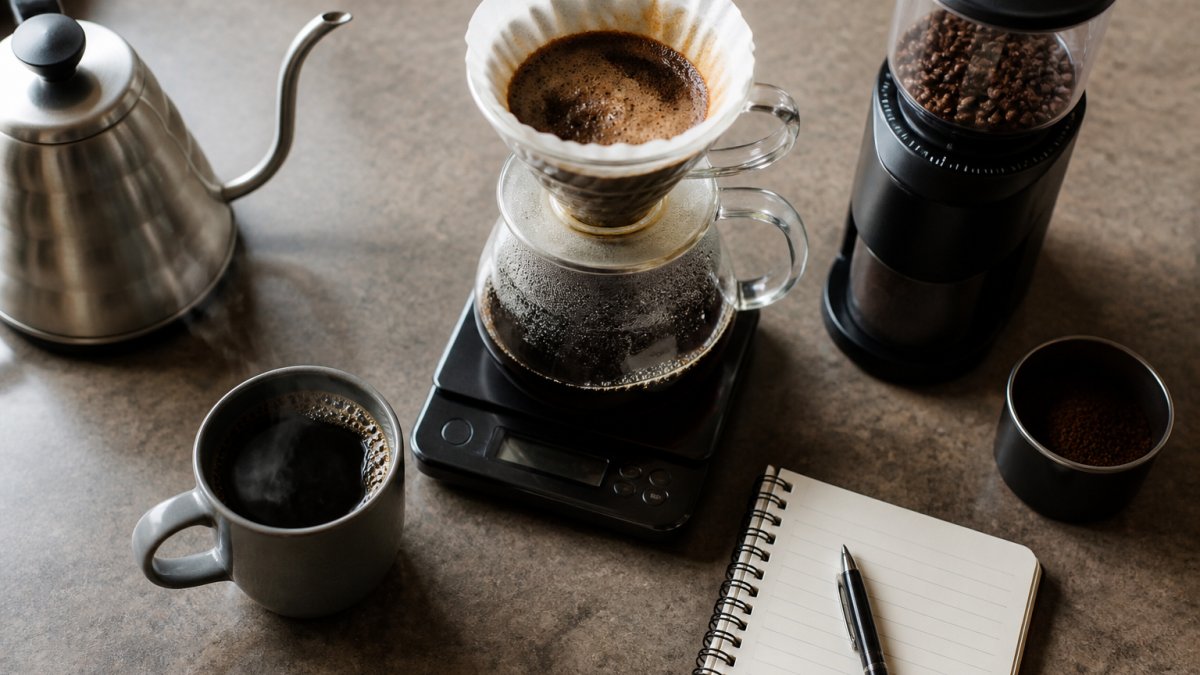
Step 1: Diagnose Before You Adjust
Ask one question: is the cup only bitter, or is it bitter and sour at the same time?
- Only bitter, dry, harsh → classic over-extraction. Go to Step 2.
- Bitter and sour together → uneven extraction. Go to Step 5.
- Bitter but weak or watery → too little coffee for the water. Go to Step 4.
- Bitter only in the last few sips → channeling or a dirty machine. Go to Step 6.
Step 2: Grind Coarser (The First Lever)
If the cup is purely bitter, grind size is the highest-probability fix. Move one setting coarser on your grinder and brew again. On a burr grinder, one click or one number. On a blade grinder, pulse one fewer time.
If the bitterness fades but the cup goes sour, you overshot, split the difference.
Step 3: Drop the Temperature
If grind adjustments don't move the needle, lower your brew water by about 5°F. Bitterness from heat is common with dark roasts, which extract faster than light roasts at the same temperature.
Step 4: Check Your Ratio
Weigh your grounds and your water. If you're under 1:15 (too little coffee), the water over-extracts what's there and turns bitter. Move toward 1:16, then 1:17 if bitterness persists. If you're already at 1:17 and still bitter, ratio isn't your problem, go back to grind.
Step 5: Fix Uneven Extraction
Bitter-and-sour cups mean part of the bed over-extracted while the rest under-extracted. Common causes:
- A blade grinder producing dust and chunks → switch to a burr grinder
- Pouring water in one spot instead of a slow spiral → distribute the pour
- A clogged filter or fine-heavy bed → check the coffee bed after brewing
Step 6: Clean and Descale
If bitterness shows up only late in the cup, or builds over weeks of brewing, your equipment is the likely cause. Old oils and mineral scale cause channeling. Descale your machine, backflush if it supports it, and rinse your carafe and filter basket with hot water after every brew.
Step 7: Rule Out the Beans
If you've worked through Steps 2-6 and the cup is still harsh, the roast is the answer. Dark roasts carry bitter notes by design. Try a medium roast from the same origin and see if the harshness disappears.
A common mistake is adjusting two things at once. You'll get a better cup and have no idea why, which means you can't repeat it tomorrow.
Adjust One Variable at a Time
Change one thing, taste, then decide. If you're using single-serve capsules, your grind is already set, so focus on temperature, water quality, and machine care instead. Our 12 Pack Single Serve Coffee Capsules are sealed with no oxygen inside, so the coffee stays fresh and the flavor stays consistent from cup to cup.

Coffee Grind Size for Brewing: Getting It Right
Coffee grind size for brewing is the single biggest lever you control. Too fine means over-extraction and bitterness. Too coarse means a weak, sour cup.
A burr grinder crushes beans to an even size. A blade grinder chops them into a mix of dust and chunks, which causes uneven extraction. Part of the coffee bed over-extracts while the rest under-extracts. You taste both at once.
12 Pack Single Serve Coffee Capsules →
Match your grind to your brew method:
- Espresso: fine, like powdered sugar
- Pour-over: medium-fine, like table salt
- Drip: medium, like sand
- French press: coarse, like sea salt
How to Check Your Grind Without a Microscope
Rub a pinch between your fingers and compare it to salt or sand. Check the coffee bed after brewing. If it's muddy and clogged, grind coarser. If water runs straight through, grind finer.
Coffee-to-Water Ratio: The Measurement That Changes Everything
The right coffee-to-water ratio is about 1 gram of coffee to 15 to 18 grams of water. This brew ratio controls strength and extraction together.
Too little coffee and the water over-extracts what's there, which turns bitter.
A basic kitchen scale removes all the guesswork. Weigh your grounds, then weigh your water. A good starting point is 1:16.
Water Temperature and Quality: The Variables Most People Ignore
Water temperature and water quality cause more bitter coffee than most people realize. Both are invisible, so both get ignored. But water is roughly 98% of your cup, and its chemistry decides which compounds the water can pull out of the grounds.
Temperature: The Narrow Window
Ideal brewing temperature sits between 195°F and 205°F, the range the Specialty Coffee Association cites for drip brewing. Water that's too hot scorches the grounds and pulls out harsh compounds. Water that's too cool leaves you with a sour, weak cup.
Temperature is also the fastest variable to test. Drop your brew water by 5°F and taste. If the bitterness softens without going sour, you were running hot.
Water Chemistry: The Part Almost Nobody Explains
"Use filtered water" is the advice every guide gives. It's also incomplete. What matters is which minerals are in the water and how much.
- Magnesium binds to coffee compounds aggressively and pulls out fruity, sweet, and, past a point, bitter notes. A little magnesium is good. Too much accelerates extraction and tips you into bitterness.
- Calcium is a milder extractor. It contributes body and rounds out flavor, but high calcium plus high alkalinity can mute acidity and leave a flat, chalky, sometimes harsh cup.
- Alkalinity (bicarbonate) is the buffer. High-alkalinity water neutralizes coffee's natural acids, so the cup tastes dull and the roast's bitter notes stand out with nothing to balance them.
- Total dissolved solids (TDS) is the sum. Very high TDS water tastes mineral-heavy on its own, and that mineral load reads as bitterness in the cup.
A useful target range most practitioners aim for: TDS around 75-125 ppm, with alkalinity near 40 ppm. You don't need a lab. A $15 TDS meter tells you whether your tap water is in the ballpark, and a simple carbon filter (not a water softener, softeners swap calcium for sodium and can make coffee taste flat) handles most municipal water problems.
Clean Equipment: The Hidden Bitterness Source
Old oils and mineral buildup cause channeling, where water finds a path through the coffee bed instead of soaking it evenly. The over-extracted channels taste bitter while the rest of the bed under-extracts. Descaling your machine monthly (more often in hard-water areas) and rinsing your gear after every brew keeps every cup tasting the way it should.
Is It Your Technique or Your Beans? Bitterness vs. Roast Profile
Sometimes the bitterness is in the bean, not your brewing. Roast level decides how much bitterness a coffee can deliver before you even grind it.
Dark roasts carry smoky, bold bitter notes by design. If you brew a dark roast perfectly and still find it harsh, the roast is the answer, not your technique.
Here's the simple test: brew the same beans two ways. Tighten your technique first. If the bitterness fades, it was extraction. If it stays, it's the roast level.
Best Coffee for a Smooth Taste: What to Look For
The best coffee for a smooth taste is a medium roast with a clean, balanced flavor profile.
Look for these markers:
- Medium roast level
- Tasting notes like caramel, cocoa, or honey
- A named origin or grower
- A recent roast date
Medium roasts from Peru, Mexico, and Colombia tend to cup smooth and sweet. If you want to find your favorite without committing to a full bag, our Best Sellers Sample Pack and Single Origin Favorites Sample Pack let you taste several roasts side by side, which makes it easy to spot which ones turn bitter in your setup and which stay smooth.


Freshness matters too. Coffee loses its best flavors as it ages, and stale beans can taste flat or harsh no matter how well you brew.
Bitterness in coffee is a solvable problem, not a permanent one. Work through grind, ratio, temperature, and cleanliness one variable at a time, and most harsh cups turn smooth within a few brews.
Frequently Asked Questions
How do I fix bitter coffee after brewing?
Start by coarsening your grind one setting at a time. If that doesn't help, check your coffee-to-water ratio; too little coffee relative to water can pull harsh compounds. Lower your water temperature to between 195-205°F if you're brewing near boiling. Also taste your water on its own. If it has a strong mineral or chlorine flavor, that carries into the cup. Change one variable per brew so you know what fixed it.
Can a grind that is too fine make coffee taste bitter?
Yes. A fine grind increases the surface area of coffee grounds exposed to water, which speeds up extraction. When extraction runs too far, you pull bitter compounds from the coffee bed. If your coffee tastes harsh and astringent, try a coarser setting on your burr grinder. For drip and pour-over, a medium grind works well. For French press, go coarse. For espresso, fine is correct, but bitterness there usually points to water temperature or brew time instead.
Does brewing coffee for too long make it bitter?
It can. Contact time between water and coffee grounds determines how much gets extracted. When brew time runs long, especially with a fine grind, you extract bitter notes and astringency along with the flavors you want. French press is the most common culprit because the grounds sit in water the whole time. Aim for a 4-minute steep, then press and pour immediately. Drip brewers should finish a cycle in 4-6 minutes. Longer than that usually means the grind is too fine or the filter is clogged.
What kind of coffee is least bitter?
Medium and medium-light roasts tend to taste smoother than dark roasts because the roasting process hasn't pushed the beans as far into smoky, bitter territory. Single-origin coffees from regions like Peru, Colombia, or Ethiopia often have natural sweetness and fruit-forward tasting notes that balance bitterness. If you want a reliable starting point, a medium-roast single origin or a smooth breakfast blend gives you a clean cup without the harsh edge. Freshness matters too. Beans roasted within the last two to four weeks taste noticeably smoother than older coffee.