


Table of Contents
- Light Roast vs Dark Roast Coffee at a Glance
- What Is a Light Roast?
- What Is a Dark Roast?
- Flavor Profile Differences: Light Roast vs Dark Roast Coffee
- Caffeine Content in Light vs Dark Roast
- Best Brewing Methods for Light Roast Coffee
- How Roast Level Affects Health and Antioxidants
- Frequently Asked Questions
Last Updated: October 1, 2026
Light Roast vs Dark Roast Coffee at a Glance
The light roast vs dark roast debate comes down to one thing: how far the beans traveled into the roaster. That single decision shapes acidity, body, sweetness, and how you should brew the coffee. At Happy Pup Coffee Company, we roast both ends of the spectrum, so we have no stake in picking a side. This comparison gives you the flavor profiles, the caffeine facts, and the brewing methods that actually suit each roast.
Here is the short version before the details:
| Factor | Light Roast | Dark Roast |
|---|---|---|
| Roast degree | Stopped early, before second crack | Roasted past second crack |
| Acidity | Higher, brighter | Lower, softer |
| Body | Lighter, tea-like | Heavier, syrupy |
| Flavor notes | Floral, fruity, citrus | Chocolatey, smoky, earthy |
| Surface | Dry, matte | Oily sheen |
| Best brew method | Pour-over, drip | Espresso, French press |
| Caffeine | Slightly more by weight | Slightly less by weight |
What Is a Light Roast?
A light roast is coffee pulled from the roaster shortly after first crack, when the bean has expanded but not yet darkened. Roasters stop the process while the bean's internal temperature sits in a range that preserves delicate acids and sugars.
How Light Roasting Affects Flavor Development
Flavor development in a light roast is mostly about what the roaster does not do. The sugars caramelize lightly, the acids stay intact, and the bean keeps the compounds that carry its origin story.
What Is a Dark Roast?
A dark roast is coffee roasted well past second crack, until the bean's surface oils migrate outward and the color turns nearly black. At that point, the roast flavor itself becomes the dominant taste.
Caramelization and Oil Development in Dark Roasts
Two changes define a dark roast. First, caramelization and the Maillard reaction run to completion, converting sugars into the bittersweet, chocolatey compounds people associate with dark coffee. Second, oils migrate to the surface, which is why dark beans look shiny and feel slick.
Flavor Profile Differences: Light Roast vs Dark Roast Coffee
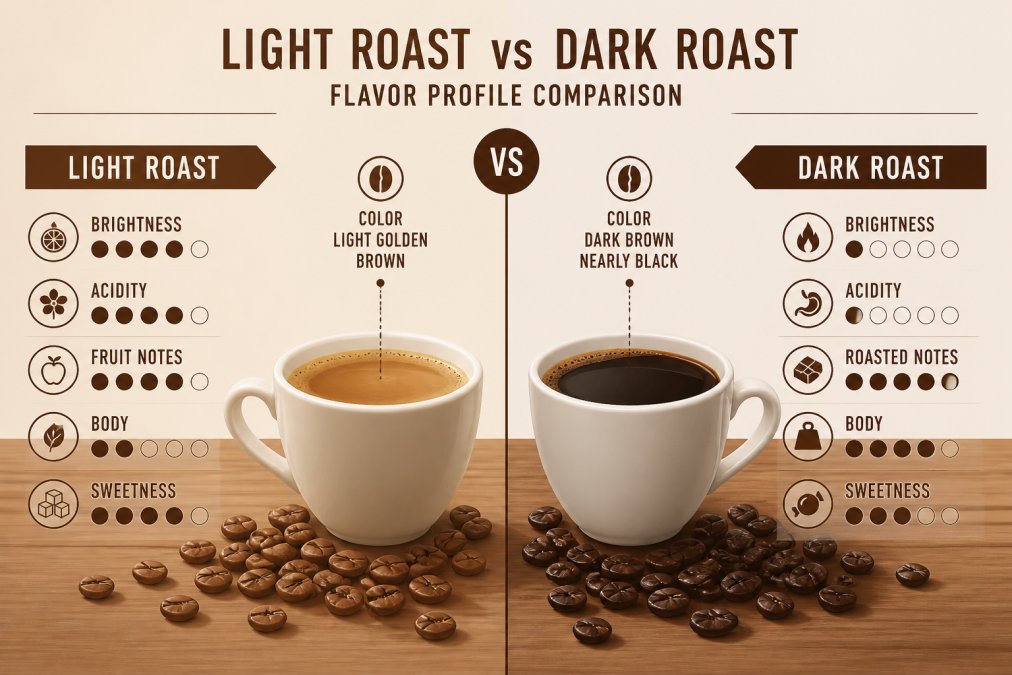
The core difference in light roast vs dark roast coffee flavor profiles is what sits in the cup: origin or roast. Light roasts taste like the bean's terroir, with brightness and fruit. Dark roasts taste like the roasting process, with smoke, cocoa, and caramel.
Understanding Coffee Acidity Levels by Roast
Acidity in coffee is not the same as stomach acid, and it is not a flaw. It is the brightness that makes a cup taste lively rather than flat. Roasting destroys acids gradually, so light roasts carry more of them and dark roasts carry less.
Body, Mouthfeel, and Aftertaste
Body is the weight of the coffee on your palate, and roast level drives it. Light roasts tend to feel lighter and more tea-like. Dark roasts feel heavier and syrupy because the oils and caramelized compounds add texture.
Caffeine Content in Light vs Dark Roast
Caffeine content in light vs dark roast is the most misunderstood part of this comparison. The short answer: roast level barely changes caffeine at all. The roasting process does not destroy caffeine in any meaningful way, so the difference between a light and dark bean of the same origin is small.
The Volume vs. Weight Trap
Here is where most people go wrong. If you scoop coffee by volume, a tablespoon, a scoop, a full basket, you are measuring space, not mass. A scoop of dark roast holds fewer coffee grounds by weight than a scoop of light roast, because each dark bean is lighter and the scoop fills with more air and fewer solids.
That means:
- By volume (scoops): A scoop of dark roast and a scoop of light roast land in roughly the same caffeine range. The lighter beans weigh more per scoop, but the darker beans extract slightly more efficiently, and the two effects largely cancel out.
- By weight (grams): A light roast delivers slightly more caffeine, because more beans fit into the same weight. If you weigh 18 grams of each, the light roast contains more caffeine.
What Actually Moves Caffeine
- Species: Robusta beans contain roughly twice the caffeine of Arabica beans. A dark-roasted Robusta blend can out-caffeinate a light-roasted Arabica single origin every time.
- Dose: How much coffee you use, by weight, is the single biggest variable in your cup.
- Brew method: Espresso concentrates caffeine into a small volume, while drip and pour-over spread it across a larger cup. A strong-tasting dark espresso shot may carry less total caffeine than a mild-tasting large drip coffee.
- Grind and contact time: Finer grinds and longer contact times extract more caffeine, regardless of roast.
Roast level is a flavor decision, not a caffeine decision. Treat it that way and the whole debate gets simpler.
Best Brewing Methods for Light Roast Coffee
Light roasts are denser and less soluble than dark roasts, so they need more help from the brewer to taste right. The best methods for light roast coffee are pour-over, drip, and any approach that rewards clarity and control. The reason is mechanical: light beans have tighter cell walls and less surface oil, so water has a harder time pulling out the sugars and acids that make the cup taste sweet instead of sour.
A few practical adjustments:
- Water temperature: aim for 200-205°F. Light roasts need the top of the range to break down their denser structure.
- Grind size: go finer than you would for a dark roast. A finer grind increases surface area and compensates for the bean's resistance.
- Ratio: start at 1:16 coffee to water by weight, then adjust. If the cup tastes sour or thin, grind finer before you add more coffee.
- Brew time: expect a slightly longer contact time. Light roasts reward patience; cutting the brew short leaves them underdeveloped.
How Your Brewer Changes the Same Roast
- Pour-over: The paper filter traps oils and sediment, so it highlights acidity and clarity. A light roast brewed pour-over tastes bright and tea-like. A dark roast brewed pour-over often tastes thinner and more muted because the oils that carry its chocolate and smoke notes never make it into the cup.
- French press: The metal mesh lets oils and fine particles through, so it amplifies body and texture. A dark roast brewed French press tastes heavy, rich, and syrupy, often the best showcase for its flavors. A light roast brewed French press can taste muddy and flat because the oils coat the palate and bury the delicate fruit and floral notes.
- Espresso: Pressure and a fine grind extract aggressively. Dark roasts handle this well because their oils and caramelized compounds dissolve easily, which is why they dominate espresso blends. Light roasts can work as espresso, but they usually need a finer grind, a longer shot, and a hotter machine to avoid sourness.
- Cold brew: Low temperature and long time favor dark roasts, which give up their sugars and oils readily. Light roasts often taste underdeveloped in cold brew unless you use a finer grind and a longer steep.
Matching roast to method is the fastest upgrade most people can make. Buy the roast your brewer was built for, and you spend less time fighting the cup.
How Roast Level Affects Health and Antioxidants
Roast level affects the antioxidant compounds in coffee, though the picture is mixed. Chlorogenic acid, one of coffee's main antioxidants, degrades as roasting continues, so lighter roasts generally retain more of it.
Frequently Asked Questions
Which has a stronger flavor, light roast or dark roast coffee?
Dark roast coffee typically tastes stronger because roasting longer develops bold, smoky, and bittersweet notes while muting the bean's original origin flavors. Light roasts preserve more of the bean's natural character, including floral, fruity, and bright acidic notes. The perception of strength also depends on your brewing method and grind size. A light roast brewed as espresso can taste intense, while a dark roast brewed as drip may taste smooth and mild.
Does light roast coffee have more caffeine than dark roast?
By weight, light roast beans retain slightly more caffeine because caffeine degrades marginally during prolonged roasting. However, the difference is small and rarely noticeable in a finished cup. When measured by volume, dark roast beans lose more moisture and become less dense, so a scoop of dark roast may contain fewer beans than the same scoop of light roast. What matters most for caffeine content in light vs dark roast is how much coffee you actually use per cup.
Is dark roast coffee less acidic than light roast?
Yes, coffee acidity levels by roast show that longer roasting breaks down many of the acids responsible for brightness. Dark roasts like Happy Pup's French Roast offer low acidity and a bittersweet, smooth flavor. Light roasts retain more chlorogenic and citric acids, which produce the bright, tangy notes many coffee enthusiasts enjoy.
How do I choose the best coffee roast for my brewing method?
The best brewing methods for light roast coffee include pour-over and drip, where hot water extracts the delicate floral and fruity notes over a longer contact time. Dark roasts work well in espresso machines, French presses, and moka pots because their oils and bold flavors hold up to high pressure and short extraction. If you use a standard drip machine at home, a medium-light blend like Happy Pup's Breakfast Blend offers a balanced cup that suits most palates.
What are the primary flavor notes associated with light roast coffee?
Light roasts highlight the bean's origin, so flavor notes range widely. Happy Pup's Ethiopia Natural, a medium-light roast, delivers milk chocolate, fruity, and caramel notes from heirloom cultivars grown in the Sidama zone. The Tanzania medium-light roast brings pear, floral, jasmine, and strawberry notes from the Mbeya region. These bright, layered flavors come from terroir and processing rather than the roast itself, which is why light roast enthusiasts often explore single-origin coffees.
Choosing between light and dark roast is really a choice about what you want from a cup: the bean's origin or the roaster's craft. Happy Pup Coffee Company roasts both, from the bright, fruit-forward Ethiopia Natural to the deep, bittersweet Italian Roast, and delivers them fresh to your door. Every bag is specialty-grade, and every order supports a veteran-owned and operated business. Get started with Happy Pup Coffee Company and find the roast that fits your morning.