


Table of Contents
- Quick Comparison: The 10 Best Coffee Brewing Methods
- 1. Pour-Over: Clarity and Control in Every Cup
- 2. French Press: Full-Bodied Immersion Brewing
- 3. Cold Brew: Smooth, Low-Acid Extraction
- 4. Espresso: Pressure and Precision
- 5. Drip Coffee Machine: Consistent and Convenient
- 6. Moka Pot: Stovetop Intensity
- 7. AeroPress: Versatile and Fast
- Matching Grind Size and Water Temperature to Your Method
- Beyond the Basics: What Most Guides Skip
- Brewing by Roast Profile: A Quick Guide
- Frequently Asked Questions
Last Updated: September 28, 2026
Quick Comparison: The 10 Best Coffee Brewing Methods
Great coffee is not about expensive equipment. It is about controlling four variables: grind size, water temperature, ratio, and contact time. Get those right, and a $20 dripper can outperform a $2,000 machine.
This guide from Happy Pup Coffee Company breaks down the 10 best coffee brewing methods for maximum flavor extraction, ranked by clarity, body, and ease. We will cover grind settings, water temperature, and ratios for each. The goal is simple: help you match a method to your taste and your morning schedule.

Coffee brewing methods fall into two families: immersion (grounds soak in water) and percolation (water passes through grounds). Immersion builds body. Percolation builds clarity. Everything below sits somewhere on that spectrum, and knowing where each method lands is the fastest way to pick the right one.
1. Pour-Over: Clarity and Control in Every Cup
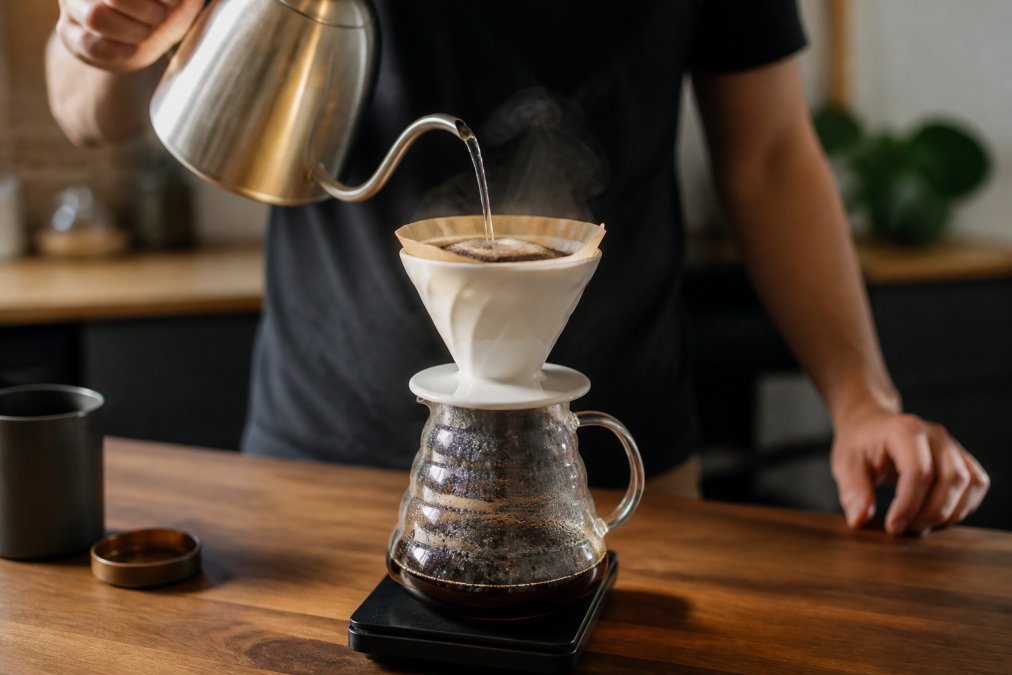
Pour-over is a percolation method where hot water is poured over grounds in a paper or metal filter. It produces the cleanest cup on this list because paper traps oils and fine particles. You taste origin character, not sediment.
The technique rewards attention. Bloom the grounds with a small pour, wait 30 seconds, then pour in slow circles. A gooseneck kettle helps. So does a scale.
Pour-Over Pros and Cons
Pros:
- Best clarity and flavor separation of any method here
- Full control over every variable
- Cheap equipment, from $15 up
Cons:
- Demands 3-4 minutes of undivided attention
- Easy to over-extract if your pour is uneven
- Paper filters add ongoing cost
2. French Press: Full-Bodied Immersion Brewing
French press is full immersion: coarse grounds steep in hot water for about four minutes, then a metal mesh plunger separates them. No paper means oils and fine particles stay in the cup. The result is heavy, rich, and full-bodied.
Grind consistency matters more here than anywhere else. Too fine, and you get sludge and bitterness. Too coarse, and the cup tastes weak and hollow. Aim for coarse sea salt texture.
French Press Pros and Cons
Pros:
- Richest mouthfeel of any method on this list
- No filters to buy
- Forgiving of small timing errors
Cons:
- Sediment in the last few sips
- Oils can turn rancid if you leave brewed coffee sitting
- Not ideal if you prefer a clean, tea-like cup
3. Cold Brew: Smooth, Low-Acid Extraction
Cold brew steeps coarse grounds in cold water for 12 to 24 hours. No heat means fewer bitter compounds and lower acidity. The tradeoff is time: you plan this the night before, not the morning of.
Because cold water extracts slowly, you need a higher coffee-to-water ratio. Most home brewers start around 1:4 for concentrate, then dilute to taste. Happy Pup Coffee Company's Cold Brew Coffee is ground coarse specifically for this method, which removes the guesswork. A medium roast with chocolate and toffee tones also works well for nitro.

Cold Brew Pros and Cons
Pros:
- Smooth, low-acid cup that suits sensitive stomachs
- Keeps in the fridge for days
- Scales easily for batches
Cons:
- 12-24 hour wait
- Uses more grounds per serving
- Loses some delicate origin notes
4. Espresso: Pressure and Precision
Espresso forces hot water through finely ground coffee at high pressure in under 30 seconds. It is the most concentrated method here and the base for every milk drink. It is also the least forgiving.
A burr grinder is non-negotiable. Small grind changes swing the shot wildly. Watch for channeling, where water cuts a path through the puck instead of saturating it evenly. That produces sour, thin shots even with good beans.
Espresso Pros and Cons
Pros:
- Intense, syrupy body with concentrated flavor
- Fast once dialed in
- Foundation for lattes, cappuccinos, and more
Cons:
- Highest equipment cost by far
- Steep learning curve
- Requires fresh beans and a quality grinder
5. Drip Coffee Machine: Consistent and Convenient
A drip machine handles the whole process: it heats water, saturates the grounds, and holds the pot at temperature. For busy mornings and offices, nothing else matches the convenience.
Not all machines are equal. Look for one certified for brew temperature and time. Cheap models run too cool, which causes under-extraction and a flat, sour cup. A thermal carafe also beats a hot plate, which scorches coffee after 20 minutes.
Drip Machine Pros and Cons
Pros:
- Set it and walk away
- Brews a full pot for households and offices
- Consistent results once you dial in your ratio
Cons:
- Less control over extraction
- Hot plates degrade flavor fast
- Quality varies wildly by model
6. Moka Pot: Stovetop Intensity
The moka pot uses steam pressure to push water up through grounds. It sits between drip and espresso in strength, with a heavy, bittersweet character. It works on any stovetop, which is why it has survived nearly a century.
Use medium-fine grounds and preheated water. Do not tamp.
Moka Pot Pros and Cons
Pros:
- Strong, rich cup without an espresso machine
- Durable and inexpensive
- Works on gas, electric, and induction with an adapter
Cons:
- Easy to burn if you stop paying attention
- Small batches only
- Aluminum models need careful cleaning
7. AeroPress: Versatile and Fast
AeroPress combines immersion and pressure in a single portable device. You steep grounds briefly, then press through a paper or metal filter. Total time: about two minutes. Cleanup takes seconds.
AeroPress Pros and Cons
Pros:
- Fast, portable, and nearly indestructible
- Enormous room to experiment
- Minimal cleanup
Cons:
- Brews one cup at a time
- Recipes vary so much that consistency takes practice
- Paper filters are small and easy to run out of
Matching Grind Size and Water Temperature to Your Method
Grind size and water temperature decide whether your coffee tastes sweet or bitter. Most home brewers blame the beans when the real problem is one of these two settings.
| Method | Grind Size | Water Temp | Ratio | Time |
|---|---|---|---|---|
| Pour-over | Medium-fine | 195-205°F | 1:16 | 3-4 min |
| French press | Coarse | 195-205°F | 1:15 | 4 min |
| Cold brew | Very coarse | Cold | 1:4 concentrate | 12-24 hrs |
| Espresso | Fine | 195-205°F | 1:2 | 25-30 sec |
| Drip machine | Medium | 195-205°F | 1:16 | 5-6 min |
| Moka pot | Medium-fine | Preheated | 1:10 | 4-5 min |
| AeroPress | Medium-fine | 175-195°F | 1:12 | 2 min |
Beyond the Basics: What Most Guides Skip
Two variables separate good home coffee from great home coffee, and most brewing guides never mention them.
Brewing by Roast Profile: A Quick Guide
Roast level changes how soluble your coffee is, so it changes how you should brew it.
- Light roasts: denser beans, less soluble. Use hotter water, finer grind, and slightly longer contact time to pull out sweetness.
- Medium roasts: the most forgiving. Standard ratios and temperatures work well across every method here.
- Dark roasts: porous and highly soluble. Use cooler water and coarser grinds to avoid bitterness. Happy Pup Coffee Company's Italian Roast, an extra dark roast with non-existent acidity, performs best when you ease off the temperature.
Frequently Asked Questions
What is the best coffee brewing method for maximizing flavor?
There is no single best method, but pour-over and AeroPress give you the most control over variables like water temperature and agitation, which directly affect extraction yield. For a full-bodied cup, French press immersion delivers rich oils and mouthfeel. Cold brew extracts sweetness and low acidity over 12-24 hours. The right coffee brewing method depends on whether you prioritize clarity, body, or convenience in your daily routine.

What is the 15-15-15 coffee rule?
The 15-15-15 rule is a simple pour-over guideline: use 15 grams of coffee, 15 times that weight in water (225 grams), and a total brew time of about 15 minutes. In practice, most pour-over recipes finish in 3-4 minutes, so the third number often refers to a slower immersion method. Use it as a starting point, then adjust grind size and temperature to hit your preferred brew strength.
How does grind size affect coffee flavor extraction?
Grind size controls how quickly water pulls soluble compounds from coffee. A fine grind exposes more surface area and extracts faster, risking bitterness and over-extraction. A coarse grind slows extraction, which can leave coffee sour and under-extracted. Match grind to method: coarse for French press and cold brew, medium for drip and pour-over, fine for espresso and Moka pot. A burr grinder gives the grind consistency you need for repeatable results.
Does water temperature impact coffee flavor extraction?
Yes. The ideal water temperature for coffee extraction sits between 195°F and 205°F. Water that is too hot scalds grounds and pulls out harsh, bitter compounds. Water that is too cool under-extracts, leaving the cup sour and weak. For cold brew, room-temperature or cold water extracts slowly over 12-24 hours, producing a smooth, low-acid result. A thermometer or temperature-controlled kettle removes the guesswork.
Which brewing methods provide the most body vs. clarity?
French press and Moka pot deliver the most body because metal mesh and pressure allow oils and fine particles into the cup, creating a heavy mouthfeel. Pour-over with a paper filter produces the most clarity, trapping oils and letting bright acidity and delicate tasting notes shine. Espresso sits in the middle: concentrated and syrupy, but with enough pressure to highlight sweetness when dialed in correctly. Choose based on whether you want richness or definition.