


Table of Contents
- Specialty Coffee vs Commercial Coffee: What's the Difference?
- Bean Quality and Origin: Where Flavor Begins
- Freshness and Roast Date: Why Timing Matters
- How to Brew Specialty Coffee at Home
- Coffee Flavor Notes Explained: A Beginner's Guide
- The Physiological Impact of Specialty Coffee
- Budget-Friendly Specialty Coffee and Sustainable Sourcing
- Frequently Asked Questions
Last Updated: September 15, 2026
Specialty Coffee vs Commercial Coffee: What's the Difference?
Specialty coffee is coffee that scores 80 points or higher on the Specialty Coffee Association's 100-point scale, a grading system that evaluates bean quality, processing, and cup characteristics (Coffee Value Assessment). Commercial coffee rarely clears that bar. The difference shows up in the cup before you can name it.
At Happy Pup Coffee Company, we roast specialty-grade beans and ship them within days of roasting, which is why the gap between grocery-store coffee and specialty coffee tastes so wide. The distinction starts with grading, but it ends with how the coffee was grown, processed, roasted, and handled before it ever reached your kitchen.
Here's what most guides get wrong: the divide is not dark roast versus light roast, and it is not price. It is defect count, growing altitude, and how carefully the beans were sorted. A commercial blend tolerates defects because roasting dark and brewing hot masks them. A specialty lot cannot hide.
Bean Quality and Origin: Where Flavor Begins
Flavor begins in the soil, at altitude, and in the hands of the farmer. A coffee bean is a seed from a fruit, and like wine grapes, its character reflects where it grew. Altitude slows cherry maturation, which concentrates sugars and produces the acidity and sweetness that define a memorable cup.
Single-origin coffees let you taste that place directly. Our Kenya comes from Othaya in Nyeri County, grown at 1,700 to 1,890 meters and processed fully washed, which is why it lands with bright citrus and floral notes rather than the flat, woody taste of a commodity blend. The Ethiopia Natural from the Sidama zone, dried on raised beds, carries milk chocolate and caramel with a fruity edge. Neither flavor is added. Both come from the varietal and the terroir.


The Specialty Coffee Association maintains the cupping standards that grade these differences. A washed Kenyan lot and a natural Ethiopian lot can both score above 80 and taste nothing alike, because origin and processing method shape the cup as much as roast does.
Freshness and Roast Date: Why Timing Matters
Freshness is the most underrated variable in home coffee, and roast date is the only honest measure of it. Coffee begins losing aromatic oils to oxidation the moment it leaves the roaster. A bag with no roast date is a bag you cannot trust.
Most supermarket coffee carries a "best by" date, not a roast date, because it was roasted months before it hit the shelf. That window is where flavor goes to die. The bloom, that bubbly swell when hot water first hits the grounds, is carbon dioxide escaping. Older beans barely bloom, and a weak bloom means weak flavor.
A common mistake is buying in bulk to save money. Buy smaller bags, more often. Store them in an airtight container away from light and heat, and finish them within a few weeks of the roast date printed on the bag.
How to Brew Specialty Coffee at Home
Brewing great coffee at home comes down to controlling a handful of brewing variables: grind size, water temperature, brew ratio, and time. Get these right and a $30 setup outperforms a $300 machine used carelessly.
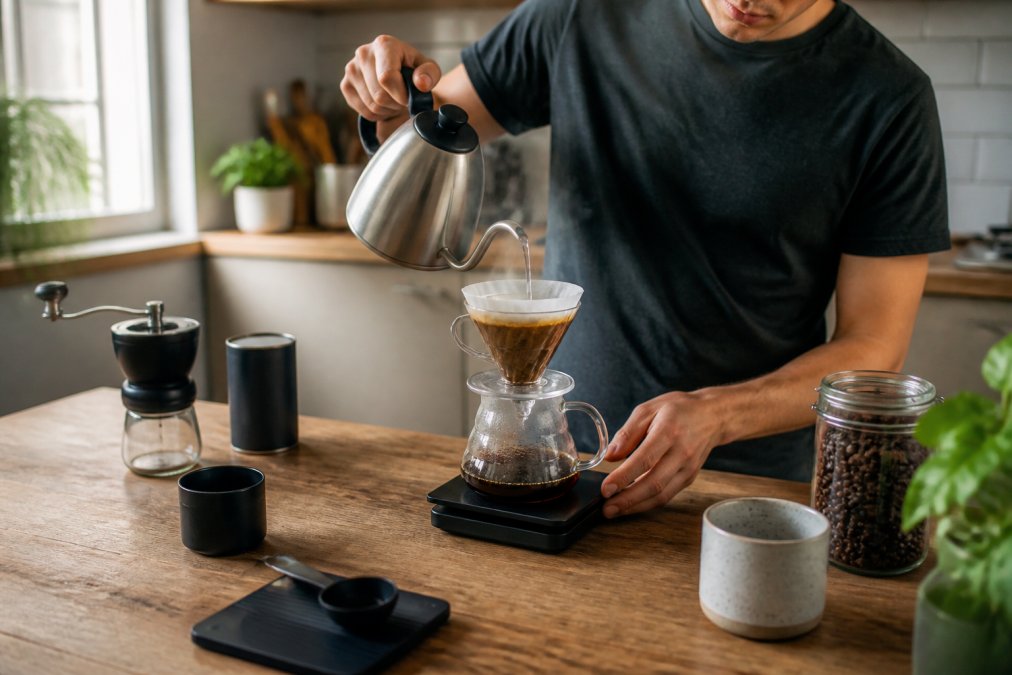
Here is a repeatable process for a pour-over:
- Weigh your coffee. Start with a 1:16 brew ratio, roughly 20 grams of coffee to 320 grams of water.
- Grind fresh. Grind consistency matters more than the grinder's price. Uneven grounds extract unevenly, giving you bitterness and sourness in the same cup.
- Heat water to 195-205°F (Cold Brew Resource Center). Thermal stability keeps extraction even from start to finish.
- Bloom the grounds. Pour twice the coffee's weight in water, wait 30 seconds, then continue.
- Pour in slow circles. Finish the pour by around 2:30, with total brew time near 3 minutes.
- Taste and adjust. Sour means under-extracted; bitter means over-extracted. Change one variable at a time.
Water chemistry is the variable nobody mentions. If your tap water tastes off, your coffee will too. Filtered water with some mineral content extracts better than distilled.
Coffee Flavor Notes Explained: A Beginner's Guide
Flavor notes describe what a coffee reminds you of, not what was added to it. When a bag says "orange" or "dark chocolate," it means the coffee's acidity, sweetness, and mouthfeel evoke those tastes. No flavoring went in.
Tasting is a skill you build. Sensory analysis professionals use cupping to compare coffees side by side, and you can borrow the method at home. Slurp the coffee to spread it across your palate, then note the aftertaste and how long it lingers.
A few terms worth knowing:
- Acidity: the bright, lively quality, not sourness. High acidity reads as citrus or berry.
- Body: the weight on your tongue, from thin and tea-like to syrupy.
- Flavor clarity: how cleanly you can pick out individual notes.
- Sweetness: the natural sugar character, often caramel or fruit.
Our Sumatra, wet-hulled in Aceh, is the opposite of a bright Kenyan: syrupy, earthy, and low in acidity, with dark chocolate and dried fruit. Our Colombia sits between them, medium-roasted with dried orange, berry, and chocolate. Tasting three side by side teaches you more than any chart.

The Physiological Impact of Specialty Coffee
Most guides stop at the tongue. But why a cup feels different in the body, clearer, calmer, less punishing, comes down to what is happening in the bean before it ever reaches your mug, and how your nervous system reads the compounds that survive roasting.
Start with the green bean. Commercial coffee is often picked at mixed ripeness and sorted loosely, which means a higher percentage of defects: unripe cherries, insect damage, mold, and over-fermented beans. Roasters mask those defects by roasting dark, and dark roasting does two things at once. It drives pyrolysis, the thermal breakdown of the bean's organic compounds, which destroys much of the delicate chlorogenic acids and volatile aromatics that give specialty coffee its clarity. It also generates the heavy, ashy bitterness that reads as 'strong' but is really just carbonized sugar and degraded protein.
That bitterness matters physiologically. Your tongue has roughly 25 bitter taste receptors (TAS2Rs), and they evolved as a warning system for toxins. When bitter compounds hit them, the brainstem can trigger a low-grade fight-or-flight response, a small spike in alertness that many drinkers describe as the 'jittery' or 'wired' feeling after cheap coffee. Specialty coffee, roasted lighter and brewed from cleaner green, delivers far fewer of those harsh bitter compounds, so the cup reads as sweet and balanced rather than aggressive. The caffeine is still there; the alarm signal is not.
Caffeine itself is only part of the story. A 12-ounce cup of coffee typically carries 95-165 mg of caffeine depending on bean and brew method, and roast level barely changes that number by weight (the FDA). What changes is the rate of delivery. A well-extracted specialty cup tends to be sipped more slowly because it tastes good, and slower consumption smooths the caffeine curve, which most drinkers experience as a gentler lift and a softer landing. The 'crash' people blame on coffee is often the tail of a fast, large dose chased by dehydration, not an inherent property of the bean.
There is also a sensory mechanism worth naming: adaptation. Bitter receptors fatigue quickly. After a few sips of over-roasted coffee, your palate stops registering the ash and starts registering only the caffeine buzz, which is why bad coffee can feel like it 'works' even when it tastes flat. Specialty coffee, with its acidity, sweetness, and aromatic complexity, keeps engaging the palate instead of numbing it, so the experience stays pleasant from first sip to last.
None of this is a medical claim, and individual sensitivity to caffeine varies widely.
Budget-Friendly Specialty Coffee and Sustainable Sourcing
Budget tips that actually work:
Frequently Asked Questions
What is the official definition of specialty coffee?
Specialty coffee is defined by the Specialty Coffee Association (SCA) as coffee that scores 80 points or higher on a 100-point scale by a certified Q Grader. This evaluation considers factors like flavor clarity, acidity, sweetness, mouthfeel, and aftertaste. The beans must be free of primary defects, grown at high altitude, and processed with care to preserve their unique characteristics.
Is specialty coffee healthier than regular coffee?
Specialty coffee is not inherently healthier, but it often contains higher levels of antioxidants and beneficial compounds because it is fresher and less processed. Commercial coffee may be roasted darker and stored longer, which can degrade some of these compounds. However, the main health differences come from what you add to your coffee. Specialty coffee's complex flavor means you may need less sugar or cream, reducing added calories and processed ingredients.
How can I tell if my coffee is specialty grade?
Look for a roast date on the bag, not just a best-by date. Specialty roasters typically print the roast date because freshness matters. Check for origin details like farm name, altitude, and processing method. The bag should mention a cupping score or SCA certification. If the coffee tastes flat, bitter, or has no distinct flavor notes, it is likely not specialty grade. Freshly roasted specialty coffee will have clear tasting notes like fruit, chocolate, or floral.
What role does bean origin play in coffee flavor?
Bean origin significantly impacts flavor because of terroir, altitude, soil, and processing methods. Ethiopian coffees often have fruity, floral notes, while Kenyan beans are known for bright acidity and berry flavors. Colombian coffees tend to be balanced with caramel and nutty notes. Sumatra coffees are earthy and syrupy. Single-origin coffees highlight these distinct characteristics, while blends combine beans from different regions for consistency. Happy Pup Coffee Company offers single-origin options like Ethiopia Natural and Kenya to explore these differences.