


Table of Contents
- Specialty Coffee vs Grocery Store Brands: A Head-to-Head Comparison
- How to Identify Specialty Grade Coffee on Any Label
- Benefits of Freshly Roasted Coffee Beans You Can Taste
- Coffee Roast Dates Explained: Why They Matter More Than Best-By Dates
- Flavor and Quality: What Your Palate Will Notice
- Price Per Cup: The Real Cost of Specialty vs Grocery Store Coffee
- Ethical and Environmental Impact: Beyond the Bean
- Brewing Equipment Compatibility: Making the Switch Smooth
- Frequently Asked Questions
Last Updated: September 10, 2026
Specialty Coffee vs Grocery Store Brands: A Head-to-Head Comparison
Walk down any grocery aisle and you'll see bags stamped "gourmet" and "premium," yet most carry no roast date at all. That gap between marketing language and verifiable quality is where the specialty coffee vs grocery store brands debate lives. This guide from Happy Pup Coffee Company breaks down how to read a label, what freshness means, and whether the upgrade is worth it, plus the specific markers that separate specialty-grade beans from mass-produced commodity coffee.
Specialty coffee scores 80 points or higher on the 100-point scale used by the Specialty Coffee Association (SCA), a standard built on defect counts, cup clarity, and flavor complexity (sca.coffee). Grocery store brands typically blend commodity-grade beans for consistency and shelf stability rather than peak flavor.
| Factor | Specialty Coffee | Grocery Store Brands |
|---|---|---|
| Cupping score | 80+ (SCA standard) | Rarely graded or disclosed |
| Roast date | Printed, often within days | Best-by date only |
| Origin detail | Farm, region, altitude, process | "Arabica" or vague blend |
| Freshness window | Weeks | Months on shelf |
| Price per cup | Higher upfront, similar per serving | Lower sticker price |
The rest of this article explains how to verify each row yourself.
How to Identify Specialty Grade Coffee on Any Label
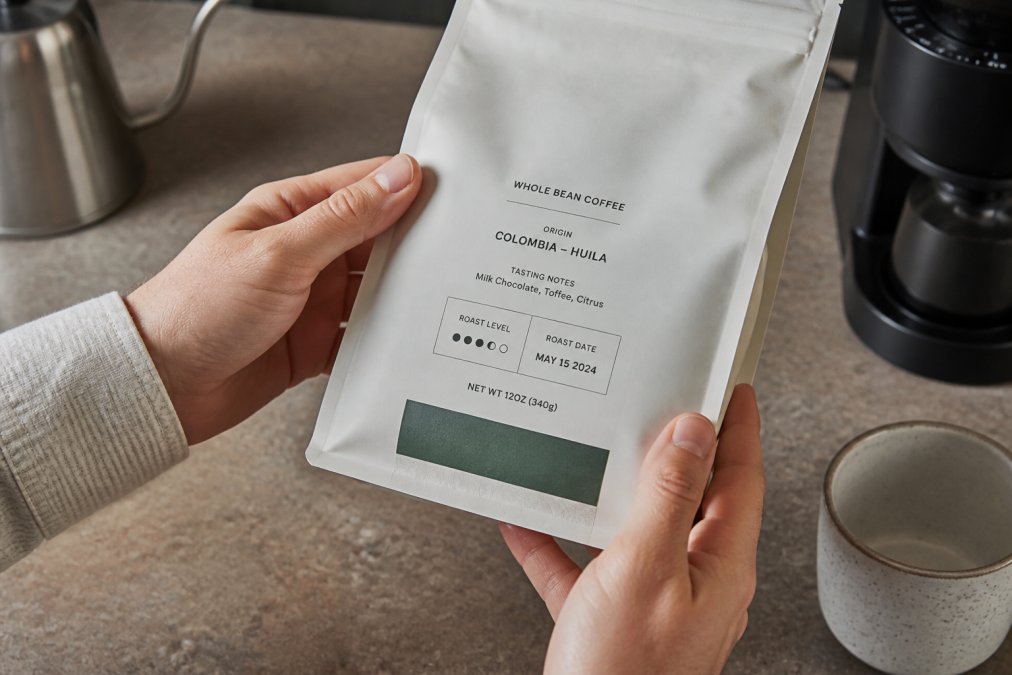
The fastest way to identify specialty grade coffee is to look for three things: a cupping score or SCA reference, a specific origin beyond "Arabica," and a printed roast date. If a bag has none of these, treat the "premium" label as marketing rather than a quality claim.
The Cupping Score and SCA Standards
A cupping score is a numeric rating assigned by trained graders who evaluate aroma, acidity, body, flavor, aftertaste, and balance. The SCA defines specialty grade as 80 points or above; commodity coffee often falls in the 60s and 70s (sca.coffee). You will rarely see the number printed on packaging, but roasters who source at that level usually say so and name their importer or cooperative.
Red Flags: What to Avoid on Packaging
Several signals suggest a bag is not specialty grade. Watch for these:
- No roast date, only a best-by date
- Origin listed as a country with no region, farm, or cooperative
- Flavor described only with generic words like "bold" or "smooth"
- Terms like "gourmet" or "artisan" with no grading reference
- Beans sold in clear bins with no packaging date at all
Benefits of Freshly Roasted Coffee Beans You Can Taste
Freshly roasted coffee beans taste noticeably different because the volatile compounds that create aroma and flavor are still intact. After roasting, beans begin degassing, releasing carbon dioxide, and gradually lose the aromatic oils that define a cup's character. A bag roasted last week will taste more vivid than one roasted six months ago, even at the same origin.
The benefits show up as brighter acidity, clearer flavor notes, and a longer, more pleasant aftertaste. Once drinkers switch to fresh beans, older coffee tastes dull or papery by comparison, a real chemical change, not imagination.
Coffee Roast Dates Explained: Why They Matter More Than Best-By Dates
A roast date tells you when the beans were actually roasted; a best-by date tells you when the roaster thinks the package stops being acceptable. Best-by dates are often set months out to accommodate shipping and shelf time, so the coffee could already be weeks or months old when you buy it.
Roast dates let you calculate freshness yourself. Most roasters suggest enjoying beans within two to six weeks of roasting for peak flavor, though the window depends on roast level and storage (peer-reviewed research). Medium and dark roasts hold up slightly longer than light roasts, but none improve with age. With only a best-by date, you have no way to know how long the bag sat in a warehouse.
Flavor and Quality: What Your Palate Will Notice
Flavor differences between specialty and grocery store coffee come down to bean quality, processing method, and roast profile. Specialty roasters often work with single-origin lots processed using washed or natural methods, which preserve distinct flavor notes tied to a region. Grocery blends are designed to taste the same every time, flattening out the characteristics that make a coffee interesting.
What you'll notice first is acidity and body. A bright Kenyan coffee might show orange, lemon, and floral notes with an effervescent quality, while a Sumatra leans into dark chocolate, dried fruit, and an earthy, syrupy body. Grocery store coffee lands in a narrow middle range: inoffensive, consistent, forgettable, a feature for some drinkers, a limitation for anyone chasing a sensory experience.

Price Per Cup: The Real Cost of Specialty vs Grocery Store Coffee
The sticker price on specialty coffee is higher, but the cost per cup often comes much closer than people expect, and once you account for waste, the grocery bag can be the more expensive habit. Here is the math.
The Formula
Cost per cup = (bag price ÷ grams per bag) × grams per cup.
A standard 12-ounce bag holds about 340 grams, and a typical 6-ounce cup uses roughly 10 to 12 grams at a 1:16 coffee-to-water ratio, about 28 to 34 cups per bag, depending on dose and brew method.
Side-by-Side Unit Economics
| Option | Bag Size | Bag Price | Cups per Bag | Cost Per Cup |
|---|---|---|---|---|
| Single-origin specialty (whole bean) | 12 oz | $21.99 | ~30 | ~$0.73 |
| Mid-tier grocery 'premium' blend | 12 oz | ~$10-$12 | ~30 | ~$0.33-$0.40 |
| Value grocery can | 24 oz | ~$12-$15 | ~60 | ~$0.20-$0.25 |
| Single-serve capsules | 12 ct | ~$8-$12 | 12 | ~$0.67-$1.00 |
| Cafe drip | 16 oz | ~$2.50-$3.50 | 2 | ~$1.25-$1.75 |
| Cafe latte | 12 oz | ~$4.50-$6.00 | 1 | ~$4.50-$6.00 |
Prices vary by market and brand, but the pattern holds: specialty whole bean lands in the same per-cup range as single-serve capsules and well below any cafe drink.
The Hidden Costs of Cheap Coffee
Three factors push the real cost of grocery coffee above its sticker price:
- Stale beans require a heavier dose. Older coffee tastes weak, so drinkers scoop more per brew, sometimes 15 to 18 grams instead of 10 to 12, cutting cups per bag by a third.
- Waste from abandoned bags. With no freshness signal, a bag that sits open for two months often gets tossed half-full. A printed roast date lets you finish it inside the peak window.
- The cafe substitution. The most expensive cup is the one you buy out because your home coffee stopped being worth drinking. A $5 latte three times a week is roughly $780 a year, far more than the annual difference between a grocery bag and a specialty bag.
When Grocery Coffee Is the Right Call
Specialty is not automatically the better buy for every drinker. If you brew one cup a day, add milk and sugar, or go through a bag slowly, a mid-tier grocery blend can be the rational choice, you are not paying for nuance you will not taste. The upgrade pays off when you drink coffee black or with minimal additions, brew a few cups a day, and finish a 12-ounce bag within the peak freshness window.
Ethical and Environmental Impact: Beyond the Bean
Most head-to-head coffee articles stop at taste. Sourcing and environmental impact is where specialty and grocery store brands diverge most, and the part of the label shoppers understand least. Here is how to read it.
What the Certifications Actually Mean
A certification logo is a claim about a supply chain, not a guarantee of flavor. The three most common on retail bags:
- Fairtrade America, sets a minimum price floor for producers plus a social premium paid to cooperatives for community projects. The floor protects growers when the commodity market drops below it.
- Rainforest Alliance, focuses on farm-level environmental and labor standards, including shade management, water use, and worker protections, verified through third-party audits.
- USDA Organic, a production standard covering how the crop is grown and processed, not a price or labor standard. A bag can be organic and still be commodity-grade.
Grocery blends often carry one certification as a marketing badge, while specialty roasters publish the importer, cooperative, and processing station by name. Named sourcing is harder to fake than a logo.
Direct Trade vs. Fair Trade
Direct trade is not a certifying body; it is a sourcing model in which a roaster buys straight from a producer or cooperative, often at a premium above the commodity benchmark, and maintains an ongoing relationship. With no universal seal, the proof lives in the roaster's disclosures: farm name, altitude, varietal, process, and sometimes price paid per pound. If a roaster claims direct trade but lists no farm, treat it as a story rather than a standard.
Environmental Factors You Can Actually Compare
Three production variables drive most of the environmental difference between a specialty single-origin and a mass-market blend:
- Shade vs. sun cultivation. Traditional shade-grown coffee supports canopy biodiversity and requires less synthetic input. Many high-volume commodity operations use full-sun varieties that yield more per acre but demand more fertilizer and irrigation.
- Washed vs. natural vs. wet-hulled processing. Washed processing typically uses more water per pound of green coffee; natural (dry) processing uses far less but requires more labor and drying space. Neither is automatically 'better', they trade water against labor and land.
- Roast scale and energy. Small-batch roasting runs shorter cycles on smaller machines, while high-volume commercial roasting runs large continuous roasters. Per-pound energy use depends on the equipment and the roaster's heat recovery, not on batch size alone.
How to Verify a Sourcing Claim
You do not need a supply-chain audit to shop ethically. Use this short checklist on any bag:
- Is the producer, farm, or cooperative named, not just the country?
- Is the altitude and process listed? (These correlate with the price paid to the grower.)
- Is there a certification, and if so, which one and what does it cover?
- Does the roaster publish an annual sourcing or impact report?
Brewing Equipment Compatibility: Making the Switch Smooth
Switching to specialty beans rarely requires new equipment. A drip machine, pour-over setup, French press, or espresso machine will brew specialty coffee today. The main adjustments are grind consistency and variables like water temperature and ratio, since fresh beans extract differently than older ones.
Single-serve capsule drinkers have a specific concern: compatibility. Many specialty roasters now offer capsules designed for standard machines rather than proprietary systems, so you are not locked in. Happy Pup Coffee Company includes convenient single-serve capsules alongside its whole-bean lineup, so remote workers and office drinkers can keep their existing setup and still upgrade the coffee inside it.
The hardest part of upgrading your coffee is not the brewing; it is trusting that a bag ordered online will arrive fresh and taste like the description promised. Happy Pup Coffee Company addresses that directly with freshly roasted, specialty-grade beans shipped to your doorstep, backed by a veteran-owned and operated team that lists the exact origin, altitude, and processing method for every single-origin offering. To verify the difference yourself, start with the Brazil Santos for a smooth, cocoa-forward cup or the Ethiopia Natural for something fruitier. Get started with Happy Pup Coffee Company and taste what a real roast date does for your morning routine.

Frequently Asked Questions
What is the main difference between specialty coffee and grocery store brands?
Specialty coffee meets strict SCA standards with a cupping score of 80 or higher, while grocery store brands often use lower-grade beans. Specialty beans are typically single-origin, freshly roasted, and traceable to specific farms. Grocery store coffee is mass-produced for shelf stability, often roasted months before purchase. This affects flavor, aroma, and overall quality.
How can you tell if a coffee is specialty grade?
Look for a cupping score of 80+ from the Specialty Coffee Association, a clear roast date, and detailed origin information like farm name and altitude. Specialty bags often list processing methods (washed, natural) and flavor notes. If the label only says '100% Arabica' without specifics, it's likely not specialty grade.
Does grocery store coffee go stale faster than specialty coffee?
Grocery store coffee is often already stale by the time you buy it because it's roasted months in advance and sits on shelves. Specialty coffee is roasted to order and shipped within days, so it arrives fresh. Once opened, both should be stored in an airtight container away from light and heat to slow oxidation. Freshness directly impacts flavor.
Is specialty coffee worth the higher price point?
Yes, for many drinkers. While specialty coffee costs more per bag, the price per cup is often comparable to a café drink. For example, a $21.99 bag of Happy Pup Sumatra yields about 30 cups, roughly $0.73 per cup. Grocery store coffee may cost less upfront but often requires more grounds for a satisfying flavor, and the taste difference is significant.
What are the health benefits of drinking freshly roasted specialty coffee?
Freshly roasted coffee retains its optimal flavor and aroma. Drinking it black without added sugars or artificial creamers can be part of a balanced routine. Always enjoy in moderation.