


Table of Contents
- Is a Coffee Subscription Worth It? The Short Answer
- Coffee Subscription Cost Comparison: Per Cup vs. Grocery Store
- Freshness and Roast Dates: Why Delivery Beats the Shelf
- Are Coffee Subscriptions Cheaper? What the Math Shows
- Best Coffee Subscription Services: What to Look For
- Pros and Cons: Subscription Convenience vs. Buying Local
- What About the Downsides? Shipping, Storage, and Cancellation
- How to Calculate Your Own Break-Even Point
- Frequently Asked Questions
Last Updated: September 6, 2026
Is a Coffee Subscription Worth It? The Short Answer
For most daily coffee drinkers, a coffee subscription is worth it because it delivers freshly roasted, specialty-grade beans that grocery store shelves cannot match, shifting your buying from a pantry staple with an unknown roast date to a direct pipeline from the roaster to your cup.
The value equation is about consistency, convenience, and knowing exactly what you pay per cup. Below, we show you how to calculate your break-even point and decide if the model fits your routine.
Coffee Subscription Cost Comparison: Per Cup vs. Grocery Store
The most common objection is price. A specialty bag costs more upfront than mass-market grounds, but the per-cup math tells a different story.
Measure cost-per-cup rather than cost-per-bag. A standard cup uses roughly 10 grams, so a 12-ounce bag (340 grams) yields about 34 cups (peer-reviewed research). A $20 specialty bag lands near $0.59 per cup; a $12 grocery bag drops to $0.35, but you sacrifice roast freshness and often bean quality.
| Option | Typical Price | Cups Per Bag | Cost Per Cup | Freshness |
|---|---|---|---|---|
| Grocery store bag | $10-$14 | ~34 | $0.30-$0.41 | Unknown roast date |
| Specialty subscription | $16-$24 | ~34 | $0.47-$0.71 | Roasted within days |
| Cafe drip coffee | $2.50-$4.00 | 1 | $2.50-$4.00 | Served immediately |
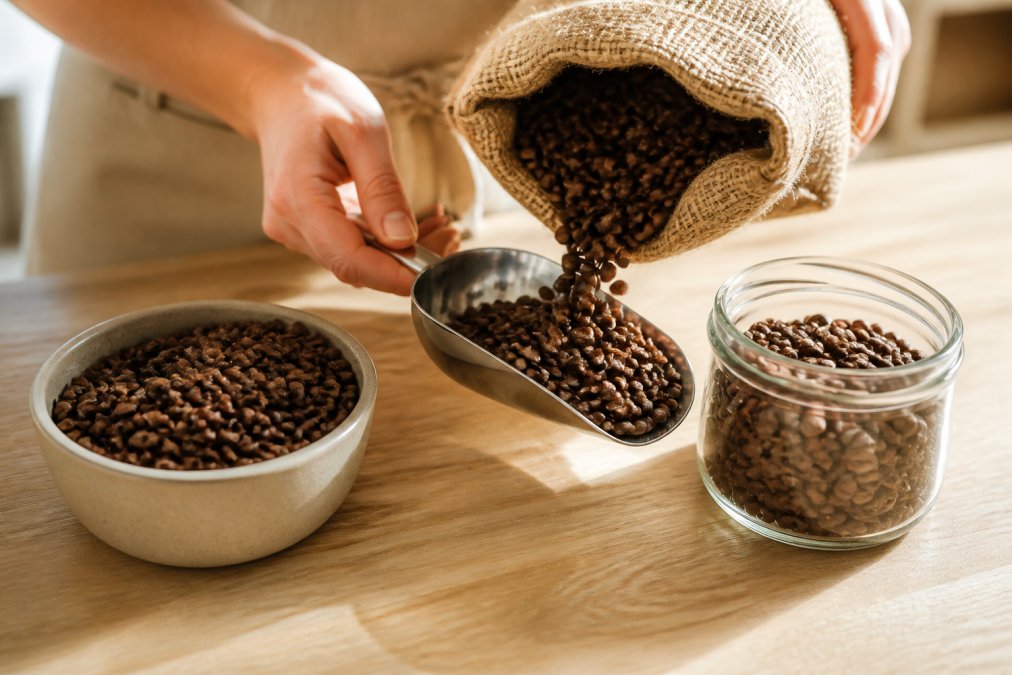
The real savings appear against cafe visits. Replace three cafe visits per week with home-brewed subscription coffee and annual savings become substantial. You pay a modest premium over grocery coffee for fresher taste and direct roaster relationships.
Freshness and Roast Dates: Why Delivery Beats the Shelf
Coffee is perishable, and the roast date is the most important number on any bag. Specialty coffee tastes best within two to four weeks of roasting, yet grocery inventory often sits for months. A subscription eliminates that lag by shipping shortly after the roast.
Roaster-direct subscriptions roast to order or in small weekly batches, so beans arrive during their optimal flavor window with aromatic compounds and natural oils intact, showing in brighter acidity, more pronounced tasting notes, and a cleaner finish.
For those using single-serve machines, freshness requires a different approach. Capsules must be sealed with an oxygen barrier to preserve the coffee. A quality capsule, like the 12 Pack Single Serve Coffee Capsules from Happy Pup Coffee Company, is flushed of oxygen during packaging so the grounds stay fresh until the moment you brew, giving you the convenience of a pod system without the stale, pre-ground flavor that plagues many commercial options.

Are Coffee Subscriptions Cheaper? What the Math Shows
Coffee subscriptions are rarely cheaper than the cheapest grocery option, but almost always cheaper than buying the same quality at retail. If you already buy specialty coffee from a local roaster, a subscription often saves money through wholesale-style pricing and reduced trips.
The clearest win comes from replacing out-of-home coffee. A daily cafe habit at $4 per visit costs roughly $1,460 annually; a subscription supplying the same volume might cost $600 to $800, saving money while improving quality (bls.gov).
For home brewers buying mid-tier grocery coffee, the premium is smaller than most assume: roughly $0.24 per cup between a $12 grocery bag and a $20 subscription bag. Many find that acceptable once they taste the improvement and realize they are supporting a roaster directly.
Best Coffee Subscription Services: What to Look For
The best service fits your brewing equipment, consumption rate, and palate. The market has segmented into distinct categories, and understanding them is key to a satisfying subscription.
Match the Subscription to Your Brewing Method
The most overlooked factor is equipment compatibility. A coffee that shines as a pour-over might be a disaster in a super-automatic espresso machine. Match the service to your setup:
- Espresso Drinkers: You need beans roasted specifically for espresso, typically slightly darker to ensure the shot is balanced and sweet, not overly acidic. Look for roasters that offer an 'espresso blend' or a 'filter roast' designation. A light-roast single-origin that tastes great as a pour-over can produce a sour, thin shot of espresso.
- Pour-Over and Drip Drinkers: You have the most flexibility. Light to medium roasts will highlight the origin's characteristics, bright acidity, floral notes, and complex sweetness. Look for roasters that print the roast date and suggest a 'rest period' (the time after roasting when the coffee is at its peak for your method).
- Single-Serve Capsule Users: Your choice is constrained by the machine's format. The key is finding capsules that are sealed with an oxygen barrier to preserve freshness. A quality capsule, like the 12 Pack Single Serve Coffee Capsules from Happy Pup Coffee Company, is flushed of oxygen during packaging so the grounds stay fresh until the moment you brew, giving you the convenience of a pod system without the stale, pre-ground flavor that plagues many commercial options.
- French Press and Cold Brew: These methods are forgiving and benefit from a coarser grind. If you don't have a grinder, look for a subscription that offers a 'coarse' grind option specifically for these methods. A standard drip grind will make a muddy, bitter French press.
The Decision Matrix: What to Check Before You Commit
Beyond brewing method, use this checklist to evaluate any service. The table below summarizes the key features that separate a flexible, high-quality service from a rigid, low-value one.
| Feature | Why It Matters | What to Check |
|---|---|---|
| Roast date printed | Confirms freshness | Look for a date within 2 weeks of shipping |
| Delivery frequency | Matches your consumption | Can you adjust or skip shipments? |
| Grind options | Fits your equipment | Whole bean, espresso, drip, coarse, or capsules |
| Variety options | Prevents flavor fatigue | Sample packs or rotating origins |
| Cancellation policy | Avoids subscription fatigue | Can you pause or cancel easily online? |
| Shipping packaging | Environmental impact | Is it recyclable or compostable? |
How to 'Test Drive' a Subscription Without Wasting Money
The smartest way to evaluate a roaster is not to commit to a full-price, recurring subscription immediately. Here is a low-risk strategy:
- Start with a Sample Pack: Most quality roasters offer a sampler. The Best Sellers Sample Pack: 6Bean, Cowboy, Breakfast, Peru, Mexico, Bali from Happy Pup Coffee Company is a smart starting point. At $24.99, it lets you taste six different coffees in 2-ounce packs before committing to a full bag, answering the question of variety without wasting money on a full pound you might not enjoy.
- Brew It Your Way: When the sample arrives, don't just taste it. Brew it using your primary method, your espresso machine, your pour-over setup, your drip machine. A coffee that tastes great as a cupping sample might not translate to your daily driver.
- Check the Roast Date: When your sample arrives, note the roast date. If it's more than two weeks old, that's a red flag. The roaster is likely holding inventory, not roasting to order.
- Test the Customer Service: Send a question via their contact form or chat. The speed and quality of their response is a preview of how they'll handle a delivery issue or a cancellation request.
By focusing on equipment compatibility and using a 'test drive' approach, you can avoid the most common reason for subscription regret: receiving a beautiful bag of beans that doesn't work with the way you actually brew.


Pros and Cons: Subscription Convenience vs. Buying Local
The convenience is undeniable. Coffee arrives on a schedule you set, removing the mental load of tracking inventory and emergency store trips. For busy professionals and remote workers, this automated ordering is a genuine time-saver.
The tradeoff is the loss of the local coffee shop experience, smelling beans, chatting with the roaster, and discovering new offerings in person. You also avoid shipping packaging and support a local business directly.
A common middle ground is using a subscription for your daily driver while visiting a local roaster for special purchases. This hybrid gives you scheduled consistency with local discovery and community.
What About the Downsides? Shipping, Storage, and Cancellation
Subscription fatigue is real, and the fine print can turn a convenience into a chore. The top complaints aren't about the coffee, they're about logistics. Here are the three biggest friction points and how to navigate them.
Cancellation Friction: The Fine Print That Traps You
Many services make signing up easy but canceling difficult. Common friction points:
- The 'Call to Cancel' Requirement: Some roasters require a phone call to cancel, a deliberate hurdle that often involves hold times and retention scripts. Before you commit, check if you can manage your subscription entirely online.
- The 'Skip' vs. 'Cancel' Distinction: A good service lets you skip a single delivery without canceling. This is crucial for managing inventory if you go on vacation or receive a gift bag. If a service only offers full cancellation, you lose your pricing tier or member perks the moment you need a break.
- Prepaid Subscription Traps: Be wary of plans that require prepayment for 3, 6, or 12 months. While they often offer a lower per-bag price, they lock you in. If your brewing habits change or you find a roaster you like better, you're stuck with a credit balance that's awkward to use.
The Actionable Test: Before subscribing, read the FAQ or Terms of Service specifically for 'pause,' 'skip,' and 'cancel.' A quality service should make managing your subscription as simple as starting it, ideally with a self-service dashboard that shows your next delivery date and lets you change it in two clicks.
The Environmental Math of Shipping: It's Not Just the Bag
The environmental cost isn't just the coffee bag; it's the entire logistics chain. Here's what matters:
- Last-Mile Delivery Emissions: A single package delivered to your door has a higher carbon footprint per item than a consolidated trip to a grocery store. The USPS, UPS, and FedEx trucks are making a dedicated stop for your 12-ounce bag.
- Packaging Weight and Volume: A typical subscription box includes a bag, a shipping box, and often protective filler. This adds up. A roaster that ships in a lightweight, recyclable mailer rather than a rigid box is reducing its footprint.
- Frequency vs. Volume: The single most impactful choice you can make is to consolidate. A monthly shipment of two 12-ounce bags has a significantly lower per-bag shipping footprint than two separate bi-weekly shipments. Choose the least frequent schedule that still keeps you in fresh coffee.
What to Look For: Seek out roasters that use 100% recyclable or compostable packaging and that offer carbon-neutral shipping options. Some roasters now partner with programs that offset the emissions of their deliveries. While this isn't a perfect solution, it's a signal that the company is thinking about the full lifecycle of your order.
The Science of Storage: How to Not Waste Your Money
Whole bean coffee loses peak flavor within four weeks of roasting, and ground coffee deteriorates faster. The volatile aromatic compounds begin to off-gas immediately after roasting. If delivery outpaces consumption, you will brew stale coffee and waste money.
Here is the practical storage protocol that most specialty roasters recommend:
- Keep It in the Bag: The one-way valve on a quality coffee bag is designed to let CO2 escape without letting oxygen in. Transferring beans to a different container often introduces more air than it saves.
- Store in a Cool, Dark Place: A pantry or cabinet away from the stove and dishwasher is ideal. Do not refrigerate your beans; the moisture and odors from the fridge will degrade the flavor (ncausa.org).
- Buy for Your Brew Rate: If you drink one 12-ounce bag every two weeks, do not order a 5-pound bulk bag to 'save money.' You will be brewing stale coffee for weeks.
- Consider Freezing for Long-Term Storage: If you must buy in bulk, portion the beans into single-week, airtight containers and freeze them. This can slow the degradation process significantly, but it is not a substitute for buying fresh. Thaw the portion completely before opening the container to avoid condensation.
By understanding the mechanics of cancellation, the true cost of shipping, and the science of storage, you can avoid the common pitfalls that turn a great coffee subscription into a source of frustration.
How to Calculate Your Own Break-Even Point
Calculating whether a subscription is worth it takes five minutes. Track how many cups you brew per week and what you pay per cup, then compare against the subscription cost using the same per-cup formula.
Step-by-step calculation:
- Count your weekly cups: average cups per day multiplied by 7.
- Determine your current cost-per-cup: divide the price of your current coffee by the number of cups it yields.
- Estimate the subscription cost-per-cup: divide the subscription bag price by the expected cup yield (about 34 cups per 12-ounce bag).
- Subtract your current cost-per-cup from the subscription cost-per-cup to find the premium or savings.
- Multiply that difference by your weekly cups, then by 52 for the annual figure.
If you drink two cups daily at $0.40 per cup, your annual spend is roughly $292. A subscription at $0.60 per cup costs about $438 annually, a premium of $146. If you buy one cafe coffee per day at $3.50, your annual spend is over $1,277, and switching saves hundreds while upgrading quality.
The break-even point shifts dramatically based on your habits. The more cafe coffee you replace, the faster a subscription pays for itself. For anyone drinking two or more cups daily, the freshness and quality benefits come at a modest premium over grocery coffee.
Choosing whether a coffee subscription is worth it comes down to your priorities: freshness, convenience, and cost-per-cup. For most daily drinkers, the math favors a subscription, especially when it replaces cafe purchases. Happy Pup Coffee Company offers freshly roasted, specialty-grade coffee delivered to your door, with single-origin favorites, flavored blends, and single-serve capsules for any brewing setup. Explore the Single Origin Favorites Sample Pack to taste the difference, or shop all coffee and find your new daily brew.
Frequently Asked Questions
How does a coffee subscription work?
You pick your beans, roast level, and delivery frequency. The roaster prepares your order after you place it, then ships it straight to your door. Most services offer weekly, biweekly, or monthly deliveries. You can usually pause, skip, or swap selections before each shipment. The main benefit is a steady supply of freshly roasted coffee without remembering to reorder.
Are coffee subscriptions cheaper than buying beans at the grocery store?
It depends on what you buy. A typical 12-ounce grocery bag costs $8 to $15. Specialty-grade coffee subscriptions often run $15 to $22 per 12-ounce bag, so per-pound costs run higher. But subscription coffee is usually roasted days before shipping, not months before hitting the shelf. For many drinkers, the freshness justifies the price difference.
Can you cancel a coffee subscription easily?
Most reputable services let you cancel from your account dashboard without calling or emailing. Look for a clear cancellation policy before you commit. Some services require you to cancel before a monthly cutoff date to avoid the next charge. Check whether the service charges a cancellation fee or locks you into a minimum number of shipments.
What is the difference between single-origin and blend subscriptions?
Single-origin coffee comes from one farm or region, so it shows a distinct flavor profile tied to that place. Blends mix beans from multiple origins to create a consistent, balanced cup. If you like exploring tasting notes like citrus or chocolate, single-origin subscriptions keep things interesting. If you want the same reliable flavor every morning, a blend is the safer pick.
What should I look for in the best coffee subscription services?
Check the roast date first. Any roaster worth your money prints it on the bag, and your coffee should arrive within days of roasting. Look for specialty-grade beans, clear origin information, and flexible delivery schedules. Confirm the service works with your brewing method. If you use capsules, verify compatibility before ordering.