


Table of Contents
- What Makes a Fresh Coffee Beans Delivery Service Worth It
- Coffee Bean Roast Dates Explained
- How to Store Coffee Beans for Freshness After Delivery
- Best Coffee Subscription Services: What to Look For
- Exploring the Happy Pup Coffee Beans Delivery Lineup
- Troubleshooting Your Coffee Delivery: Common Problems Solved
- Conclusion
Last Updated: August 25, 2026
What Makes a Fresh Coffee Beans Delivery Service Worth It
A fresh coffee beans delivery service ships specialty roasted beans to your door within days of roasting, bypassing the weeks-long lag of grocery store supply chains. The difference is stark: a bag roasted days ago delivers vivid acidity, aroma, and body, while grocery store coffee, sitting in warehouses for weeks, tastes flat and lifeless.
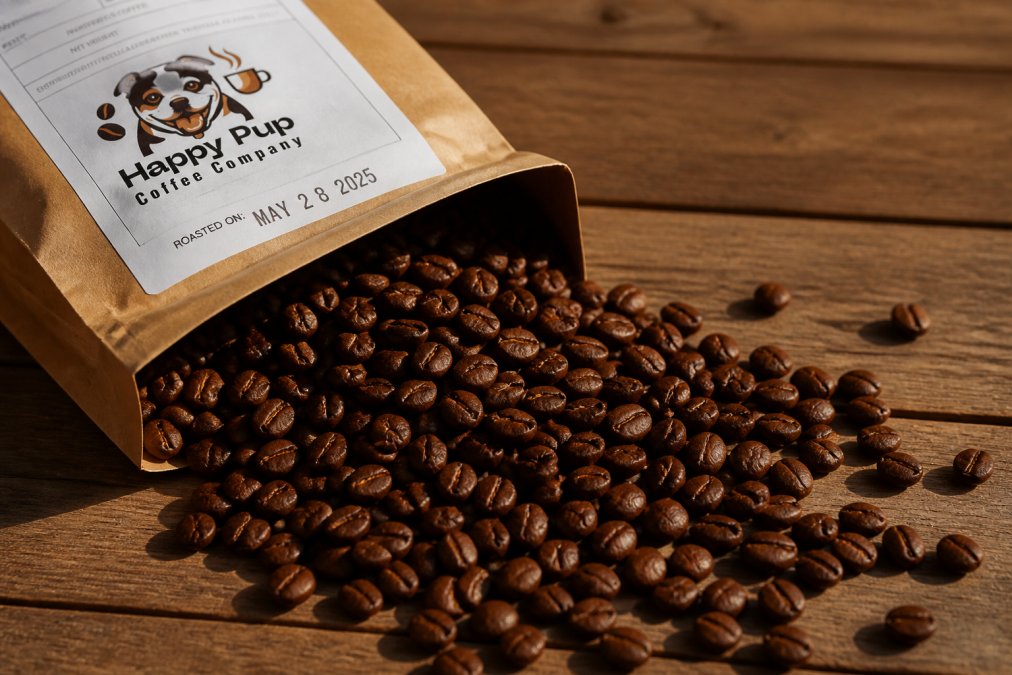
At Happy Pup Coffee Company, we've built our entire model around this gap. Specialty roasters use one-way valve bags that allow CO2 to escape without letting oxygen in. That mechanism keeps your beans tasting as they should.
Roasted-to-Order vs. Warehouse Stock
Roasted-to-order means your beans go into the roaster after you place your order. Many online providers still operate on a warehouse model, roasting in large batches and shipping from stock. The result is beans that may already be two to four weeks old before they reach your door.
Roasted-to-order beans arrive at peak degassing stage, ready to brew within days of delivery. When evaluating any coffee beans delivery provider, ask directly whether they roast on demand or from existing inventory. The answer tells you more about freshness than any marketing copy will.
Single-Origin vs. Blends: Which Should You Order?
Single-origin coffees come from one farm, cooperative, or region, reflecting the terroir of that specific place. A medium-roast Ethiopia from Sidama carries milk chocolate, fruity, and caramel notes because of altitude, soil, and processing method. Blends are intentionally designed for consistency and balance.
Neither is objectively better. Single-origin is ideal when you want to explore distinct flavor notes and understand how origin shapes a cup. Blends work best when you want reliability. For a first order, a sample pack including both is the most efficient way to discover your preference.

Coffee Bean Roast Dates Explained
A roast date is the specific day your coffee beans came out of the roaster, the single most important piece of information on any specialty coffee bag. According to the Specialty Coffee Association's freshness guidelines, coffee is generally fresh for consumption within two to four weeks of the roast date. After that window, oxidation and off-gassing degrade flavor compounds noticeably.
A roast date alone doesn't guarantee freshness. If the bag lacks a proper one-way valve seal, beans roasted yesterday can taste as stale as beans roasted a month ago. Always check both the roast date and packaging integrity.
The Degassing Window and Why It Matters for Flavor
Degassing is the process by which freshly roasted coffee releases CO2 accumulated during roasting. Beans that have fully off-gassed are past their prime.
Beans roasted within 24 to 48 hours are actually too fresh for most brewing methods. CO2 escaping during extraction interferes with even saturation, leading to uneven flavor extraction. The ideal brew window for most specialty coffee starts around 3 to 5 days post-roast and extends to about 3 to 4 weeks, depending on roast level. Lighter roasts have a longer peak window; darker roasts hit their peak faster and fade faster.
For espresso specifically, a 7 to 10 day rest period post-roast produces better crema and more balanced extraction. This detail explains why espresso at a well-run café often tastes better than home attempts with "fresh" beans that are actually too fresh.
How to Store Coffee Beans for Freshness After Delivery
Proper storage after delivery determines how long your beans stay at peak flavor. The four enemies of coffee freshness are oxygen, moisture, heat, and light.
The best storage approach for whole bean coffee:
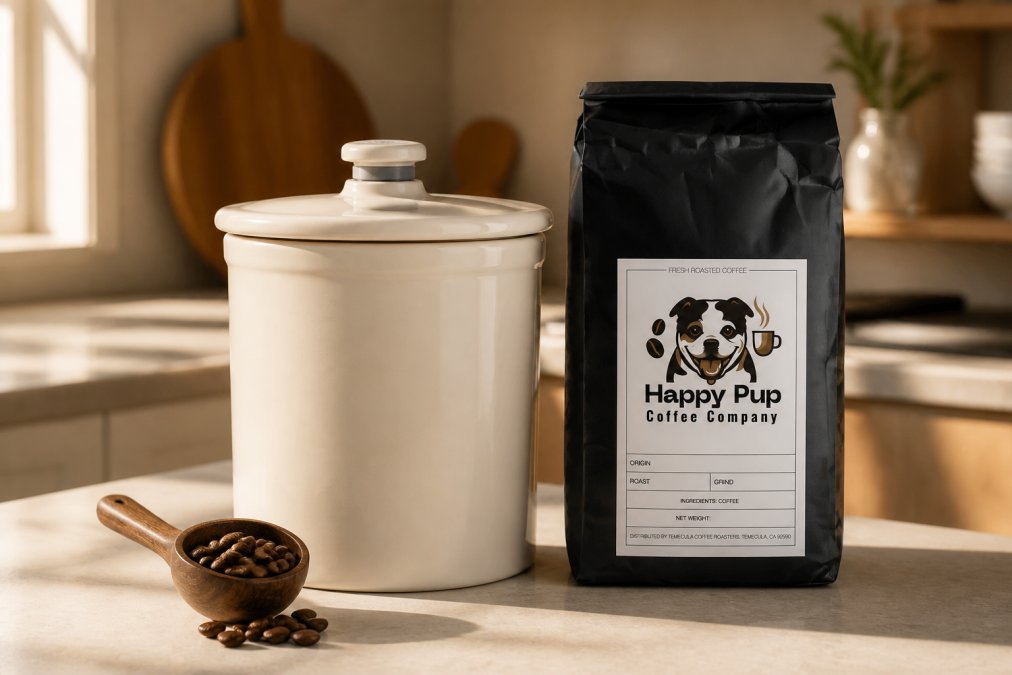
- Airtight container with a one-way valve: Keeps oxygen out while allowing residual CO2 to escape.
- Cool, dark location: A kitchen cabinet away from the stove or oven.
- Avoid the refrigerator: The fridge introduces moisture and absorbs odors from surrounding food.
- Grind immediately before brewing: Pre-ground coffee loses flavor compounds within 15 to 30 minutes of grinding.
Shelf Life by Roast Type
| Roast Type | Peak Flavor Window | Acceptable Range | Notes |
|---|---|---|---|
| Light Roast | Days 7-28 | Up to 5 weeks | Longer degassing; more delicate acids preserved |
| Medium Roast | Days 5-21 | Up to 4 weeks | Most versatile; widest brew method range |
| Medium-Dark Roast | Days 4-18 | Up to 3 weeks | Oils begin migrating to surface sooner |
| Dark Roast | Days 3-14 | Up to 2-3 weeks | Fastest to fade; oils visible on bean surface |
If you're ordering a dark roast, order in smaller quantities more frequently. Light or medium roasts hold quality longer, making larger bags more cost-efficient per cup.
Best Coffee Subscription Services: What to Look For
The best coffee subscription services roast to order, print the roast date on every bag, and give you genuine control over frequency and selections. Many subscription models lock you into rigid delivery schedules or limited variety.
According to the National Coffee Association's annual coffee trends data, home brewing has grown consistently as consumers seek café-quality results without café prices. A well-structured subscription from a specialty roaster is the most reliable way to achieve that at home.
Customization, Frequency, and Flexibility
A subscription that doesn't bend to your actual consumption habits will either leave you drowning in beans or running out mid-week. The best providers let you adjust delivery frequency and swap selections between orders without penalty.
The ability to pause a subscription matters as much as the ability to cancel. A service that forces you to cancel and restart rather than simply pause is optimizing for its own retention, not your experience.
Look for these features before committing:
- Roast date printed on every bag
- Ability to pause without canceling
- Option to swap bean selection between shipments
- Whole bean and pre-ground options available
- Transparent sourcing information (farm, region, altitude, process)
- Sample packs available before committing to full-size bags
Ethical Sourcing and Veteran-Owned Credentials
Ethical sourcing in specialty coffee means traceable supply chains, fair compensation to growers, and environmentally sound processing methods. The most meaningful sourcing transparency names the specific cooperative or farm, region, altitude, and processing method.
Happy Pup Coffee Company is veteran-owned and operated, and that identity shapes how the business runs. For customers who prioritize supporting veteran entrepreneurs, that distinction matters. The packaging your coffee arrives in also contributes to household waste. Look for providers using recyclable or compostable mailers and minimal void fill.
Exploring the Happy Pup Coffee Beans Delivery Lineup
Happy Pup Coffee Company's catalog covers the full range of what a serious home brewer needs, from single-origin specialty beans to purpose-built blends and flavored options. Every flavored coffee starts as specialty-grade single-origin coffee roasted in small batches before being carefully flavored with high-quality flavoring oils while still warm.
The single-origin offerings include traceable provenance on every bag: grower, variety, region, altitude, soil type, and processing method. The Guatemala, sourced from smallholder farmers in Antigua at 1,200-1,616 meters on volcanic loam soil, carries tasting notes of dark chocolate, bright fruit, and butterscotch. The Peru, grown by Cooperativa Agricola de Servicios Norandino at 1,100-1,700 meters, delivers salted caramel, silky sweetness, and citrus.
According to the USDA's specialty coffee grading standards, specialty-grade coffee must score 80 points or above on a 100-point cupping scale. That grading standard separates specialty roastery beans from mass-market grocery coffee.
Sample Packs: The Smart Way to Start
The biggest mistake new subscribers make is committing to a full-size bag before tasting it. Sample packs solve this problem directly.
Happy Pup Coffee Company offers three sample pack options at $24.99 each, each containing six 2-oz packs:

-
Best Sellers Sample Pack: Includes the 6Bean Blend, Cowboy Blend, Breakfast Blend, Peru, Mexico, and Bali single-origins. The broadest introduction to the lineup.
-
Single Origin Favorites Sample Pack: Six single-origin coffees spanning Brazil Santos, Colombia, Costa Rica, Ethiopia, Honduras, and Tanzania. Tasting profiles range from cocoa-forward elegance to pear, floral, and strawberry notes.
-
Flavored Coffees Sample Pack: Six flavored options including French Vanilla, Hazelnut, Cinnabun, Caramel, Mocha, and Cinnamon Hazelnut, all built on specialty-grade single-origin bases.

Flavored Coffees Sample Pack
At $24.99, each sample pack gives you six distinct brewing experiences before committing to a full bag.
Troubleshooting Your Coffee Delivery: Common Problems Solved
Even with the best fresh coffee beans delivery service, delivery logistics occasionally create problems.
The beans arrived stale. Check the roast date first. If it shows more than four weeks prior, contact the roaster directly. If the roast date is recent but the coffee tastes flat, check whether the bag seal was compromised during shipping.
The delivery was delayed. Carrier delays happen. If your beans sit in transit for more than a week, they're likely still fine, the one-way valve bag protects them. Avoid delays that push you past the four-week mark from roast date.
The grind size doesn't match your brewer. Always specify your brewing method at checkout. Drip, pour-over, French press, espresso, and cold brew all require different grind sizes. When in doubt, order whole bean and grind at home.
Quick coffee-to-water ratio reference:
| Brewing Method | Coffee (grams) | Water (ml) | Ratio |
|---|---|---|---|
| Drip / Pour-Over | 15g | 250ml | 1:16 |
| French Press | 20g | 300ml | 1:15 |
| Espresso | 18g | 36ml | 1:2 |
| Cold Brew | 100g | 700ml | 1:7 |
| AeroPress | 15g | 200ml | 1:13 |
These ratios are starting points. Adjust based on your taste preference and bean strength. According to the Specialty Coffee Association's home brewing resources, dialing in your ratio and grind consistency accounts for the majority of quality improvement most home brewers can achieve without changing equipment.
The subscription is sending too much coffee. If you're accumulating bags, pause or reduce frequency before beans age past their peak window. A good subscription service makes this adjustment easy.
Staying stocked with truly fresh specialty coffee takes more than clicking "subscribe" on the first roastery you find. The roast date, sourcing transparency, subscription flexibility, and storage habits you build after delivery all determine whether your daily cup is genuinely great. Happy Pup Coffee Company delivers freshly roasted, specialty-grade coffee direct to your door, with full sourcing details on every single-origin offering and a veteran-owned identity that backs every order. Start with a sample pack, find your daily driver, and get started with Happy Pup Coffee Company to make sure your mornings never rely on stale beans again.
Frequently Asked Questions
Q: How do I know the coffee beans are actually fresh when they arrive?
A: Look for a printed roast date on the bag, not just a 'best by' date. Specialty roasters ship coffee beans delivery orders within a few days of roasting, so beans typically arrive 3-7 days post-roast. That window is ideal: the degassing process has started, but peak flavor is still fully intact. If a bag lists no roast date at all, the coffee likely sat in a warehouse for weeks before shipping.
Q: Is a coffee subscription worth the cost compared to buying at the grocery store?
A: Grocery-store coffee is often roasted months before you buy it, and the roast date is rarely disclosed. A fresh coffee beans delivery service ships roasted-to-order beans directly, so you get significantly better aroma, acidity, and body. The per-cup cost is higher, but the quality difference is substantial. Subscription flexibility also means you control delivery frequency, so you are not over-ordering or running out.
Q: What grind size should I order for my brewing method?
A: Order whole bean whenever possible and grind just before brewing, pre-ground coffee loses noticeable aroma within 15-30 minutes of grinding. If you need pre-ground, match the grind size to your method: coarse for cold brew or French press, medium for drip machines, fine for espresso. Happy Pup's Cold Brew blend, for example, is specifically ground coarse to optimize extraction for that brewing method.
Q: Can I order fresh coffee beans online if I have a Nespresso or single-serve machine?
A: Yes. Many direct-to-consumer roasters offer compatible single-serve capsules alongside whole bean options. Check that the capsules are labeled as compatible with your specific machine type before ordering, since pod formats vary. If capsules are not available, a fine-ground espresso option brewed through a reusable capsule adapter is a practical alternative that still delivers fresh specialty-grade coffee.
This article was written using GrandRanker