


Table of Contents
- Quick Comparison: Best Flavored Coffee Blends
- Best Vanilla Flavored Coffee
- Best Hazelnut Flavored Coffee
- Best Caramel Flavored Coffee
- Chocolate and Mocha Flavor Profiles
- Best Coffee for Home Office: Flavored Blends That Keep You Focused
- Natural vs Artificial Coffee Flavoring: What You Need to Know
- How to Store Flavored Coffee Beans for Maximum Freshness
- Frequently Asked Questions
Last Updated: September 1, 2026
Quick Comparison: Best Flavored Coffee Blends
The difference between a forgettable cup and one that genuinely energizes your morning comes down to bean quality, flavor intensity, and freshness. Happy Pup Coffee Company has built its reputation on specialty-grade, freshly roasted flavored blends that arrive at your doorstep within days of roasting.

The best flavored coffee blends balance three things: the underlying arabica bean quality, the flavor profile intensity, and how well the infusion complements the roast. Most mass-market flavored coffees mask stale or lower-grade beans with artificial flavoring. Specialty roasters do the opposite. They start with high-quality single-origin arabica, roast to a smooth medium that preserves the bean's natural complexity, then infuse natural flavoring oils while the beans are still warm, creating depth rather than a chemical taste.
| Blend | Best For | Flavor Profile | Price |
|---|---|---|---|
| French Vanilla | Daily drinker seeking smooth, creamy notes | Rich vanilla with silky sweetness | $21.99 |
| Hazelnut | Those who want nutty complexity | Nutty with Brazilian coffee base | $189.99 |
| Mexican Chocolate | Dessert coffee or after-dinner ritual | Chocolate, cinnamon, vanilla blend | $21.99 |
| Chocolate Hazelnut | Indulgent flavor combination seekers | Rich chocolate meets hazelnut | $29.99 |
| Caramel | Blended drink base or smooth sipper | Buttery caramel sweetness | $189.99 |
| Mocha | Classic chocolate-coffee lovers | Rich chocolate decadence | $189.99 |
Best Vanilla Flavored Coffee
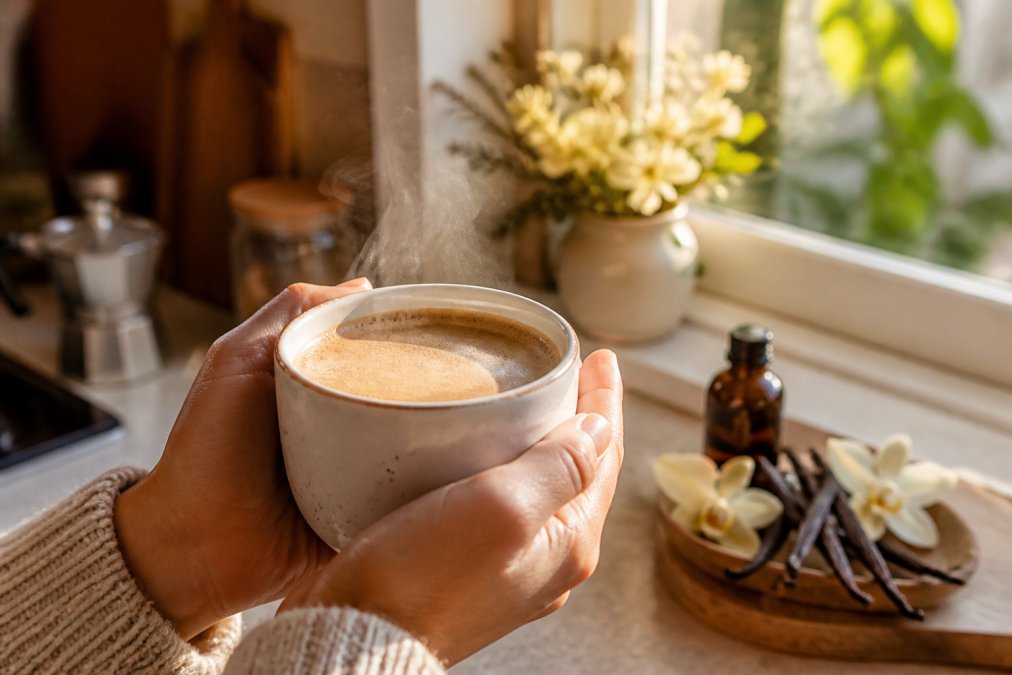
Vanilla is the safest entry point into flavored coffee. The best vanilla blends walk a fine line: rich enough to taste like actual vanilla, not artificial sweetener, but subtle enough that it doesn't overpower the underlying coffee's character.
Happy Pup Coffee Company's French Vanilla starts with specialty-grade single-origin arabica roasted to a smooth medium, then infuses natural vanilla flavoring while the beans are still warm. The result tastes like a creamy vanilla latte without any added milk or sugar. At $21.99 per bag, it's priced for regular consumption.

What makes this work: the medium roast preserves enough of the bean's natural acidity and body that the vanilla sits on top of the coffee rather than replacing it. You taste both. The vanilla flavor is "silky" because the quality of the flavoring oils and the roasting process ensure even distribution and proper bonding to the beans.
Best brewing method: drip or pour-over. The vanilla comes through clearly without the intensity of espresso or the dilution of cold brew. If you use a French press, grind coarser than usual to avoid over-extraction.
Best Hazelnut Flavored Coffee
Hazelnut is the workhorse of the flavored coffee world. It's versatile, pairs well with almost any brewing method, and when done right, tastes genuinely like toasted hazelnuts, not candy.
Happy Pup Coffee Company's Hazelnut blend uses Brazilian coffee as its base, a bean known for nutty, chocolatey undertones even before flavoring. The hazelnut infusion adds a toasted, creamy quality that works equally well black or with milk. At $189.99, this is positioned as a larger quantity purchase.

What separates good hazelnut from mediocre: the roast level and the base bean choice. Brazilian arabica naturally has the right flavor foundation to carry hazelnut without tasting artificial. The medium roast keeps the bean's body intact, which hazelnut flavoring needs to sit on.
Hazelnut coffee works beautifully in blended drinks and holds up well in cold brew, where the extended steeping time helps the hazelnut flavor develop more fully.
Grinding tip: hazelnut blends benefit from a medium-fine grind to extract the flavoring oils more evenly.
Best Caramel Flavored Coffee
Caramel is where flavored coffee gets tricky. Done poorly, it tastes like sweetened milk. Done well, it tastes like actual caramel, buttery and complex, with a slight burnt-sugar undertone.
Happy Pup Coffee Company's Caramel blend uses all-natural flavoring and is described as "fantastic alone or as the base for your blended drinks." At $189.99, the key is that the caramel flavor is buttery rather than sugary, which is the hallmark of quality.
Caramel works best straight black, where you can taste both the coffee and the caramel clearly, or in blended drinks where the caramel becomes the sweetening agent. The all-natural flavoring matters more with caramel than other flavors; artificial caramel tends toward sharp, chemical sweetness, while natural caramel has depth and slight bitterness.
Caramel flavored coffee can handle darker roasts better than vanilla or hazelnut. Happy Pup's medium roast version keeps more of the bean's origin character visible.
Chocolate and Mocha Flavor Profiles
Chocolate and mocha represent two different approaches to coffee flavoring. Mocha is pure chocolate infusion. Chocolate hazelnut and Mexican chocolate are hybrid blends that layer multiple flavors.
Happy Pup Coffee Company's Mocha blend features "rich chocolate decadence gently infused into a medium roast specialty grade arabica bean" with all-natural flavoring. At $189.99, it's positioned for coffee drinkers who want chocolate complexity without artificial taste.
The Mexican Chocolate blend combines chocolate, cinnamon, and vanilla into a single profile. This is the blend to reach for if you want something that tastes like a dessert coffee. At $21.99, it's priced for regular consumption and described as "exceptional as an after-dinner cordial with Tequila or Kahlua."
The Chocolate Hazelnut blend combines two individually strong flavors, requiring careful balance. Happy Pup's version is described as "indulgent," positioned for moments when you want maximum flavor intensity. At $29.99, it's mid-range pricing.
Mocha is specifically the combination of coffee and chocolate, while chocolate-flavored coffee is just chocolate infusion into coffee. Mocha-flavored coffee gives you the flavor profile with the simplicity of drip coffee.
Best Coffee for Home Office: Flavored Blends That Keep You Focused
Remote workers need coffee that tastes good enough to drink throughout the day and delivers consistent energy without crashes.
The best flavored coffee blends for home office work are ones that don't feel like indulgences. French Vanilla and Mexican Chocolate fit this profile; they're smooth enough to drink black and priced for regular consumption. Hazelnut also works well because it's complex enough that your palate stays interested through a full workday.
The key variable for home office coffee is grind consistency. Invest in a burr grinder, not a blade grinder. Blade grinders produce inconsistent particle sizes, which means uneven extraction and varying taste cup to cup.
Storage in a home office matters too. Keep your beans in an airtight container away from direct sunlight and heat sources. A dark cabinet or pantry is ideal. Temperature fluctuations and light exposure degrade the flavoring oils faster than anything else.
Natural vs Artificial Coffee Flavoring: What You Need to Know
The difference between natural and artificial coffee flavoring is significant enough that it should influence your purchase decision.
Natural flavoring comes from actual plant sources: vanilla extract from vanilla beans, hazelnut flavoring from hazelnut oil, chocolate from cocoa. The flavor profile is complex because the source material is complex. Natural vanilla contains over 250 different flavor compounds (peer-reviewed research).
Artificial flavoring is synthesized to taste like the source material but uses far fewer compounds. Artificial vanilla is usually vanillin, a single molecule that tastes like vanilla but lacks depth. It's cheaper to produce and more stable in storage, which is why it appears in mass-market flavored coffees.
The practical difference: natural flavoring tastes more complex and less "chemical." Artificial flavoring tastes sharper and one-dimensional.
Happy Pup Coffee Company uses natural flavoring in most of its blends. This means the flavor profile you're getting is closer to the actual source material, not a synthesized approximation.
The cost difference is real but not enormous. Natural flavoring costs more to source, but it's not the primary driver of coffee price. Quality of the base bean, freshness, and roasting process matter more.
Brewing note: natural flavoring oils are more volatile than artificial ones. They degrade faster when exposed to heat, light, or air. This is another reason why freshness matters.
How to Store Flavored Coffee Beans for Maximum Freshness
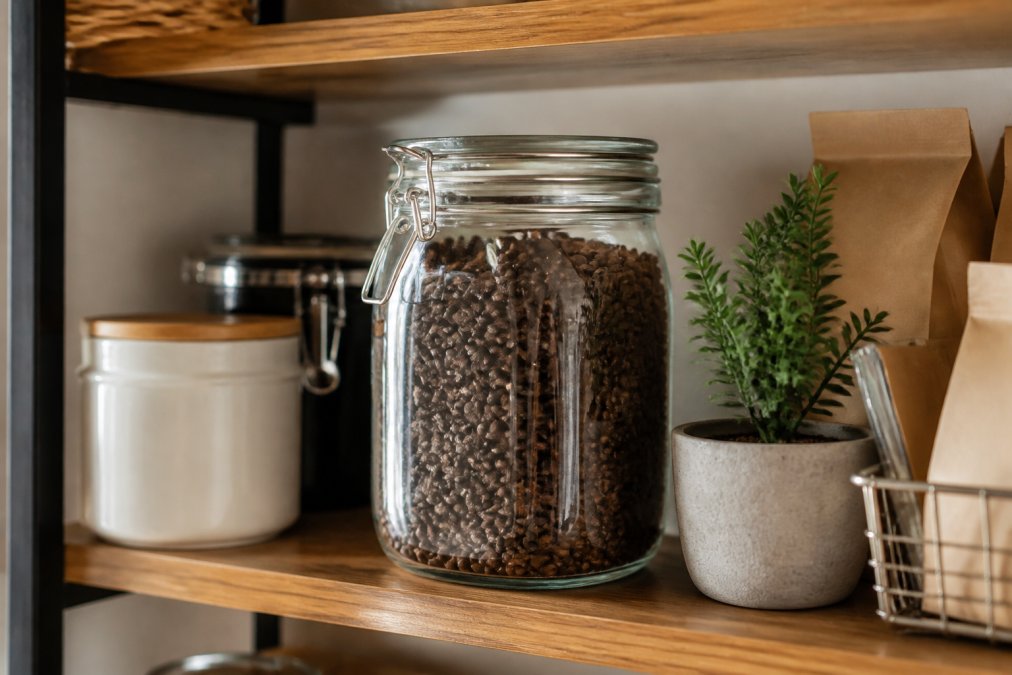
Storage is where most home coffee drinkers fail. They buy good beans and then destroy them by leaving the bag open on the counter or storing it in a clear container in direct sunlight.
The enemies of flavored coffee freshness are heat, light, air, and humidity. Flavoring oils are volatile; they evaporate and degrade when exposed to any of these. Your job is to minimize that exposure.
The ideal storage setup: airtight container, dark location, cool temperature, away from the stove or any heat source. A kitchen pantry is perfect. Under the sink is not (too humid). Above the stove is not (too hot).
Container material matters. Glass is better than plastic because plastic can absorb and retain flavors. Ceramic is also good. The key is that the container seals tightly.
Grind size affects storage longevity. Whole beans stay fresh longer than ground coffee because grinding increases surface area, which increases oxidation. If you grind your beans, grind only what you'll use in the next week.
Temperature stability matters more than absolute temperature. A cool pantry at 65-70°F is better than a refrigerator, which creates condensation every time you open and close it.
The roast date on the bag is your freshness guide. Coffee is best consumed within 2-3 weeks of roasting (peer-reviewed research). Flavored coffee blends are more sensitive to staling than unflavored coffee because the flavoring oils degrade faster than the bean's natural compounds.
Finding the best flavored coffee blends comes down to three decisions: the flavor profile that matches your taste, the brewing method you use daily, and how you'll store the beans once they arrive. Happy Pup Coffee Company delivers specialty-grade, freshly roasted flavored blends directly to your door, with natural flavoring and small-batch roasting that preserves both the bean quality and the flavor intensity. Start with French Vanilla or Mexican Chocolate if you want something smooth and approachable, or go with Hazelnut or Mocha if you prefer more complexity. SHOP ALL COFFEE and experience the difference that freshness and quality make.
Frequently Asked Questions
What are the best flavored coffee blends for 2026?
Top flavored coffee blends include French Vanilla ($21.99), Hazelnut ($189.99), Caramel ($189.99), Mocha ($189.99), and Mexican Chocolate ($21.99). Each uses specialty-grade arabica beans roasted to a smooth medium and flavored with natural extracts while still warm. The best blend depends on your taste preference: vanilla for classic smoothness, hazelnut for nutty depth, caramel for sweetness, or mocha for chocolate lovers. Try a few to discover your favorite.
How do I choose high-quality flavored coffee beans?
Look for specialty-grade arabica beans roasted in small batches to a consistent medium roast. Check that the coffee uses natural flavoring rather than artificial additives. Verify the roast date on packaging, freshness matters significantly for flavor quality. Quality blends start with single-origin specialty coffee before flavoring is applied. Avoid mass-market options with excessive additives or unclear sourcing. Fresh, small-batch roasted coffee delivers superior tasting notes and aroma compared to commodity-grade alternatives.
What's the difference between natural and artificial coffee flavoring?
Natural flavoring comes from real plant extracts and oils applied to warm beans immediately after roasting, creating authentic taste profiles. Artificial flavoring uses synthetic compounds designed to mimic flavors but often tastes hollow or chemical. Natural extracts provide complex, nuanced flavor profiles with better mouthfeel and aftertaste. Most specialty roasters, including Happy Pup Coffee Company, use natural flavoring to preserve the integrity of specialty-grade beans. Natural options cost slightly more but deliver noticeably better flavor complexity and satisfaction.
How should I store flavored coffee beans to keep them fresh?
Store beans in an airtight container away from direct sunlight, heat, and moisture. Keep them at room temperature in a cool, dark cupboard, never in the refrigerator or freezer, as moisture damages flavor. Use within 2-4 weeks of the roast date for peak freshness. Whole beans stay fresher longer than ground coffee. Check the roast date on packaging before purchasing, and buy only what you'll use within a month. Proper storage preserves the delicate flavor notes and natural extracts infused into specialty-grade beans.
What brewing method works best for flavored coffee?
Flavored coffee brews well with pour-over, French press, and automatic drip methods. Grind size matters: medium-fine grinds work best for most flavored blends to extract flavor without bitterness. Brew at 195-205°F water temperature for optimal extraction. Avoid over-extraction, which can create harsh or burnt notes that mask the delicate flavor profile. For specialty-grade flavored beans, a simple pour-over or standard drip machine highlights the natural extracts and origin characteristics better than espresso machines, which can over-concentrate and drown out subtle flavor notes.
This article was written using GrandRanker