


Table of Contents
- What to Look for in Coffee for Nespresso Machines
- Top Nespresso Compatible Pods for Every Drink
- Refillable Nespresso Capsules: Pros, Cons, and Best Practices
- How to Recycle Nespresso Pods and Reduce Waste
- Cost-Per-Cup Breakdown: Pods vs. Refillables vs. Drip
- Pairing Pods with Milk Alternatives
- Troubleshooting Extraction Issues by Pod Type
- Frequently Asked Questions
Last Updated: September 26, 2026
What to Look for in Coffee for Nespresso Machines
The best coffee for Nespresso machines comes down to three things: capsule compatibility, intensity level, and how you actually drink your coffee. Get those right and you'll stop wasting money on pods that brew weak, watery shots.
At Happy Pup Coffee Company, we roast specialty-grade beans and seal them into single-serve capsules with no oxygen inside, so the coffee stays fresh from our roastery to your machine. That matters more than most buyers realize.
Original Line vs. Vertuo Compatibility
Original Line machines use small, narrow capsules and brew at high pressure, producing classic espresso and lungo shots. Vertuo machines read a barcode on the rim of each capsule and spin it to brew everything from espresso to full mugs.
Intensity, Roast Profile, and Flavor Notes
Intensity is a scale, not a caffeine warning. A high-intensity pod tastes bolder and more bitter; it doesn't necessarily contain more caffeine. Roast profile drives that flavor: light roasts keep brightness and acidity, dark roasts bring dark chocolate and molasses notes.
Top Nespresso Compatible Pods for Every Drink
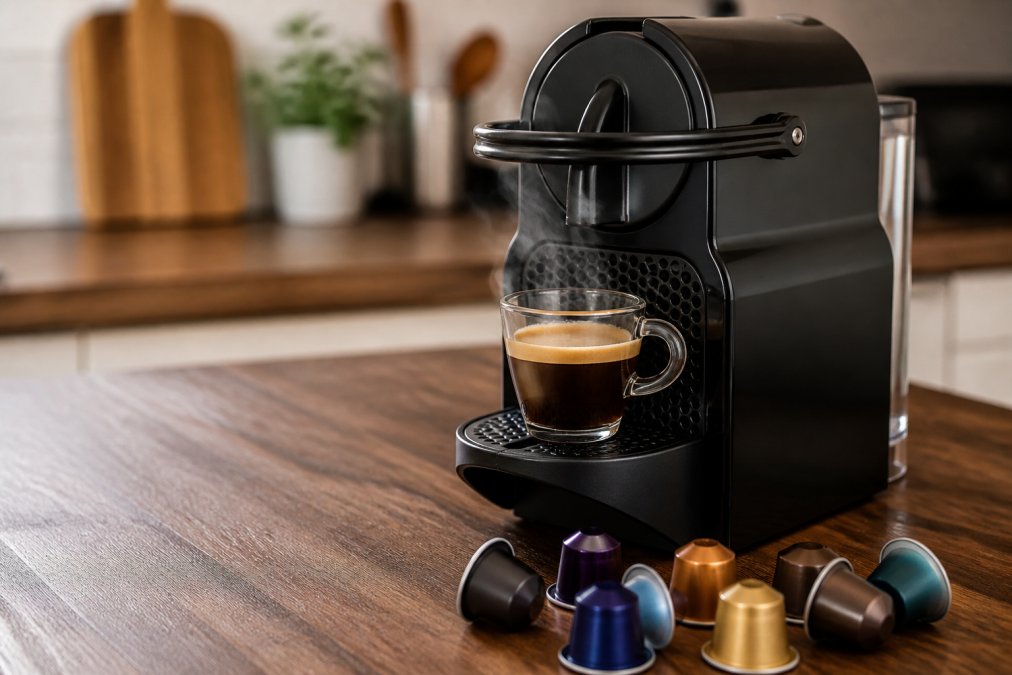
Best for Espresso and Ristretto
Ristretto and espresso drinkers want density and a thick crema. The Bali Coffee Pods ($19.99) deliver exactly that: a medium-dark roast with dark chocolate, molasses, and brown sugar notes from smallholder farms in Kintamani. Pull it short and the body holds up.
Best for Lungo and Iced Coffee
Lungo drinkers need a pod that won't turn thin when you push more water through it. The Mexico Coffee Pods ($19.99) handle the longer pull well, with medium acidity, a creamy body, and lemon, brown sugar, and dark chocolate in the cup.
Refillable Nespresso Capsules: Pros, Cons, and Best Practices
Refillable nespresso capsules let you pack your own grounds into a reusable shell, which cuts per-cup cost and lets you brew any coffee you like. The tradeoff is real, though: you handle the filling, the tamping, and the cleanup every single time.
- Rinse the capsule shell after every use to prevent stale oil buildup
- Fill level: leave a small gap at the top so the lid seats properly
- Tamp lightly and evenly, not hard
- Test one capsule before filling a week's worth
How to Recycle Nespresso Pods and Reduce Waste
Recycling used pods is simpler than most people assume, but only if you know which pods you own. The single biggest confusion in this category is that "Nespresso compatible" says nothing about recyclability. An aluminum capsule and a plastic capsule can look identical in the box and behave completely differently at the curb.
Aluminum vs. Plastic: The Real Divide
Original manufacturer capsules are aluminum, and aluminum is one of the most recyclable materials in the waste stream. Nespresso's own collection program accepts used aluminum capsules at boutiques and through mail-back bags, and the recovered aluminum is smelted and reused. That program is the reason aluminum pods have a credible end-of-life story.
A Practical Recycling Routine
- Aluminum pods: collect them in a dedicated container, then drop them at a boutique or use a mail-back bag. Rinse lightly to reduce odor and pest issues.
- Plastic pods: check the manufacturer's guidance first. If no take-back program exists, treat them as trash unless your local program explicitly accepts them.
- Refillable shells: these sidestep the issue entirely. One reusable shell used daily replaces hundreds of disposable pods a year, which is the single biggest waste reduction available to most home drinkers.
The Honest Trade-Off
Recycling is not free of effort. Mail-back bags cost money, boutique drop-offs require a trip, and plastic pods may have no path at all. If waste reduction is a priority for you, the order of impact is clear: refillable shells first, aluminum pods with a verified collection path second, and plastic pods last. That ranking is worth more than any single brand claim on a box.
Cost-Per-Cup Breakdown: Pods vs. Refillables vs. Drip
Cost per cup is where compatible pods quietly win or lose, depending on how you buy. The sticker price on a box tells you almost nothing. What matters is the per-cup math after you account for pack size, subscription discounts, and the hidden labor cost of refillables.
12 Pack Single Serve Coffee Capsules →
The Math, Laid Out
Our 12-pack works out to roughly $1.67 per cup, while the 60-pack drops that to about $1.00 per cup. That is a 40% reduction for buying the same coffee in a larger format, the simplest lever most people have.
| Method | Approx. Cost Per Cup | Effort | Best For |
|---|---|---|---|
| 12-pack capsules | ~$1.67 | None | Testing a new coffee |
| 60-pack capsules | ~$1.00 | None | Daily drinkers |
| Refillable capsules | Lowest (beans only) | High | Tinkerers, waste-cutters |
| Drip coffee | Lowest per cup | Medium | Large batches |
Why Refillables Look Cheaper Than They Are
Refillables cost the least per cup if you already own a grinder, because you are paying for beans only. But the time adds up: filling, tamping, and rinsing a shell every morning is real labor, and a bad grind wastes a whole capsule's worth of coffee. If your time is worth anything, the gap between refillables and a bulk capsule narrows fast.
Drip Is Cheapest at Volume, With a Catch
Drip coffee wins on raw cost per cup for large batches, but it cannot match the crema, the pressure, or the convenience of a capsule. If you drink three or more cups a day and do not care about espresso texture, drip is the rational choice. If you drink one or two and want them to be good, the capsule math is closer than the headline numbers suggest.
A Simple Decision Rule
- Testing a new coffee: 12-pack.
- Daily drinker, no time to tinker: 60-pack.
- Waste-focused or enjoy the ritual: refillable.
- Three-plus cups a day, texture optional: drip.
Run your own numbers against your actual consumption before committing to any format. The cheapest per-cup option is the one you will actually use every day.
Pairing Pods with Milk Alternatives
Milk choice changes how a pod tastes, sometimes more than the pod itself. Oat milk is the safest match for most espresso: its natural sweetness complements the dark chocolate and molasses notes in a Bali or 6 Bean Blend without overpowering them.
Troubleshooting Extraction Issues by Pod Type
Extraction problems usually trace back to the pod, the machine, or the grind, in that order. If a capsule brews watery, the issue is often a weak seal or an old pod. If it brews nothing at all, the machine likely needs descaling.
- Watery shot: check pod freshness and seal, then verify the capsule is seated correctly
- No flow: descale the machine; mineral buildup is the most common cause
- Sputtering or spraying: the filter may be compromised, or the grind is too fine in a refillable
- Bitter, harsh cup: water temperature is too high or the pod is over-extracted
- Sour, thin cup: under-extraction, often from too coarse a grind in refillables
Frequently Asked Questions
What kind of coffee does a Nespresso machine take?
Nespresso machines use sealed single-serve capsules, not loose grounds. Original Line models take small, bar-shaped pods, while Vertuo machines use larger, dome-shaped capsules with barcodes. You can buy pods from the machine maker or third-party brands that make compatible versions. For the best coffee for Nespresso machines, look for capsules labeled for your specific line and sealed to keep oxygen out.
Are third-party coffee pods compatible with all Nespresso machines?
No. Compatibility depends on the machine line. Most third-party pods are made for Original Line machines, which have a simpler piercing mechanism. Vertuo machines rely on barcode scanning, so compatible options are fewer and often require refillable capsules. Always check the product listing for your machine model before buying, and note that using non-Nespresso pods may affect warranty terms in some cases.
Can you use your own coffee grounds in a Nespresso machine?
Yes, with refillable nespresso capsules. These reusable pods let you fill them with your own ground coffee, then brew as usual. Use a fine, consistent grind similar to table salt for Original Line, and avoid overfilling. Refillables cut waste and cost per cup, but they require cleaning after each use. They work best with medium to dark roasts that extract evenly.
How do I choose the best coffee intensity for my Nespresso?
Intensity reflects roast level and body, not just caffeine. For a bold, syrupy shot, pick a dark roast with an intensity of 8 to 12. For a milder, brighter cup, choose a medium or light roast in the 4 to 7 range. If you drink lattes or cappuccinos, a higher intensity holds up better against milk. Single-origin pods often list tasting notes to guide your choice.
How to recycle nespresso pods properly?
Recycling options vary by program. Some brands offer prepaid mail-back bags or drop-off points where used aluminum pods are collected, and the grounds are composted. For refillable capsules, empty the grounds into your compost or trash, rinse the capsule, and reuse it. Check local recycling rules because small pods may not be accepted in curbside bins. Rinsing pods before recycling reduces contamination.