


Table of Contents
- Operation Coffee vs Specialty Brands: The Quick Comparison
- Specialty Coffee vs Commercial Coffee: What Actually Separates Them
- Black Rifle Coffee Alternative: What Veterans Are Switching To
- Price Per Cup: Operation Coffee vs Specialty Brands
- Best Veteran Owned Coffee Brands: How to Verify the Claim
- Brewing Method Sensitivity and Sensory Testing
- Conclusion
- Frequently Asked Questions
Last Updated: September 16, 2026
Operation Coffee vs Specialty Brands: The Quick Comparison
Operation Coffee built its reputation on a simple promise: bold coffee, veteran pride, and a mission people want to support. But when you compare operation coffee versus specialty brands on what's actually in the bag, the gap often comes down to grading, freshness, and how the beans were handled before they ever reached a roaster. This guide from Happy Pup Coffee Company breaks down the real differences, from cupping scores to cost per cup, so you can decide where your money goes.
Here's the short version: most mass-market veteran brands sell coffee first and source it second. Specialty roasters flip that order.
The operation coffee category covers veteran-focused brands that roast at volume and sell on identity and convenience. Specialty brands sell on bean quality, traceability, and roast date. Both can be veteran-owned. Only one is graded on a 100-point scale before it ships.
| Factor | Operation-Style Brands | Specialty Brands |
|---|---|---|
| Grading standard | Rarely published | Cupping score of 80+ |
| Roast date on bag | Often absent | Standard practice |
| Sourcing detail | Blended, undisclosed | Farm, region, or lot level |
| Price per cup | Lower upfront | Higher, varies by lot |
| Best for | Convenience, brand identity | Flavor, freshness, transparency |
That table is the whole argument in five rows. The rest of this article explains why each line matters, and where the middle market complicates everything.
Specialty Coffee vs Commercial Coffee: What Actually Separates Them
Specialty coffee is coffee that scores 80 points or higher on the Specialty Coffee Association's 100-point cupping scale, evaluated by licensed graders for flavor, acidity, body, aroma, and absence of defects. Commercial coffee, by contrast, is graded for consistency and cost rather than cup quality.
That single threshold explains most of the difference you taste. A commercial blend can include beans from multiple countries, multiple harvests, and multiple quality tiers, all roasted dark enough to smooth over the variation.
Cupping Scores and the 80-Point Line
Cupping is a standardized sensory evaluation: graders slurp, score, and compare against reference samples. Anything below 80 is, by definition, not specialty. The practical effect is that a specialty roaster has to reject coffee that a commercial buyer would happily accept.
Why the Middle Market Blurs the Line
Here's where most comparisons get lazy. Plenty of brands sit between the two poles, buying decent green coffee, roasting it competently, and marketing it as premium without publishing a score. The middle market is real, it's large, and it's where most "veteran coffee brand vs specialty roaster" decisions actually happen.
How to Verify a Specialty Claim in Two Minutes
You don't need a cupping table to sort the real claims from the decorative ones. Four checks cover most of it:
- Score published? A roaster selling genuine specialty coffee will usually name the score or at least the range. If the number is missing, treat "specialty" as a marketing word.
- Origin named? Look for a country plus a region, farm, cooperative, or lot. "South American blend" is not traceability.
- Roast date printed? Not a "best by" date, an actual roast date. Coffee is at its best within roughly two to six weeks of roasting for most brew methods, and a best-by date tells you nothing about when that clock started.
- Process named? Washed, natural, honey, and anaerobic are processing methods that change flavor in predictable ways. A roaster who can't name the process usually doesn't know it.
Black Rifle Coffee Alternative: What Veterans Are Switching To
The most common reason veterans switch away from a big-name veteran brand is freshness. Beans roasted weeks before shipping taste flat no matter how good the story behind them is.
Price Per Cup: Operation Coffee vs Specialty Brands
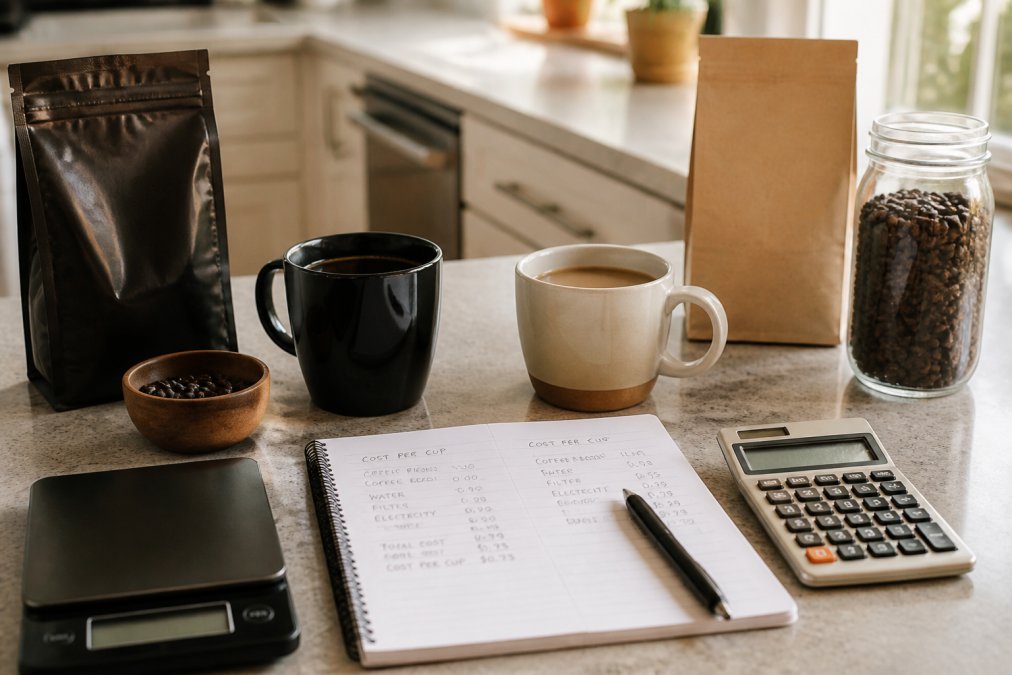
Specialty coffee usually costs more per cup than operation-style brands, but the gap is narrower than the sticker price suggests. A $21.99 bag of whole bean typically brews 25 to 30 cups, which lands somewhere near a dollar per cup.
| Purchase | Price | Approx. Cups | Cost Per Cup |
|---|---|---|---|
| 12 Pack Capsules | $19.99 | 12 | ~$1.67 |
| 60 Pack Capsules | $59.99 | 60 | ~$1.00 |
| French Roast (whole bean) | $21.99 | 25-30 | ~$0.73-$0.88 |
| Italian Roast (whole bean) | $29.99 | 25-30 | ~$1.00-$1.20 |
Why Specialty Costs More, and Where the Money Goes
The price gap isn't arbitrary. Specialty green coffee costs more at the farm gate because it's picked selectively, processed in smaller lots, and often paid for above commodity market rates. Add smaller roast batches, and packaging that actually seals against oxygen, and the per-bag cost climbs before the coffee ever reaches you.
12 Pack Single Serve Coffee Capsules →

The Hidden Cost of Stale Coffee
Cost per cup only tells half the story if the coffee goes stale before you finish the bag. A 12-ounce bag of whole bean holds its peak flavor for roughly two to six weeks after the roast date, depending on storage. Buy a large bag, drink one cup a day, and you may be brewing mediocre coffee for the last third of it.
How to Run Your Own Cost-Per-Cup Math
The formula is simple: divide the bag price by the number of cups you actually get from it.
- Dose per cup. A standard drip cup uses roughly 10 grams of coffee; a strong pour-over or espresso-based drink can use 18 to 20 grams. Doubling the dose roughly doubles your cost per cup.
- Waste. Ground coffee left in the bag past its peak, or capsules you brew and don't finish, both count against the real number.
Best Veteran Owned Coffee Brands: How to Verify the Claim
Verifying a veteran-owned claim takes about two minutes if you know where to look. Start with the About page, then cross-check the founder's service record against public sources, and finally look for third-party verification programs rather than self-applied badges.
A checklist that actually works:
- Does the site name the branch, role, or service period of the founder?
- Is there a verifiable founder profile outside the brand's own site?
- Does the brand participate in any recognized veteran business certification?
- Are the beans graded, or is "premium" the only quality claim?
- Is a roast date printed on the bag?
Brewing Method Sensitivity and Sensory Testing
Brewing method sensitivity is how much a coffee's flavor changes depending on how you brew it. A washed, light-roast single-origin might taste bright and citrusy in a pour-over and thin and sour in a drip machine. A dark roast holds up better across methods because roast character dominates the cup.
Conclusion
The honest answer to operation coffee versus specialty brands is that they're solving different problems. One sells convenience and identity. The other sells graded, traceable, freshly roasted beans, and it usually costs a little more per cup to do it.
Frequently Asked Questions
What is the difference between specialty coffee and commercial coffee?
Specialty coffee is graded by licensed Q graders and must score 80 or higher on the 100-point Specialty Coffee Association scale. Commercial or commodity coffee typically scores below 80 and is judged on uniformity rather than distinct flavor. In practice, specialty beans are hand-picked at peak ripeness, traceable to a specific farm or region, and roasted in small batches with a printed roast date. Commercial beans are picked for volume, blended for consistency, and often sit in warehouses for months before reaching a shelf.
How do I check if a veteran owned coffee brand is actually veteran owned?
Look for a named founder with a documented service record, not just a flag on the packaging. Legitimate brands usually publish a founder story with branch, rank, or deployment details, and many register with verification programs or state-level veteran business certifications. Check the about page, the company's business registration, and third-party veteran business directories. If a brand uses military imagery but never names a veteran owner or links to any certification, treat the claim as marketing until you find proof.
Is operation coffee cheaper than specialty brands?
Not always. Operation coffee brands often sit in the middle market, priced above grocery commodity coffee but below single-origin specialty roasters. The gap narrows fast when you calculate cost per cup. A $19.99 12-pack of single-serve capsules works out to roughly $1.67 per cup, while a $21.99 12-ounce bag of whole bean brewed at 18 grams per cup lands near $1.15 per cup. The cheaper option depends on your brewing setup, not the label on the bag.
Does brewing method change how much difference you taste between coffee brands?
Yes, and more than most buyers expect. A French press or pour-over preserves oils and aromatics, so subtle differences in roast profile and bean quality show up clearly. A drip machine with a wide spray pattern or a capsule system with a fast, high-pressure brew mutes those differences. If you drink capsule coffee daily, upgrading bean quality matters less than fixing the brew. If you brew pour-over, bean quality is the single biggest variable in the cup.
What should I look for on a bag to confirm freshness and sourcing?
Check three things: a roast date, not just a best-by date; an origin listed down to the country or region, ideally the farm or cooperative; and a processing method such as washed or natural. Roast date tells you how long the beans have been off the roaster, and most coffee tastes best within two to four weeks of that date. Origin and processing details signal supply chain transparency. A bag with none of these is usually commodity coffee in specialty packaging.