


Table of Contents
- Operation Coffee vs Black Rifle: How the Two Compare
- Roast Profiles and Flavor Notes
- Caffeine Content and Energy Levels
- Why Shoppers Look for a Black Rifle Coffee Alternative
- What a Veteran Owned Coffee Subscription Should Include
- Specialty Grade Coffee Benefits You Can Taste
- Cost Per Cup: What You Actually Pay
- Brewing Method Compatibility and Convenience
- Frequently Asked Questions
Last Updated: September 22, 2026
Operation Coffee vs Black Rifle: How the Two Compare
Choosing a veteran coffee brand has become harder than it should be. This guide from Happy Pup Coffee Company breaks down how Operation Coffee and Black Rifle stack up on roast profiles, caffeine, and price, and where a veteran owned coffee subscription fits into the decision.
The short version: Black Rifle Coffee Company is the larger, more widely distributed operation, while Operation Coffee runs a leaner, mission-focused model. Both roast coffee, both lean on veteran identity, and both charge more than grocery store cans. The real differences show up in roast range, caffeine options, and how each brand handles sourcing and community giving.
Below, we compare the two head to head, then explain what actually matters when you pick a veteran coffee brand in 2026.
Roast Profiles and Flavor Notes
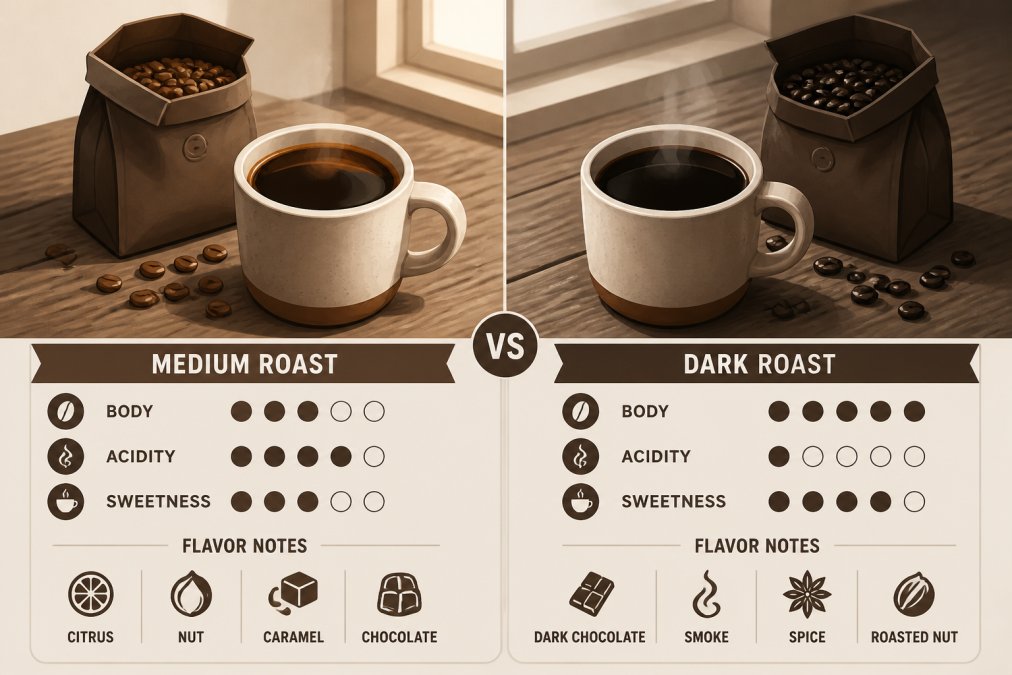
Operation Coffee keeps a tighter menu built around medium and dark roasts with straightforward, traditional flavor notes.
Roast choice comes down to how you brew and what you drink it with:
- Medium roast: balanced acidity, works black or with milk
- Dark roast: heavier body, cocoa and caramel tones, stands up to cream
- Blends: consistent cup year-round, easier to dial in
A common mistake is buying dark roast for a drip machine set to a fine grind. The result tastes bitter, not bold. Match the roast to the brew method before you match it to the brand.
Caffeine Content and Energy Levels
Caffeine is where these two brands diverge most, and it is also where most comparisons get lazy. Operation Coffee keeps its menu closer to standard roast caffeine levels. Neither brand is built around extreme caffeine, but the range differs enough to matter if you drink three or four cups a day.
Here is the practical way to think about it. An 8 oz cup of drip coffee typically lands somewhere between 95 and 165 mg of caffeine depending on the bean, the roast, and the brew ratio. Two variables drive most of that spread:
- Species: Robusta beans carry roughly twice the caffeine of arabica. A blend that mixes both gives you a stronger cup without the harsh, rubbery finish that straight robusta can carry.
- Brew ratio and method: A 1:15 pour-over extracts more caffeine per ounce than a 1:18 drip batch. Cold brew concentrate can run higher per ounce than hot drip because of the longer steep.
Roast level is the variable most people get backwards. Dark roast does not mean more caffeine by weight of bean, the roasting process burns off a small amount, but dark roast beans are less dense, so a scoop by volume weighs less and brews a slightly weaker cup. If you measure by weight, the difference is small. If you scoop, it is real.
If caffeine is your deciding factor, read the label for the source, not the marketing name. A blend that lists robusta or a specific high-caffeine origin is telling you something. A bag that just says "bold" is telling you about flavor, not strength.
That is the approach behind blends like Max Caf Blend, which combines Tanzania and India Robusta for a higher-caffeine cup. If you want the standard-strength comparison point, a medium roast arabica like Breakfast Blend + sits at the everyday end of the range.


One more note on timing: caffeine's half-life in most adults runs about five hours. A 200 mg cup at 3 p.m. still has roughly 100 mg circulating at 8 p.m. If sleep is the reason you are comparing caffeine levels, the brand matters less than the clock.
Why Shoppers Look for a Black Rifle Coffee Alternative
The most common reason people search for a black rifle coffee alternative is price and availability, not politics.
Other reasons shoppers branch out:
- They want a smaller roaster with a fresher roast date
- They want a subscription that ships on their schedule
- They want to support a different veteran-owned mission
- They want single-serve capsules that work with machines they already own
None of these reasons require abandoning veteran-owned coffee. They just require knowing what to compare.
What a Veteran Owned Coffee Subscription Should Include
A veteran owned coffee subscription should deliver freshly roasted beans on a schedule you control, with the option to pause, skip, or change your selection month to month. Anything less is just a recurring charge.
Here is what to check before you commit:
| Feature | Why It Matters | What to Look For |
|---|---|---|
| Roast date | Freshness fades fast | Printed date, not just "best by" |
| Flexibility | Life changes | Pause, skip, swap options |
| Grind choice | Brew method fit | Whole bean or ground to order |
| Capsule compatibility | Machine fit | Standard single-serve format |
| Verification | Trust | Clear veteran ownership statement |
Specialty Grade Coffee Benefits You Can Taste
Specialty grade coffee is coffee that scores 80 points or higher on the standardized 100-point scale used by licensed Q graders, the industry's trained sensory evaluators. That score reflects defect count, cup clarity, sweetness, and flavor complexity, and it is the line between commodity coffee and coffee worth paying more for.
You can taste the difference in three places: sweetness without added sugar, a clean finish with no cardboard or papery notes, and acidity that reads as bright rather than sour. Mass-market cans rarely clear that bar because they blend for consistency across millions of pounds, not for cup quality.
Cost Per Cup: What You Actually Pay
Cost per cup is the number that matters, not the bag price. A $30 bag that brews 40 cups costs less per cup than a $12 bag that brews 12. Most comparisons stop there and never show the actual math. Here is the math.
The standard conversion: a 12 oz bag of whole bean coffee holds roughly 340 grams. At a 1:16 brew ratio, that is about 5,440 grams of brewed coffee, or roughly 184 fl oz, about 23 eight-ounce cups. A 16 oz bag runs closer to 30 cups. Capsules are fixed: one capsule, one cup, no yield variance.
| Format | Typical Pack Size | Cups per Pack | Cost per Cup Range |
|---|---|---|---|
| Whole bean, 12 oz | 12 oz bag | ~23 | $0.85-$1.30 |
| Whole bean, 16 oz | 16 oz bag | ~30 | $0.75-$1.15 |
| Ground, 12 oz | 12 oz bag | ~23 | $0.80-$1.25 |
| Single-serve capsules | 12 pack | 12 | $1.50-$1.75 |
| Single-serve capsules | 60 pack | 60 | $0.95-$1.10 |
A few levers move cost per cup more than brand choice does:

- Buy the larger pack. The same capsules at 60-count versus 12-count typically drop cost per cup by 35-45%.
- Subscribe instead of reordering. Recurring shipments usually beat one-off orders once shipping is folded in.
- Match grind to method. Pre-ground coffee for the wrong brewer wastes extraction and forces you to use more coffee per cup.
- Track your actual pour. Most households brew more than they drink. Measuring what you pour is the fastest way to find real savings.
Brewing Method Compatibility and Convenience
Brewing compatibility decides whether a coffee actually fits your routine. Whole bean works with any method, from French press to pour-over to drip. Ground coffee locks you into one grind size. Capsules work only with machines built for that format.
Frequently Asked Questions
Is Black Rifle Coffee considered high quality?
Quality depends on roast date and how the beans were stored. If freshness matters, look for a roast date printed on the bag and a roaster that ships within days of roasting.
What coffee is comparable to Black Rifle Coffee?
Look for a veteran-owned roaster that offers dark and medium blends, high-caffeine options, and single-serve capsules. Happy Pup Coffee Company covers those categories with its Cowboy Blend (dark and medium, cocoa and caramel tones), Max Caf Blend (Tanzania and India Robusta for high caffeine), and 12 or 60 pack single serve capsules sealed with no oxygen inside to keep the coffee fresh.
How do I verify a coffee brand is actually veteran owned?
Check the company's About page for named founders and their service history, then cross-reference that against state business registrations or veteran-owned business certifications. A brand that only uses the word veteran in its marketing without naming anyone is a red flag. Happy Pup Coffee Company states it is veteran owned and operated, and that claim sits at the center of its brand mission rather than as a tagline.
What are the specialty grade coffee benefits compared to grocery store coffee?
Specialty grade beans are scored higher for defects, flavor, and consistency, and they are usually roasted in small batches with a printed roast date. That combination gives you a cleaner flavor profile with more distinct tasting notes and less bitterness.
Do single serve capsules work with standard machines?
Happy Pup Coffee Company's 12 and 60 pack single serve capsules use a premium blend called Original Roast, sealed with no oxygen inside so the coffee stays fresh. The improved filter design stops coffee from shooting through the middle, so it absorbs more grounds without slowing the brew time. Check your machine's capsule format before ordering.